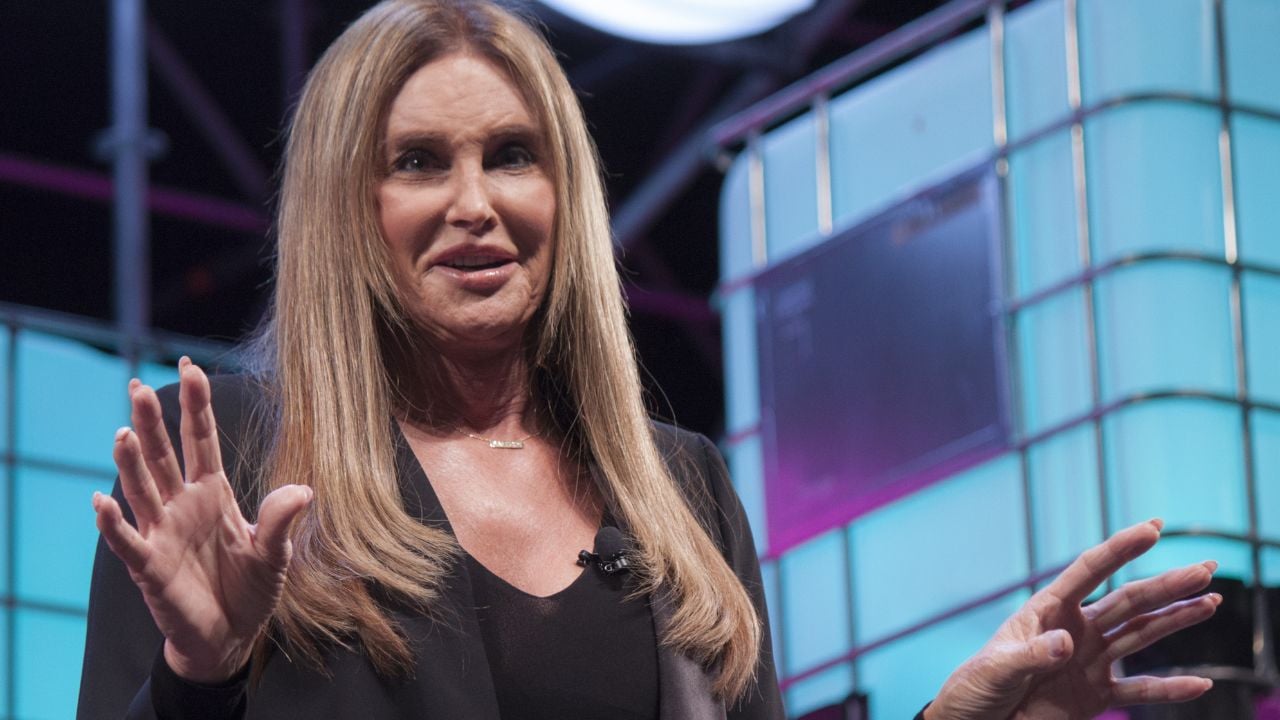
Caitlyn Jenner has entered the increasingly public debate over transgender eligibility in the WNBA, backing former NBA players Enes Kanter Freedom and Royce White as they challenge how the league defines who can play.
Jenner made her position clear during an appearance on Fox News @ Night, where she accused the WNBA of hypocrisy and argued that eligibility for women’s competition should be determined by sex. Addressing commissioner Cathy Engelbert directly, Jenner said, “Cathy, XX, you’re in. XY, you’re out. It’s that simple.”
Her comments followed declarations by Kanter Freedom and White that they intend to enter the 2027 WNBA Draft while saying they identify as women. Both announcements were made as challenges to the league’s eligibility language.
The WNBA, however, has not said either former NBA player is eligible. The league says there are “no immediate eligibility matters” affecting it and has committed to further discussions with teams and the players’ association while emphasizing both fair competition and respect for transgender people.
Jenner Says Kanter Freedom and White Are Exposing ‘Hypocrisy’
Jenner praised Kanter Freedom and White for drawing attention to what they see as ambiguity in the WNBA’s eligibility language. “They’re showing the hypocrisy of what’s going on out there in the WNBA,” Jenner said.
She then characterized Engelbert’s position as the league continuing to discuss transgender eligibility without reaching a definitive standard and offered her own proposed rule. “Cathy, XX, you’re in. XY, you’re out. It’s that simple,” Jenner said.
Jenner also said she wants to “protect women’s sports” and invoked Title IX while making her argument. Title IX itself governs sex discrimination in federally funded education programs and activities.
The former Olympic decathlon champion has publicly taken similar positions for years. Jenner, who came out as transgender in 2015, has argued that transgender women should not compete in women’s athletic categories.
The WNBA Rule Says Only Women Are Eligible, but Goes No Further
The dispute centers partly on a short provision in the WNBA’s collective bargaining agreement. As The Associated Press reported, the agreement states that “only players who are women are eligible to play in the WNBA.” It does not provide more specific language addressing gender identity or sex assigned at birth.
That absence is what Kanter Freedom and White have sought to highlight with their announcements. Both said they identify as women while declaring themselves eligible for the 2027 draft.
Engelbert told team presidents and general managers that player eligibility rules are collectively bargained and described transgender participation as a “complex and nuanced topic.”
She said the league would continue discussions with teams and the Women’s National Basketball Players Association. She also stressed that “preserving the integrity of our game and ensuring fair competition” would remain among the league’s highest priorities.
The League Says There Is No Immediate Eligibility Case to Decide
The WNBA went further after league officials met to discuss transgender athletes along with online abuse and other issues affecting players. “There are no immediate eligibility matters affecting the WNBA,” a league spokesperson said. The statement also denounced what the league described as “bad-faith efforts” to use the subject to “demean or marginalize others.”
The 2027 draft will not take place until next April, leaving the league time to continue its discussions before any potential eligibility question connected to that draft would have to be resolved. No transgender woman has ever appeared on a WNBA roster, according to the AP.
The Debate Grew After Sophie Cunningham’s Comments
The broader controversy had already intensified after Indiana Fever guard Sophie Cunningham spoke publicly about transgender participation in girls’ and women’s sports.
Cunningham said she wanted to protect young female athletes who, in her words, “shouldn’t have to go against biological men.” She later pushed back against claims that her position amounted to hatred toward transgender people. Front Office Sports noted that Cunningham’s remarks were followed by demonstrations both supporting and opposing her position.
There have also been prominent voices inside women’s basketball arguing for transgender inclusion. Minnesota Lynx coach Cheryl Reeve said earlier in August that she views access to sports for transgender children as a human-rights issue. “We need to protect trans kids,” Reeve said. “Every kid has a right to sports.”
The WNBPA has taken a similarly cautious approach to the debate. In a statement, the players’ union said it embraces “justice, equity, diversity, and inclusion,” condemned hate and demonization directed at transgender people and said it would continue participating in difficult conversations about the issue. At the same time, the union said it would “not be used as political pawns.”