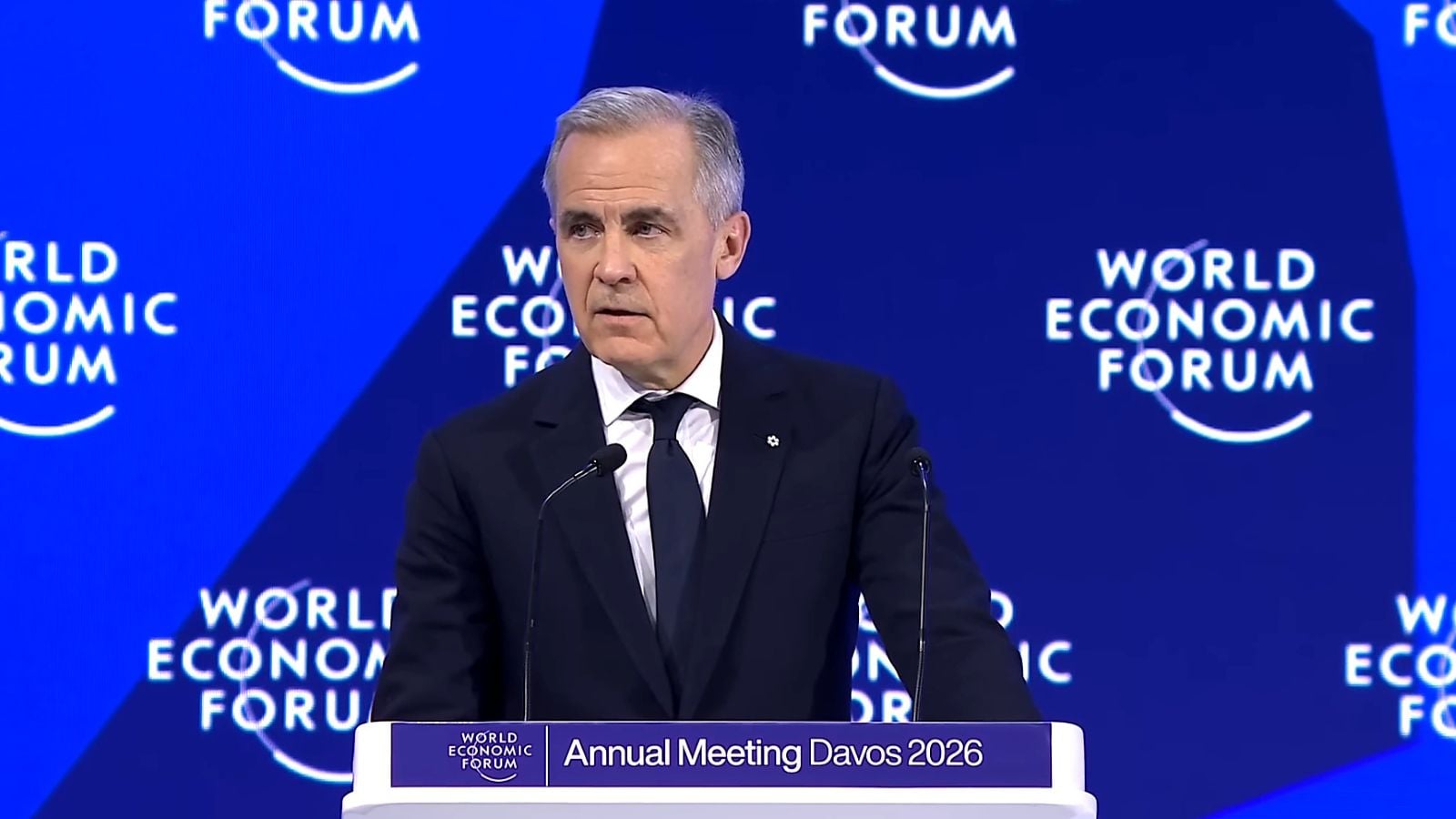
Mark Carney went to Davos in January to tell the world what principled foreign policy looks like. He said middle powers had to stop pretending the rules-based international order still worked as advertised. He said acting consistently meant applying the same standards to allies and rivals. He warned that when countries criticize coercion from one direction but stay silent when it comes from another, they are “keeping the sign in the window.”
On April 10, Canada kept the sign in the window.
That was the day the UN’s Economic and Social Council, by consensus, nominated Iran to the Committee for Program and Coordination, a body that helps shape UN program planning on women’s rights, human rights, disarmament, and the prevention of terrorism. The chair invited member states to speak. One country did. The United States formally disassociated from the consensus. Canada did not.
That matters more than Ottawa wants to admit.
The room told the story
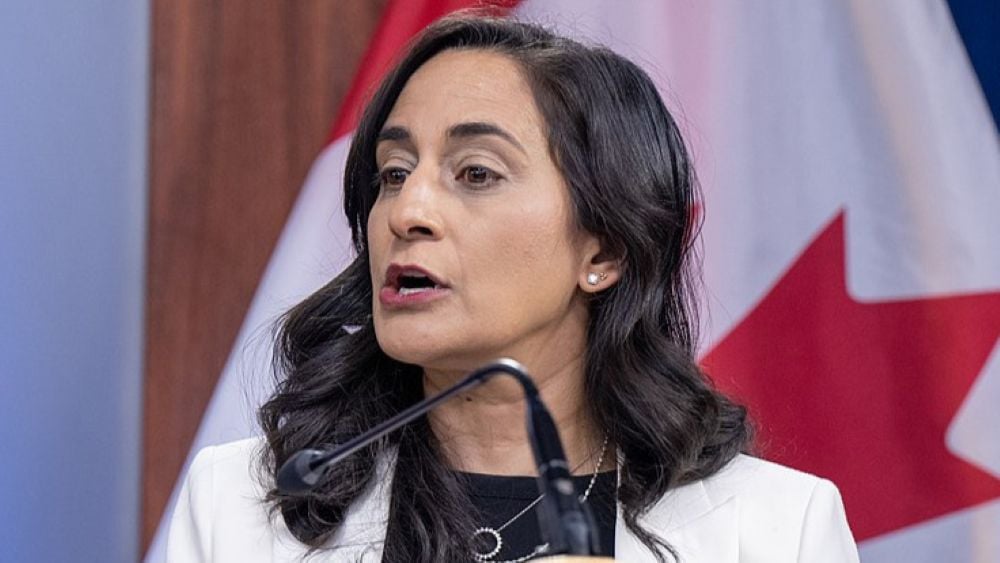
Canada has spent months talking tough on Iran. In February, Foreign Affairs Minister Anita Anand said Canada would not restore diplomatic relations with Tehran without regime change. At the end of that month, Carney and Anand said Canada supported the United States acting to prevent Iran from obtaining a nuclear weapon. Days later, Carney criticized the U.S. and Israel for acting without consulting allies and said their strikes appeared inconsistent with international law.
This is not a government that lacks strong views. Canada has listed the IRGC as a terrorist entity, cut diplomatic ties with Tehran years ago, and says the regime threatens both its own people and international security. Ottawa has been perfectly willing to sound morally certain when the target is obvious and the cameras are on.
That is a lot of rhetoric for a government that could not manage a sentence of dissent when the room was staring back at the United Nations.
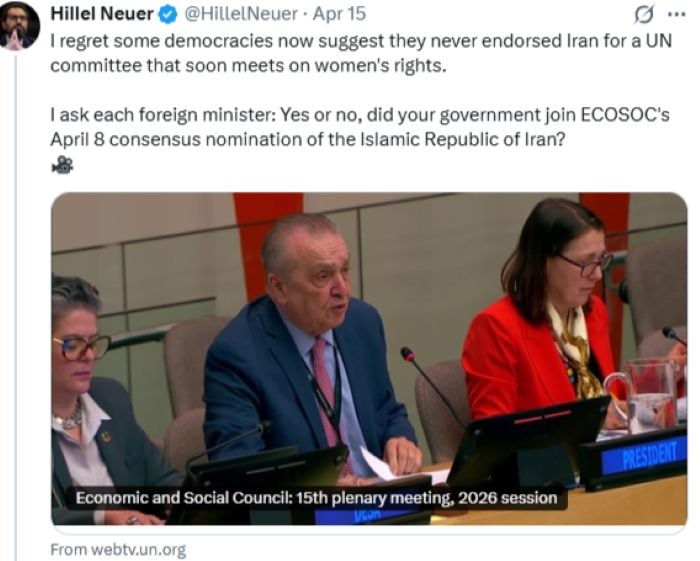
The easiest way to understand this story is to ignore the jargon and look at the room. Iran got its nomination. The United States objected on the record. UN Watch’s Hillel Neuer pointed out that the chair repeatedly invited other delegations to do the same. Canada, along with other Western democracies, now hiding behind procedure, stayed quiet.
For one brief and deeply inconvenient moment, Trump’s America was the only democracy willing to say out loud that Iran was unfit for the job.
Canada’s excuse is process
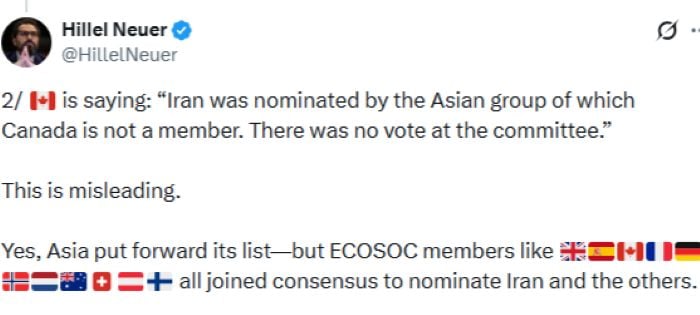
Canada’s defense is that Iran was nominated by the Asia-Pacific group, of which Canada is not a member, and that there was no formal vote. That is technically neat and politically pathetic.
There may not have been a roll call. There was still a consensus. The United States still broke from it. Canada still did not.
If Ottawa wants to argue that it lacked the power to stop Iran, fine. Great powers and regional blocs get their way at the UN all the time. But that is not the same as saying Canada had no choices. It had one obvious choice available in the room. It could have done exactly what the United States did and disassociated from the consensus. It chose not to.
And the committee itself is not some meaningless diplomatic shelf. It helps steer how the UN plans and prioritizes programs before larger political bodies sign off. A regime Canada itself treats as repressive, destabilizing, and hostile to basic rights should not get waved through to a committee touching those areas without even a symbolic objection.
Why Americans should care
What makes this land in the United States is the inversion. Americans are constantly told that Trump isolates the country, alienates allies, and burns moral authority. On this question, the isolation was moral clarity. The consensus was cowardice.
That does not make Trump a human-rights hero. It does not wash America clean on Iran. It says something narrower and uglier. The governments that sell themselves as the civilized alternative to Trump vanished the moment objecting carried even a trivial diplomatic cost.
Carney did not just diagnose the hypocrisy at Davos. He stepped into it. He warned middle powers to stop “going along to get along.” Then Canada did exactly that when Iran got a new perch at the UN.
The General Assembly still has to act. That means Ottawa still gets one more chance to choose which country it wants to be. The one that lectures about consistency in Davos, or the one that goes mute the second consistency becomes inconvenient.
If Ottawa stays silent again, this stops looking like procedural embarrassment and starts looking like policy. Not principled policy. Not strategic policy. Just the same middle-power reflex Carney claimed he wanted Canada to outgrow.