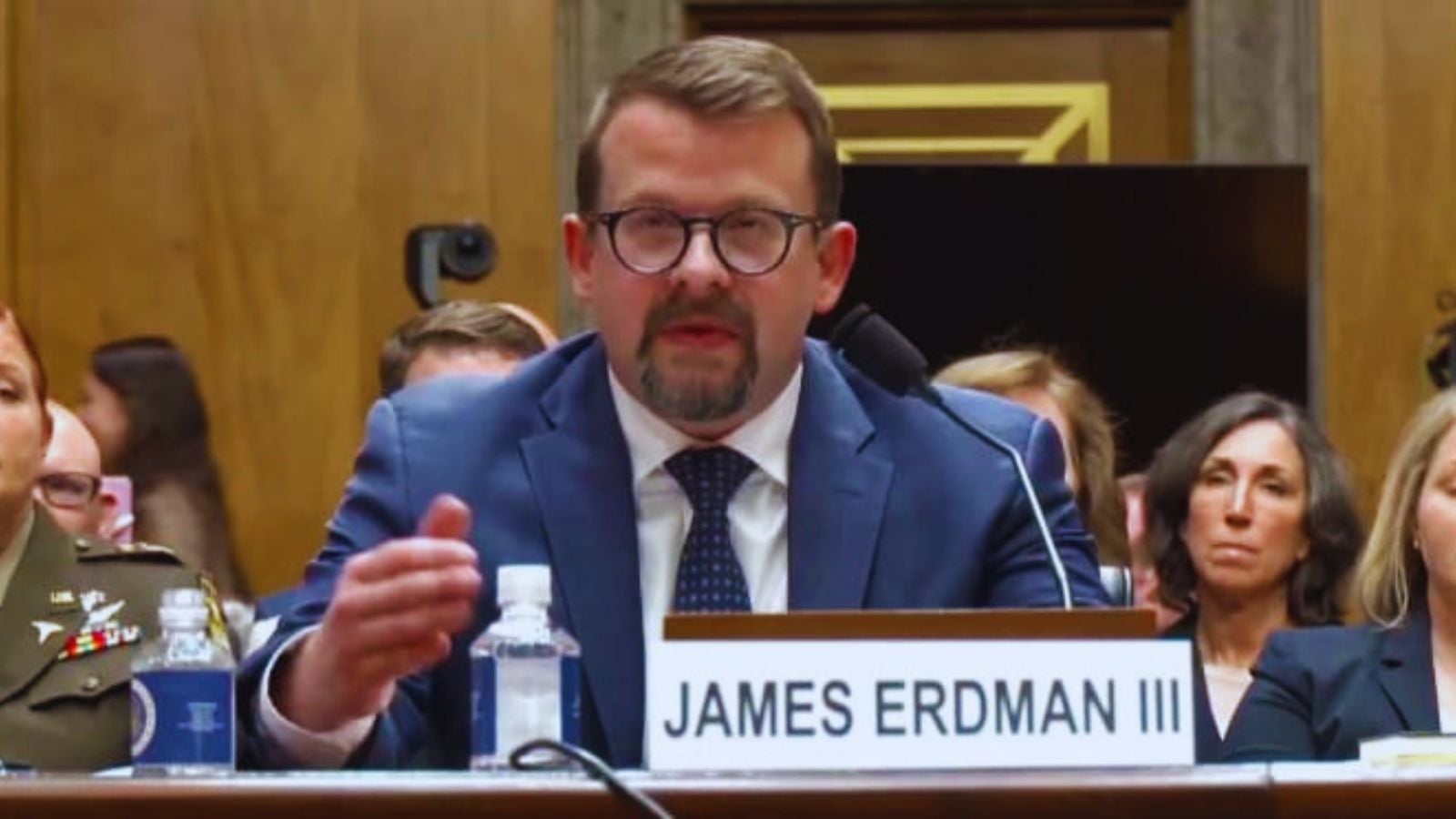
Let’s talk about the CIA, a Senate hearing, and one of the most explosive moments of 2026 that somehow still doesn’t have a clean answer.
On the 13th of May 2026, a current CIA officer named James Erdman III sat before the Senate Homeland Security and Governmental Affairs Committee and said, out loud and on the record, that the intelligence community suppressed the lab-leak theory before it became the agency’s official position.
He didn’t volunteer to be there. He was subpoenaed. And that one detail has turned out to be the most revealing part of this entire story.
We are now more than six years out from when COVID-19 turned the entire world upside down, and the debate about where it actually came from has moved from viral social media threads to actual witness stands. The federal government shut down its free at-home testing program in early 2025, which felt like the official closing of a chapter. Except the story clearly wasn’t done.
The Subpoenaed Witness and the Agency Rebuke
BREAKING: A CIA whistleblower just testified UNDER OATH that Anthony Fauci DIRECTLY meddled with intelligence agencies to cover up the COVID lab leak.
Every day that Fauci remains free is an INJUSTICE.
Per the whistleblower, the CIA was on the verge of calling it a lab leak —… pic.twitter.com/V6c4Xx67zd
— Nick Sortor (@nicksortor) May 13, 2026
The CIA’s response to Erdman’s appearance was sharp and defensive, almost telling in itself. Spokesperson Liz Lyons issued a formal statement accusing the Senate Committee of acting in bad faith by subpoenaing an active officer without prior notification, especially after already receiving closed-door testimony from him.
The agency went out of its way to frame Erdman not as a whistleblower but as a man simply responding to a legal order, as if that distinction alone should discredit everything he said. Lyons called the whole proceeding “dishonest political theater masquerading as a congressional hearing.”
That’s a sharp thing to say. But the thing about that framing is that the CIA is currently on record supporting the lab-leak conclusion. As of early 2025, the agency officially shifted its stance, stating that the virus was more likely to have originated from a research-related lab incident. It attached a “low confidence” qualifier to that, sure, but the directional shift happened.
So the agency is now simultaneously defending that public position and attacking the hearing at which a man testified that he was penalized for holding that view years earlier.
The tension in that position is hard to miss.
The Semantic Shift of Likely
🚨 CIA Whistleblower reveals that despite a majority of CIA scientists concluding COVID leaked from a lab in Wuhan, Anthony Fauci was able to convince high-ranking intel officials to change the assessment from a lab leak to neutral. pic.twitter.com/2j40uToh4e
— Senator Rand Paul (@SenRandPaul) May 13, 2026
The CIA did not always say “lab leak.” For years, the publicly available narrative tilted toward natural origin, and any serious discussion of a lab incident was treated as fringe territory. Erdman’s testimony paints a specific picture of what was happening inside the building during that time. He described a culture in which the lab-leak hypothesis was, in his telling, widely held among analysts even as it was publicly dismissed.
His most pointed allegation is about a middle-of-the-night anonymous rewrite. According to Erdman, senior managers pressured his team to alter their findings, and someone anonymously rewrote their assessment, shifting it from a definitive conclusion to a “non-call” judgment.
That kind of move doesn’t delete a finding outright. It just makes sure the finding never officially lands anywhere, which, depending on how you look at it, is worse. He also alleged that Dr. Anthony Fauci used his influence to ensure the intelligence community consulted a deliberately narrow set of experts, steering the consultation away from voices that might land differently.
Senator Rand Paul, who chairs the committee, used the hearing to reinforce his longstanding concerns about U.S. funding for research at the Wuhan Institute of Virology and potential conflicts of interest associated with that funding. These are claims that have been circulating for years. Erdman’s testimony adds a name and a face to the broader pattern, even if no independently verified documents have surfaced to confirm the specific mechanics of the alleged rewrites.
We just completed the very successful COVID-Coverup Whistleblower hearing. I am very grateful for the whistleblower who came forward to tell the truth to the American people.
I wrapped up my remarks with a direct response to the CIA: https://t.co/ULywkxvxPj pic.twitter.com/VmLEjMunGP
— Senator Rand Paul (@SenRandPaul) May 13, 2026
The Architecture of Disputed Incentives
This is not the first time someone inside the CIA has raised these concerns. Back in late 2023, congressional letters described a “highly credible senior-level officer” who claimed that a majority of the COVID-19 origins team believed the science pointed toward a lab leak.
The most explosive part of that earlier claim was the allegation of financial incentives, with analysts reportedly offered significant monetary benefits to shift their conclusions toward a zoonotic origin, meaning animal-to-human. No payment records have ever come to light publicly. The CIA categorically denied any financial coercion.
What Erdman’s 2026 testimony does is give a continued voice to that same narrative of internal pressure. Whether or not money changed hands, his account describes a work environment where dissent had career consequences, and findings were revised to prevent inconvenient conclusions from appearing in the official record. The CIA has denied all of it.
The Committee acted in bad faith by subpoenaing an Agency officer for testimony today without notifying CIA, despite having already obtained closed-door testimony from the individual previously. The witness testifying today is not appearing as a whistleblower in pursuit of the…
— Liz Lyons (@CIASpox) May 13, 2026
A Legacy of Non-Call Judgments
Here is where the story sits right now: there is still no unified conclusion across the U.S. intelligence community on COVID-19’s origins. Different agencies hold different views at varying levels of confidence, and the official record is a patchwork of qualified assessments and public denials. Without the original draft analyses or an independent audit of the internal process Erdman described, the specific truth of what happened inside that building remains unconfirmed.
What has been confirmed is the pattern. The agency held one public position for years, quietly shifted it, and is now on the defensive about the period before the shift. The people who say they were punished for holding the currently official view are still talking about it in Senate hearings. And the public is left holding a collection of high-stakes allegations without a clear resolution.
The May 2026 hearings will not be remembered as the moment someone proved what happened. They will be remembered as proof that the distance between what institutions say publicly and what their people believe privately can be staggering, and that closing that gap, when it involves something as consequential as a global pandemic, takes a very long time.
The way we trust expert institutions has shifted permanently after watching this play out, and the Erdman testimony is just the latest evidence that the real story of how official conclusions get made is still being written.