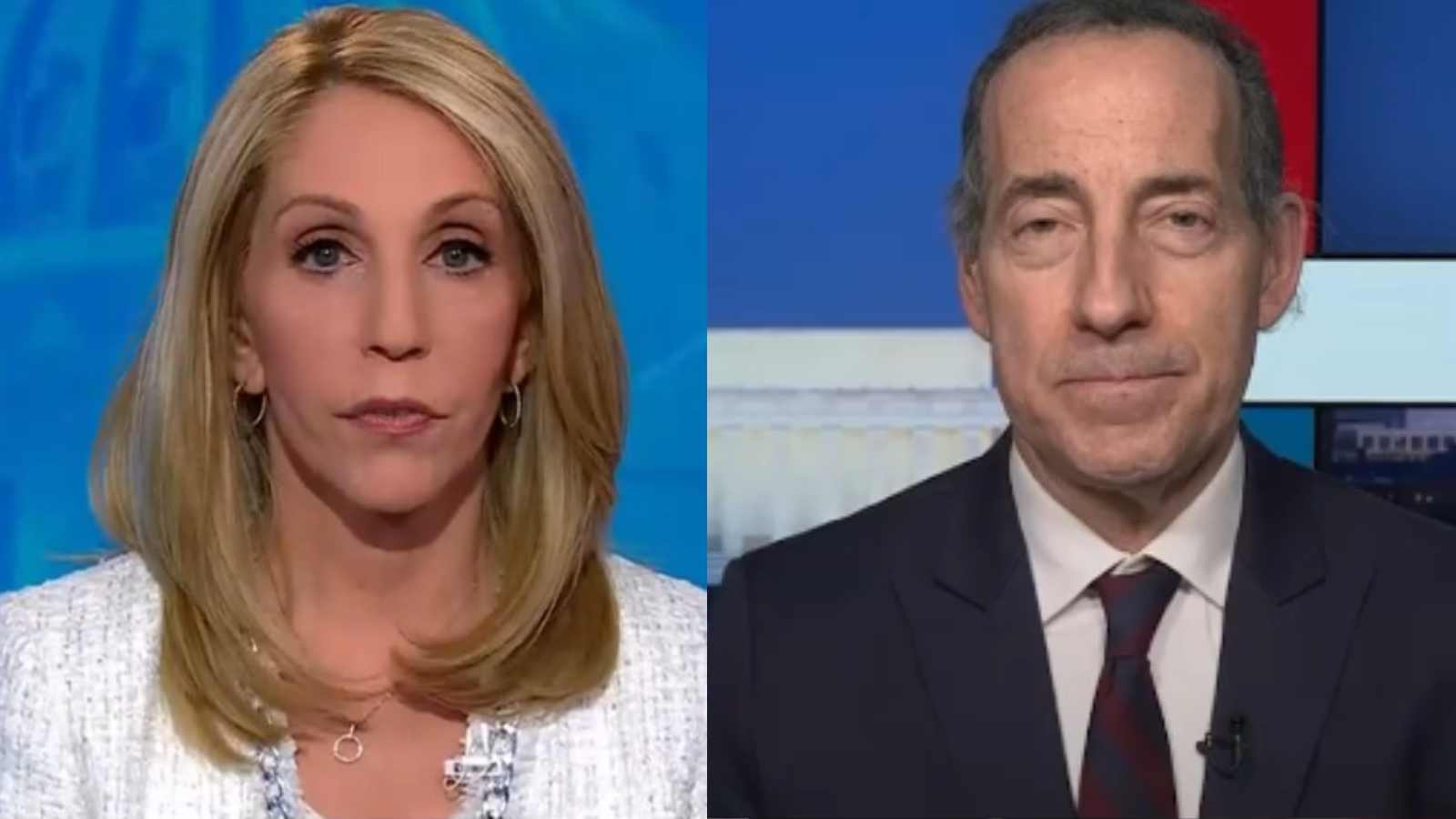
The tuxedoes were still hanging in closets, the remnants of half-finished cocktails were likely still sitting on tables in the evacuated ballroom of the Washington Hilton, and the sheer adrenaline of Saturday night’s terrifying breach was still vibrating through the city when the Sunday morning political autopsy began.
We are used to the Sunday show circuit being a place where talking points are polished and narratives are refined, but the interview between CNN’s Dana Bash and Representative Jamie Raskin felt different.
It felt like watching a collision between two worlds: one desperate to assign blame for a chaotic, violent reality, and another trying to hold on to the guardrails of civil discourse while the ground beneath them is being ripped apart.
Bash pressed Raskin on whether the sharp-edged language coming from the Democratic side of the aisle, the kind of rhetoric that frames political opponents as existential threats, bears some responsibility for the environment that allowed a gunman to charge toward a presidential event.
It wasn’t just a question; it was a mirror held up to the political establishment, forcing them to confront whether the words they use in the pursuit of power are inadvertently feeding the very fires they claim to abhor.
The Collision of Rhetoric and Reality
The exchange that followed captured the fundamental breakdown in how we discuss violence in America.
Dana Bash didn’t mince words when she set the stage for the questioning, asking Raskin directly, “Is it fair to look at the heated rhetoric coming from Democrats, labeling opponents as existential threats, and wonder if that language has created an environment where an incident like this becomes more likely? … Do you ‘think twice’ about political rhetoric after shootings like WHCD?”
Her question was pointed, stripping away the usual diplomatic fluff to get to the core of the discomfort many Americans feel. She was effectively asking if the words spoken at the podium are directly linked to the bullets fired at the gate.
It was a loaded inquiry, one that suggests the political establishment is not just an observer of our national decay, but an active participant in it.
By highlighting the framing of opponents as “existential threats,” Bash tapped into a vein of criticism that has been growing louder and more persistent, questioning whether our political vocabulary has become so inflammatory that it has lost the ability to de-escalate.
Representative Jamie Raskin’s response was immediate and focused, refusing to accept the premise that the language used by Democrats could be equated with the actions of a violent individual.
He pushed back, stating, “Dana, we have to distinguish between the language of political critique and the absolute rejection of political violence. When we call out authoritarianism or policies that threaten our democracy, we are doing our jobs. To suggest that describing a dangerous political reality is the same as inciting a gunman to commit an act of terror is a false equivalency that lets the true perpetrators off the hook.”
Raskin’s answer was a clear, firm line in the sand. He argued that the responsibility for the shooting lay entirely with the person who pulled the trigger, not with those who are tasked with holding power to account.
Searching for Clarity in the Noise
When you look at the reaction to this interview, you see the true state of our public discourse. It has become a performance art in which the goal isn’t to reach an understanding or to de-escalate tension, but to score points in an ongoing, never-ending culture war.
Raskin, for his part, navigated the interview with the practiced precision of a veteran legislator, seeking to steer the conversation back to the danger posed by the violence itself rather than the vocabulary used to describe his opponents.
But the persistence of the questioning revealed a media industry that is just as locked into these patterns as the politicians they cover. They are looking for the “gotcha” moment, the slip-up, the soundbite that confirms their audience’s pre-existing worldview.
It is a feedback loop that leaves very little room for the average person to breathe, think, or process the madness of these recurring security breaches. We are trapped in a cycle of outrage that feeds on itself, ensuring that we never actually address the root causes of our instability.
Perhaps the most jarring part of the entire ordeal is realizing how quickly we have become accustomed to this brand of uncertainty. The WHCA Dinner, a night meant to celebrate the First Amendment and the uneasy but essential relationship between the press and the presidency, became a site of gunfire.
View this post on Instagram
The fact that we are sitting here the next morning dissecting a television interview about “tone” instead of demanding a total overhaul of our security infrastructure is an indictment of our collective priorities.
We seem to have a strange psychological resistance to focusing on the logistics of safety, preferring instead to stay in the realm of the abstract, to talk about the “vibes” and the “rhetoric” because that allows us to stay in our political silos.
It is much easier to be angry at what someone said on a Sunday morning show than to admit that our system, from the top down, is currently unable to protect the people at its center.
If you are looking for a takeaway from the Bash-Raskin interaction, it isn’t about whether Bash was “biased” or whether Raskin was “defensive.” It is about the fact that we have run out of vocabulary for our reality.
We are using the language of a functioning, stable democracy to describe a country that is showing increasingly dangerous cracks. Every time we have an event like the one on Saturday night, the media reaches for the same playbook: invite the politicians on, ask them about the rhetoric, watch them dodge the question, and move on to the next crisis.
It is a script that has been written a thousand times before, and yet we keep performing it as if the audience doesn’t know exactly how it ends. The question remains: at what point do we stop watching the play and start asking who is responsible for the stage?
Until we shift our gaze from the microphones to the barricades, we are destined to keep having these same exhausting, unproductive conversations while the world outside grows darker and more unpredictable.
We are, quite simply, out of time for the polite fictions of political theater, yet we seem terrified to face the hard, cold reality of what has actually become of our public life.