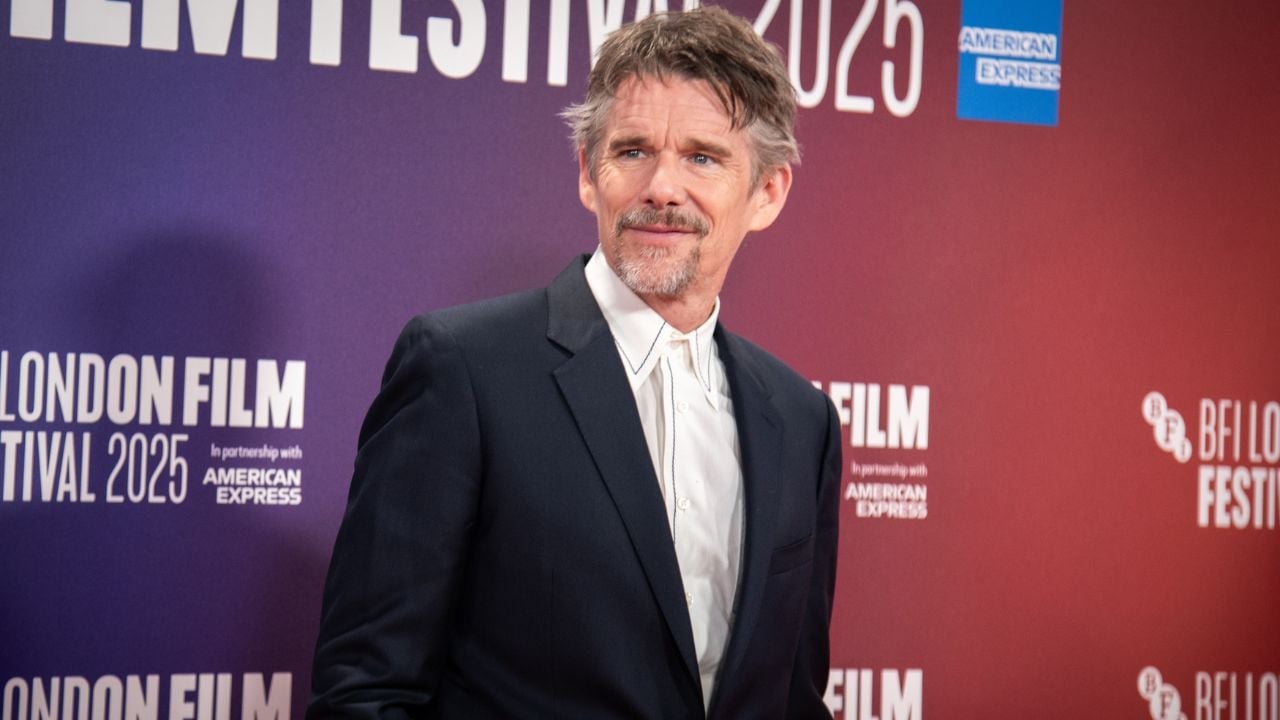
Ethan Hawke can point to much bigger movies in his career than Tape. The one-room Richard Linklater drama nevertheless occupies a place that Dead Poets Society, Before Sunrise and even Training Day do not.
Asked which film role had changed his life, Hawke chose the $100,000 production he made with then-wife Uma Thurman and longtime friend Robert Sean Leonard. “If I had to pick a film role that changed my life, it would be Tape,” he told the BBC.
The 2001 film confined its three actors to a motel room while their characters confronted conflicting memories of a sexual encounter from high school. Hawke was approaching 30 at the time and experimenting with digital filmmaking alongside Linklater, years before that production method became routine.
Hawke now describes Tape as his “entrance to adult acting.” Its six-day shoot also came immediately before he played rookie police officer Jake Hoyt opposite Denzel Washington in Training Day, giving him a burst of confidence before the performance that would earn him his first Oscar nomination.
‘Tape’ Had Six Days to Make One Motel Room Work
The stripped-down production left little room for the performances to drift. After approximately two weeks of rehearsal, Linklater and the cast shot the entire feature in six days using digital-video cameras.
Hawke told the BBC that the unfamiliar technology allowed the group to work differently from the way they had on conventional film sets. With only three actors and one motel room holding the audience’s attention, he said they needed to be “laser sharp, precise and funny.”
Hawke said he, Thurman and Leonard were already friends, allowing the rehearsal process to move into difficult material with unusual speed.
Linklater also saw another layer in pairing Hawke with Leonard. The two had famously played classmates in 1989’s Dead Poets Society, while Tape reunited them as men roughly a decade removed from high school and forced their characters to confront what their younger selves had done.
It Gave Hawke Confidence Before ‘Training Day’
He went from the intimate Linklater production directly into Antoine Fuqua’s Training Day, where he would spend much of the movie opposite Washington.
Hawke told the BBC that he felt grateful for the experience he had accumulated on Tape before encountering Washington’s intensity as a performer. He described Washington’s imagination and charisma as unlike anything he had previously experienced.
“Training Day put everything I had learned to the test,” Hawke said.
The test produced the biggest awards breakthrough of Hawke’s career up to that point. The Academy nominated him for Best Supporting Actor at the 2002 Oscars, while Washington won Best Actor for his performance as Alonzo Harris.
Hawke has since accumulated additional acting and screenplay nominations, but Training Day remains the movie that produced his first Oscar recognition.
Hawke Helped Turn Stephen Belber’s Play Into the Movie
Playwright Stephen Belber originally wrote Tape for the stage, and Hawke participated in a reading when the play was being considered as part of another theater project. That proposed pairing fell apart, but Hawke held onto the material.
When the low-budget digital initiative InDigEnt created an opportunity for another feature, Hawke returned to Belber’s play. Contemporary Playbill reporting says Hawke proposed Tape, offered to star and suggested Linklater as director. Thurman and Leonard subsequently joined him.
Belber later described Hawke as the driving force behind the screen version. Linklater likewise recalled in a 2001 interview that Hawke had sent him the play, reversing their usual dynamic in which Linklater approached Hawke with a role.
The Movie Cost About $100,000
The scale was tiny even by independent-film standards. The Directors Guild of America later put Tape‘s production budget at approximately $100,000.
Digital video made it possible to work quickly, shoot long stretches and build a feature around three established actors without the expense normally associated with a studio production.
The film runs approximately 86 minutes and unfolds essentially in real time. Hawke plays Vince, who secretly records his old friend Jon, played by Leonard, discussing a disputed sexual encounter with Amy, played by Thurman. Amy’s arrival forces both men to confront how differently the same event has been remembered.