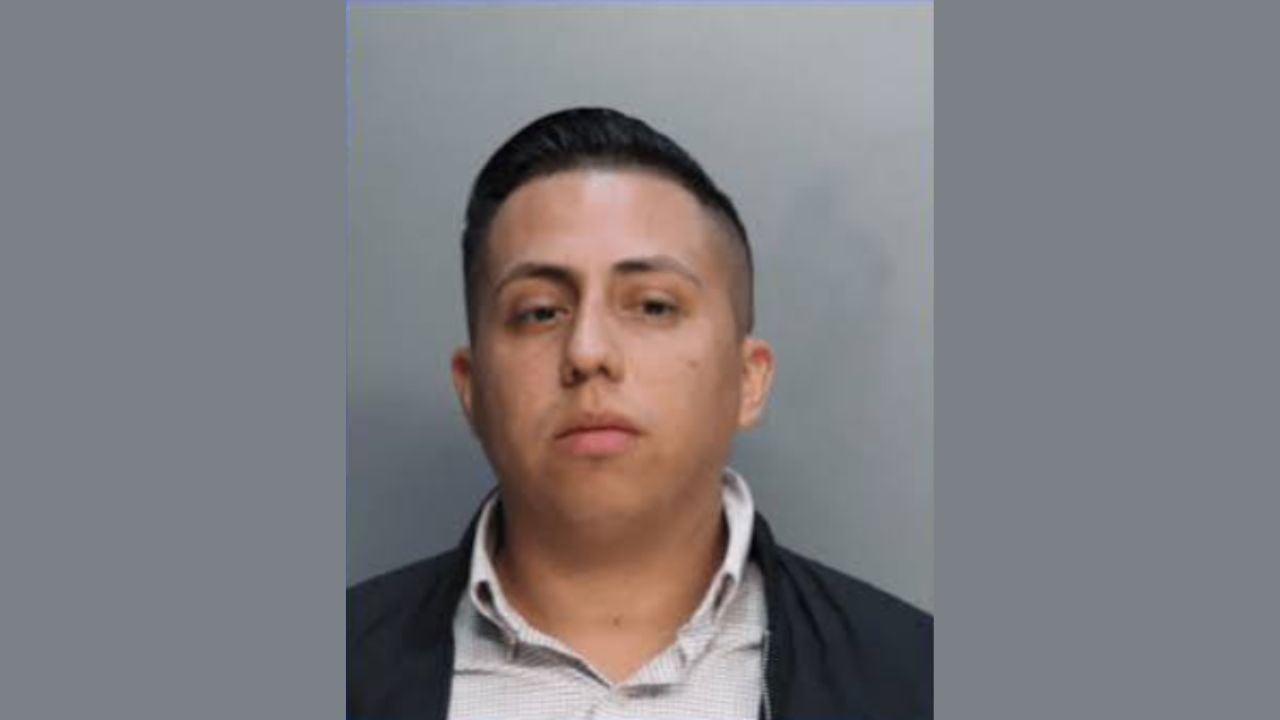
A South Florida bank teller is facing felony charges in two separate cases after investigators accused him of taking money through altered money orders and cash removed from the branch where he worked.
Jonathan Escobar, 36, was arrested September 14 over activity at the First Horizon Bank at 5901 Miami Lakes Drive. He had worked as a teller at the branch since June 22, according to Local 10 News.
One case involves four Amscot money orders totaling $4,000 that deputies say were taken from a customer’s account. A separate investigation found a $7,657.80 shortage in Escobar’s cash drawer and $11,000 in transactions involving Western Union money orders with actual face values of only $10 each.
Miami-Dade Sheriff’s Office records list one count of third-degree grand theft and one count of organized fraud involving $20,000 or less in each case. Escobar was being held at the Turner Guilford Knight Correctional Center on $10,000 bond when Local 10 reported the arrest. The charges are accusations, and he is presumed innocent unless proven guilty.
Four Amscot Money Orders Led to the First Case
@wsvn7news A Miami Lakes bank teller is accused of stealing more than $18,000 through missing cash and money order transactions, police said. Investigators said an audit found $7,657.80 missing from Jonathan Escobar’s cash drawer and 11 money orders worth $1,000 each cashed against a customer’s account. #MiamiLakes #Bondcourt #SouthFlorida ♬ original sound – WSVN 7News
The first arrest report concerns activity on September 8. Deputies accuse Escobar of taking four Amscot money orders with a combined value of $4,000 from a customer’s account.
Investigators say he later cashed the instruments and kept the proceeds. Surveillance cameras inside the branch recorded the transaction, according to the arrest report.
Authorities treated that allegation as a separate case from the larger group of transactions uncovered during the bank’s subsequent internal review.
An Audit Found $7,657.80 Missing From His Cash Drawer
Bank personnel audited Escobar’s teller drawer on September 11 and discovered a shortage of $7,657.80. A broader review then uncovered 11 Western Union money orders processed against an unsuspecting customer’s account.
Each money order had an actual face value of $10, but investigators say Escobar processed them for $1,000 each, creating another $11,000 in losses. The second investigation therefore identified $18,657.80 in missing or improperly obtained funds.
The 11 money orders represented only $110 in legitimate face value before being processed for a combined $11,000.
Investigators Found Six More Money Orders Before His Interview
Escobar returned to the branch on September 14 carrying a folder and was asked to meet with representatives from human resources and a bank investigator. Before the interview began, bank personnel found six additional money orders in his possession, each with a face value of $10.
According to the arrest report, Escobar admitted during the bank interview that he had cashed altered money orders against customer accounts and removed money from his cash drawer for personal use. Investigators also said he acknowledged reporting the drawer as balanced so the shortage would not be detected.
CBS Miami reported that law enforcement interviewed Escobar separately afterward. He was advised of his Miranda rights and invoked them before being taken into custody.
Customers Should Report Unfamiliar Account Activity Promptly
Customers should regularly compare withdrawals, transfers and other debits with transactions they actually authorized. Account alerts can provide notice of unusual activity before the next monthly statement arrives.
The Consumer Financial Protection Bureau advises customers to notify their bank or credit union promptly after discovering an unauthorized electronic transaction. When an unfamiliar transaction appears on a statement and the customer’s card or PIN was not lost or stolen, federal protections generally require notice within 60 days after the statement was sent.
Customers who spot missing money should preserve statements, transaction records and any available images of checks or other payment instruments before contacting the institution’s fraud department. The bank can then investigate the disputed activity and determine what protections apply to the specific type of transaction.
If unauthorized transactions continue, customers should contact their bank’s fraud department promptly and ask whether cards, account numbers, or online banking credentials need to be replaced or secured. Evidence of theft can also be reported to local law enforcement.