
Telemarketers urged Medicare beneficiaries to accept braces they did not need, while software helped turn those calls into medical orders falsely claiming that doctors had examined patients. The resulting scheme generated more than $1 billion in fraudulent claims to Medicare and other insurers, according to federal trial evidence.
Brett Blackman, 43, of Johnson County, Kansas, owned HealthSplash, which operated the DMERx prescription platform. A federal judge in Miami sentenced him to 19 years in prison on Oct. 14, 2026, after a jury convicted him of three healthcare fraud-related conspiracies.
The operation connected overseas call centers, equipment suppliers, pharmacies and telemedicine companies whose practitioners signed the orders. Prosecutors documented sham contracts and invoices used to disguise payments for those orders.
The Justice Department announced the sentence on Oct. 15. Its account of the evidence includes an undercover investigation showing what happened when a supposed Medicare patient agreed to receive braces through the network.
Call Centers Pushed Braces and Collected Medicare Information
The superseding indictment describes a conspiracy operating from at least February 2015 through October 2020. Advertisements sent by mail and shown on television, along with calls from overseas telemarketing centers, offered beneficiaries free or inexpensive orthopedic braces, pain creams and other products.
Callers gathered identifying information and encouraged people to accept products without determining whether they were medically necessary. Suppliers and pharmacies sought items with relatively high reimbursement rates, and the information was passed along to obtain signed medical orders that would support insurance claims.
The DMERx Platform Turned Sales Leads Into Doctors’ Orders
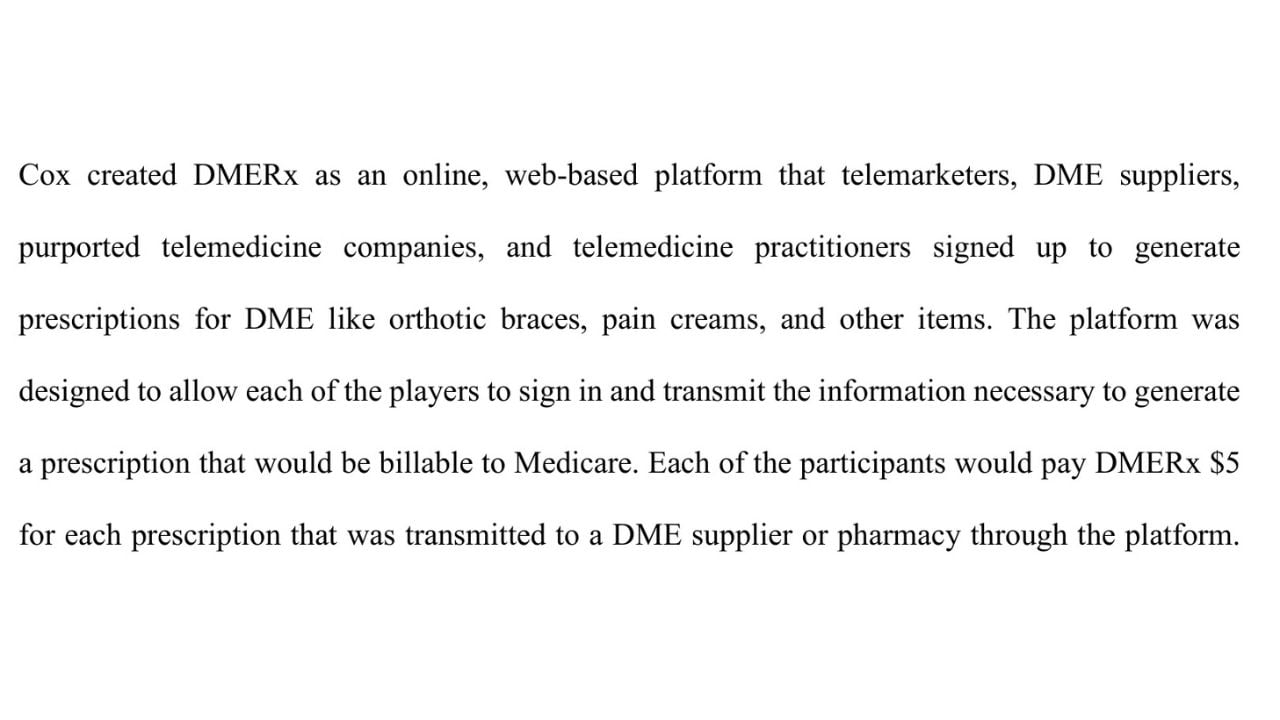
HealthSplash acquired Power Mobility Doctor Rx LLC, known as DMERx, in September 2017. Blackman’s company used the web platform to connect telemarketers and suppliers with purported telemedicine businesses whose practitioners signed orders for the requested equipment.
A December 2025 government sentencing memorandum in co-defendant Gary Cox’s case describes a $5 fee for each prescription transmitted through DMERx to an equipment supplier or pharmacy. The processing fee was separate from payments for signed doctors’ orders that prosecutors identified as kickbacks.
Rather than documenting real examinations, the software generated standardized medical narratives claiming doctors had assessed patients. Prosecutors established that some practitioners signed after brief calls and others approved orders without communicating with beneficiaries at all.
An Undercover Prescription Claimed an Exam That Never Happened
An undercover agent posing as a Medicare beneficiary was contacted by an overseas call center and encouraged to accept multiple orthopedic braces. The agent’s information went through DMERx, where a practitioner signed an order that purported to support the equipment.
According to the trial evidence, the paperwork said the physician had conducted tests requiring an in-person examination. The doctor had not performed those tests and had not even spoken with the undercover agent. The order presented a clinical assessment that never occurred.
More Than 1,200 Beneficiaries Had at Least 21 Braces Billed
Federal trial evidence tied fraudulent orthopedic-brace claims to more than 346,000 Medicare beneficiaries. A Justice Department trial exhibit breaks down the volume: its table identifies 1,236 beneficiaries for whom at least 21 braces were billed through the scheme. Across the identified beneficiaries, the average was approximately four braces.
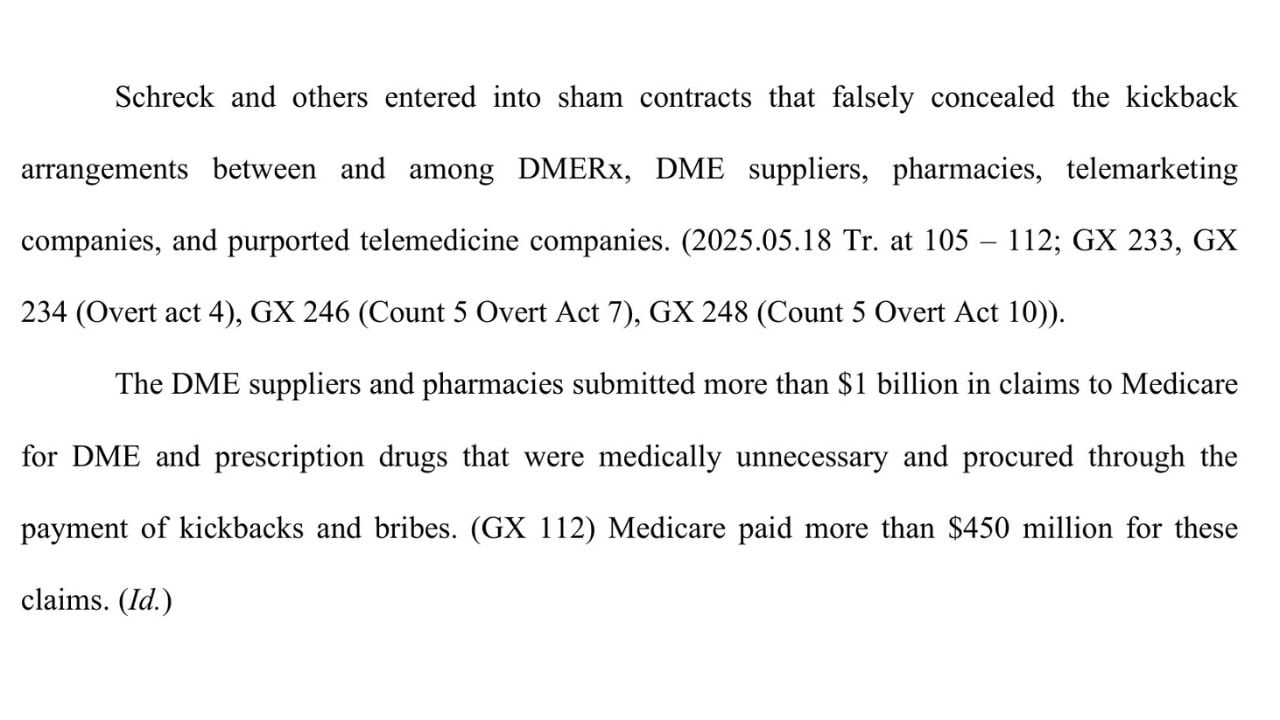
Suppliers and pharmacies submitted more than $1 billion in fraudulent claims to Medicare and other health benefit programs. Those programs and insurers actually paid more than $450 million, according to the October 2026 sentencing announcement.
False Invoices and Edited Orders Hid the Kickbacks
Prosecutors documented efforts to disguise payments for doctors’ orders as legitimate business transactions. The indictment describes an April 2015 email sending Blackman invoices that listed marketing and advertising services, even though the accompanying communication identified the payments as being for medical orders.
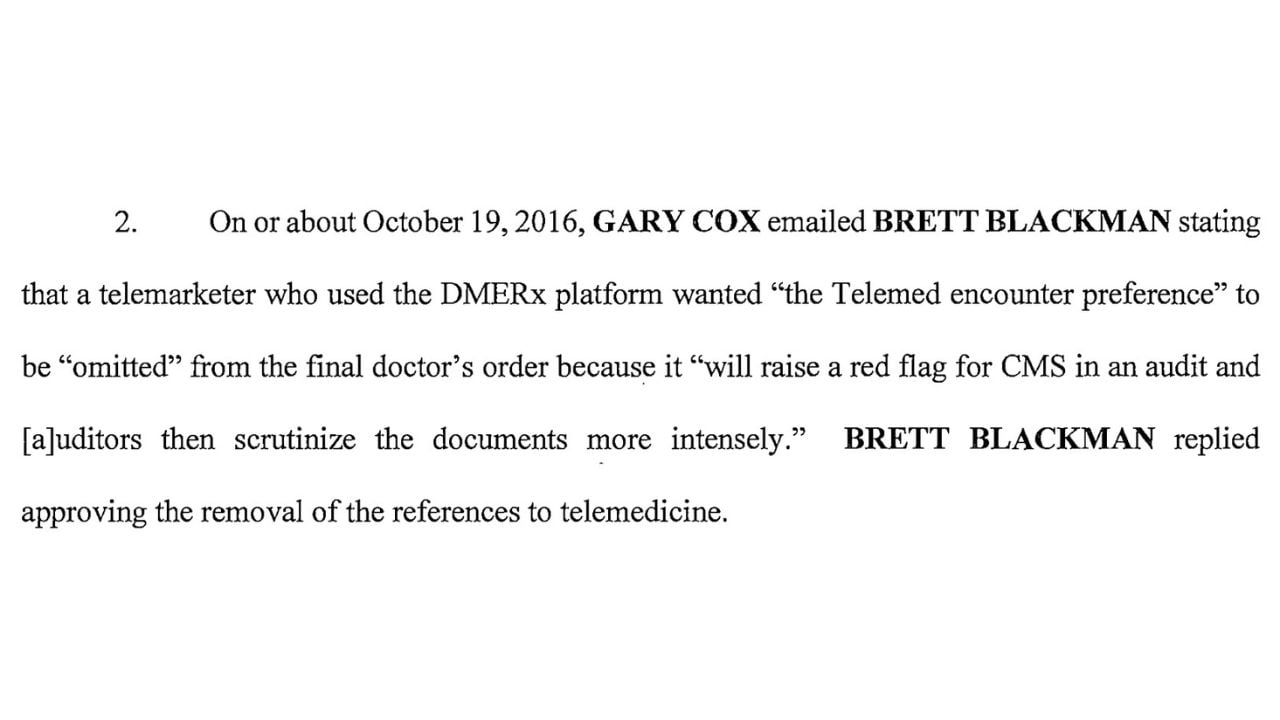
The indictment identifies an October 2016 email in which Gary Cox told Blackman that a telemarketer wanted telemedicine references removed from doctors’ orders to avoid increased Medicare audit scrutiny. Blackman replied approving that change. The government’s sentencing memorandum also describes templates claiming physical examinations had taken place and varied clinical notes intended to make orders appear individualized.
Blackman Received 19 Years; Two Other Executives Were Sentenced
A federal jury found Blackman guilty on May 13, 2026, of conspiracy to commit healthcare fraud and wire fraud, conspiracy to pay and receive healthcare kickbacks, and conspiracy to defraud the United States and make false statements involving healthcare matters. His restitution and forfeiture obligations are to be determined by the court.
Gary Cox, who previously led the company operating DMERx, received 15 years in December 2025 and was ordered to pay more than $452 million in restitution. Gregory Schreck, a HealthSplash vice president who pleaded guilty in February 2025, received an 18-month prison sentence on Oct. 16, 2026, according to subsequent court reporting.
The FBI, Department of Health and Human Services Office of Inspector General, Veterans Affairs Office of Inspector General and Defense Criminal Investigative Service investigated the scheme.
How Medicare Beneficiaries Can Spot Unnecessary Brace Claims
Medicare generally covers qualifying arm, leg, back and neck braces when they are medically necessary and ordered by an authorized healthcare provider. An unsolicited caller promising free equipment is not a substitute for a medical evaluation. Do not share a Medicare number with an unfamiliar telemarketer just to obtain products that your own provider has not recommended.
Review the Medicare Summary Notice, or the claims history in a secure Medicare.gov account, for braces and other supplies you did not request or receive. Someone enrolled in a Medicare Advantage plan should also review the plan’s claims explanations.
Report unexplained charges or suspected misuse of a Medicare number to 1-800-MEDICARE (1-800-633-4227). Keep claim notices, supplier names, unexpected delivery information and any messages connected to the offer.