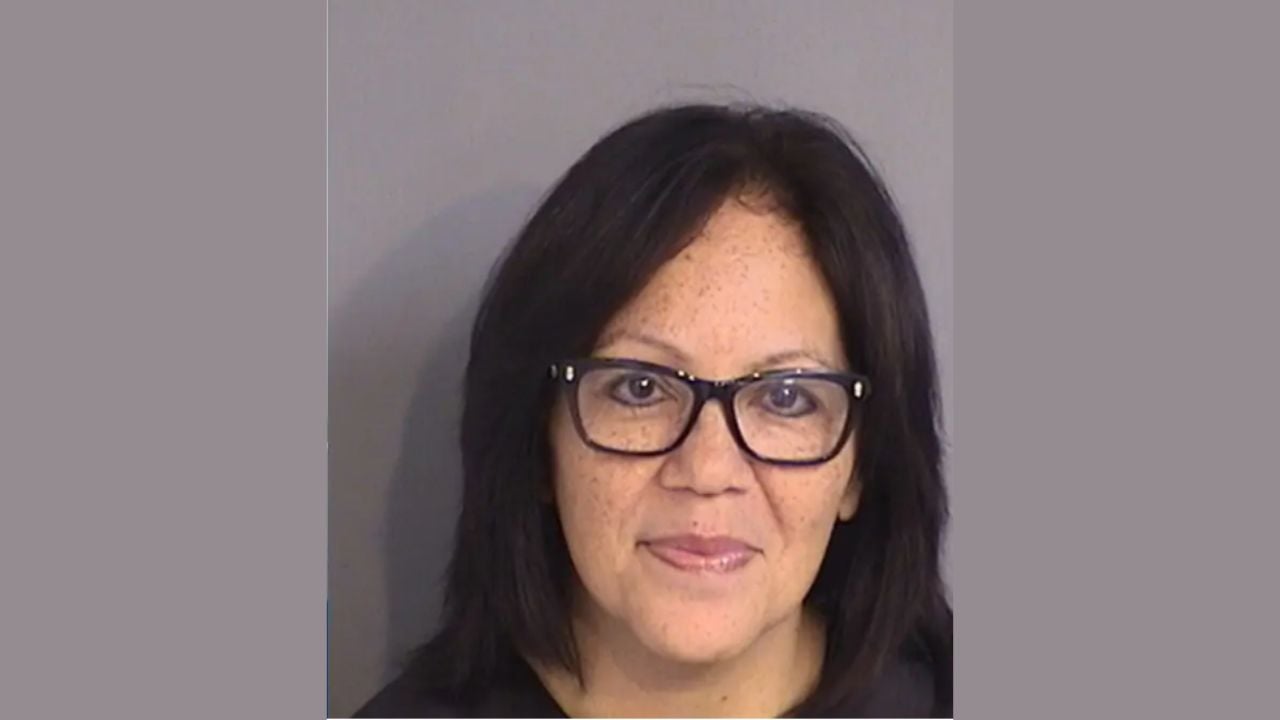
Florida’s Commission on Ethics fined and formally censured Kissimmee Mayor Jackie Espinosa on October 23 over city relief grants awarded to businesses connected to her family.
The $2,000 civil penalty was approved two days after she was arrested on felony charges involving $50,000 distributed through the same program.
Espinosa had promoted Kissimmee’s Business Boost 2.0 program and advocated directing more federal pandemic-relief money toward small-business grants. Three companies owned or controlled by her and her family subsequently received payments in November 2025.
Espinosa has pleaded not guilty to grand theft and organized scheme to defraud. Her attorney maintains that city employees administered the program and that the mayor did not act with criminal intent. The criminal prosecution remains separate from the ethics proceeding.
Ethics Commission Approved a $2,000 Fine and Public Censure
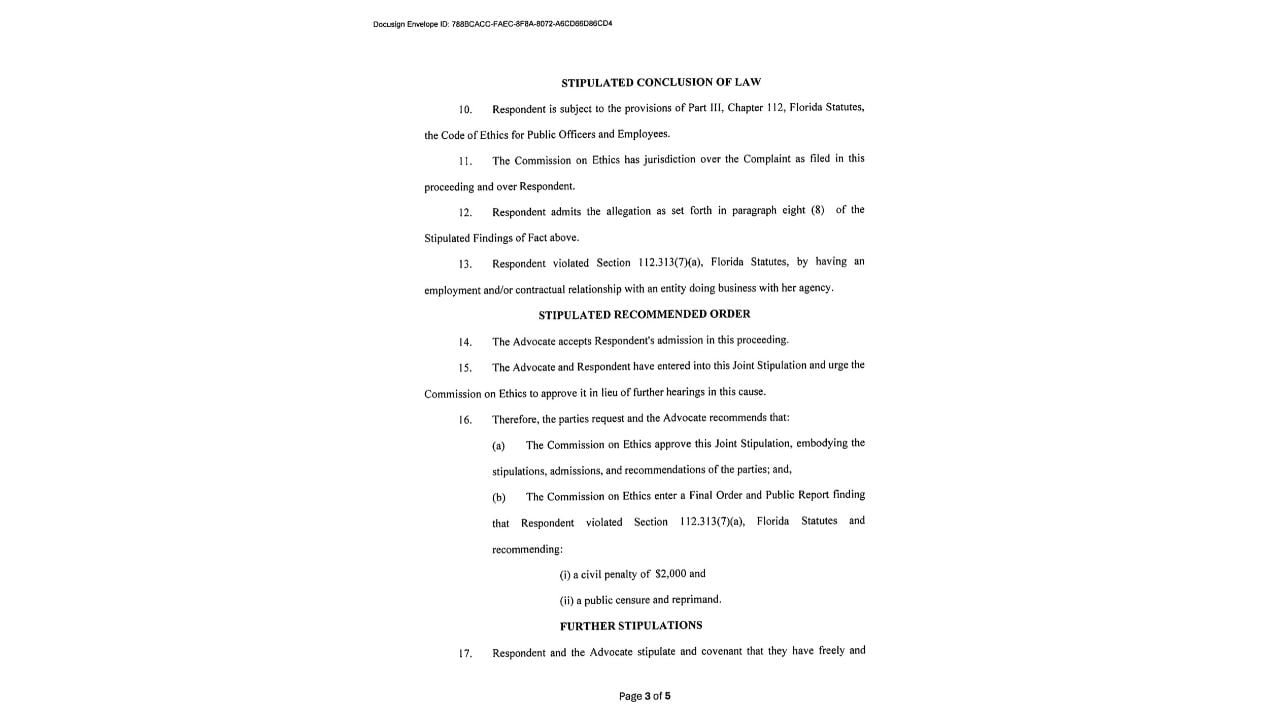
The joint stipulation Espinosa signed on September 15 was approved unanimously on October 23, according to FOX 35 Orlando.
The commission’s official materials identify the consolidated proceeding as complaint numbers 26-034 and 26-035. Espinosa admitted violating Section 112.313(7)(a) of Florida law by having an employment or contractual relationship with an entity doing business with her government agency.
The signed agreement also establishes that the commission’s votes concerning the grant program occurred before her businesses submitted applications. Espinosa did not personally vote to approve individual awards to her companies or anyone else’s businesses, and the agreement states that no qualified applicant was denied funding.
It expressly provides that the settlement is not an admission of criminal conduct, corrupt intent or fraudulent intent.
Mayor Advocated Moving More Relief Money Into Business Grants
Kissimmee used American Rescue Plan Act funds to create Business Boost 2.0, offering financial assistance to local companies affected by the pandemic. The city’s published program information describes awards of $5,000 to $20,000, based on business size, for qualifying companies with documented financial hardship.
According to the selected FDLE affidavit excerpts, the program’s earlier design included business training, entrepreneurial education, marketing and direct financial grants. City Manager Mike Steigerwald told investigators that approximately $350,000 was initially allocated to grants, but Espinosa pressed for more money to reach businesses directly.
The commission ultimately allocated $875,000 to direct grants and $125,000 to marketing. Steigerwald said Espinosa led the discussion, arguing that business owners wanted financial assistance rather than training. In September 2025, she also advocated simplifying application requirements to make the money easier for businesses to obtain.
Three Family Businesses Received $50,000 From the Program
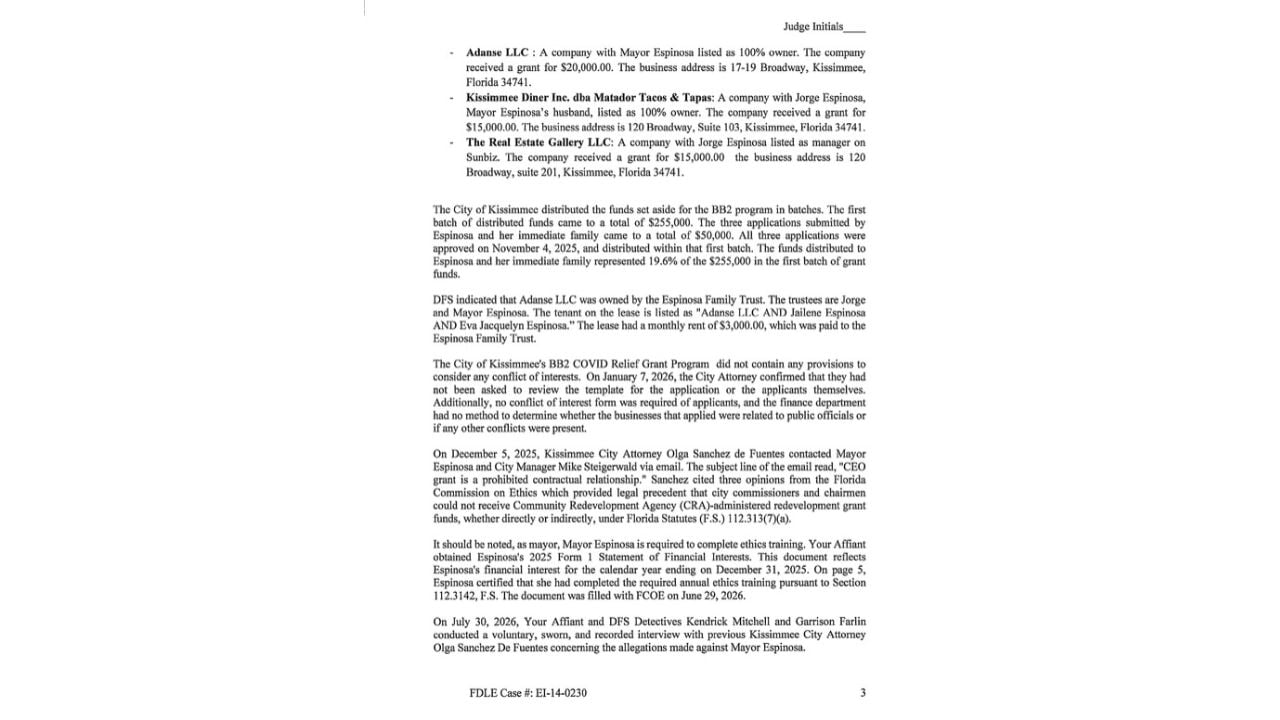
Adanse LLC received $20,000. The affidavit initially lists Espinosa as its sole owner but later identifies the Espinosa Family Trust as the owner, with Espinosa and her husband Jorge named as trustees. Kissimmee Diner Inc., which formerly operated as Matador Tacos & Tapas and was listed under Jorge Espinosa’s ownership, received $15,000. The Real Estate Gallery LLC, which lists Jorge Espinosa as manager, received $15,000.
All three applications were approved on November 4, 2025. Investigators reviewed bank records showing that the grants were paid on November 7 into accounts associated with the businesses.
The three awards accounted for 19.6% of the program’s initial $255,000 distribution. Kissimmee’s November announcement reported that 21 local businesses had received grants in that first batch, with another 12 businesses approved for $150,000 in additional payments.
City Employee Questioned the Applications Before Approval
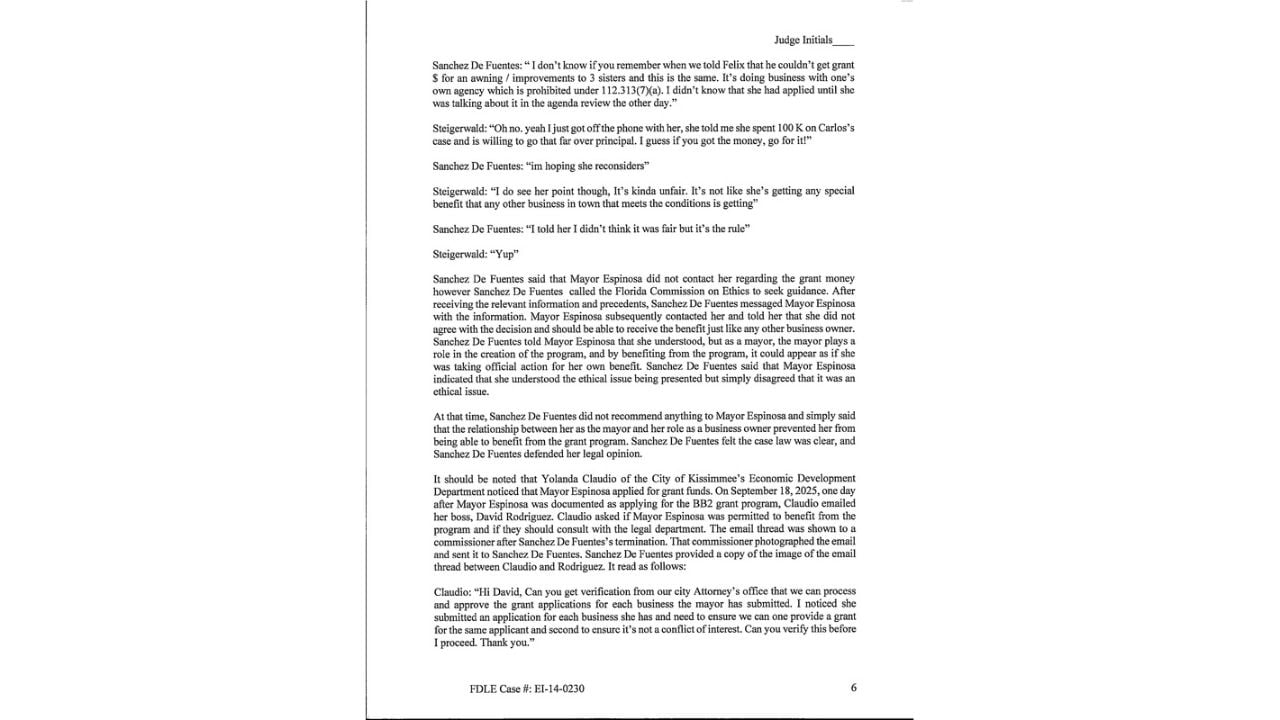
City employee Yolanda Claudio noticed the applications on September 17, 2025, when the grant program opened. The following day, she emailed Economic Development Director David Rodriguez to ask whether the mayor could receive multiple awards and whether the applications created a conflict of interest.
The email reproduced in the FDLE affidavit requested verification from the city attorney’s office before Claudio proceeded. Rodriguez responded that owners of separate businesses operating from different addresses could apply for individual grants. His responses addressed the multiple-business question but did not resolve Claudio’s concern about the mayor’s public office.
Claudio told investigators that she stopped processing the three applications while awaiting guidance. Rodriguez later confirmed that he personally reviewed and approved them. He said the program itself contained no rule excluding the mayor’s businesses and that he believed Espinosa was responsible for seeking ethics advice about her own participation.
Former City Attorney Olga Sanchez de Fuentes told investigators that her office had not been asked to review the program’s application template or its applicants. On December 5, after the grants had been paid, she informed Espinosa that receiving the money created a prohibited conflict and cited Florida ethics opinions supporting her interpretation.
City Manager Steigerwald also advised returning the funds, according to the affidavit. Investigators allege that Espinosa refused, while maintaining that the grants were available to qualifying businesses and that her companies had suffered pandemic-related losses. She disputed the attorney’s interpretation and believed the advice was influenced by personal animosity.
State Audit Identified Another $40,000 Paid to Tenant Businesses
The Florida Department of Financial Services reviewed the city’s use of grant money and identified seven businesses located in properties owned or managed by Espinosa’s family that received a combined $90,000, according to the department’s October 21 announcement.
That figure includes the $50,000 paid to three family-connected companies. The remaining $40,000 went to four separate tenant businesses operating in family-owned or managed properties, with each receiving $10,000. The tenant awards were not payments directly to the mayor’s three companies.
Espinosa Faces Two Felonies and Was Released on $70,000 Bond
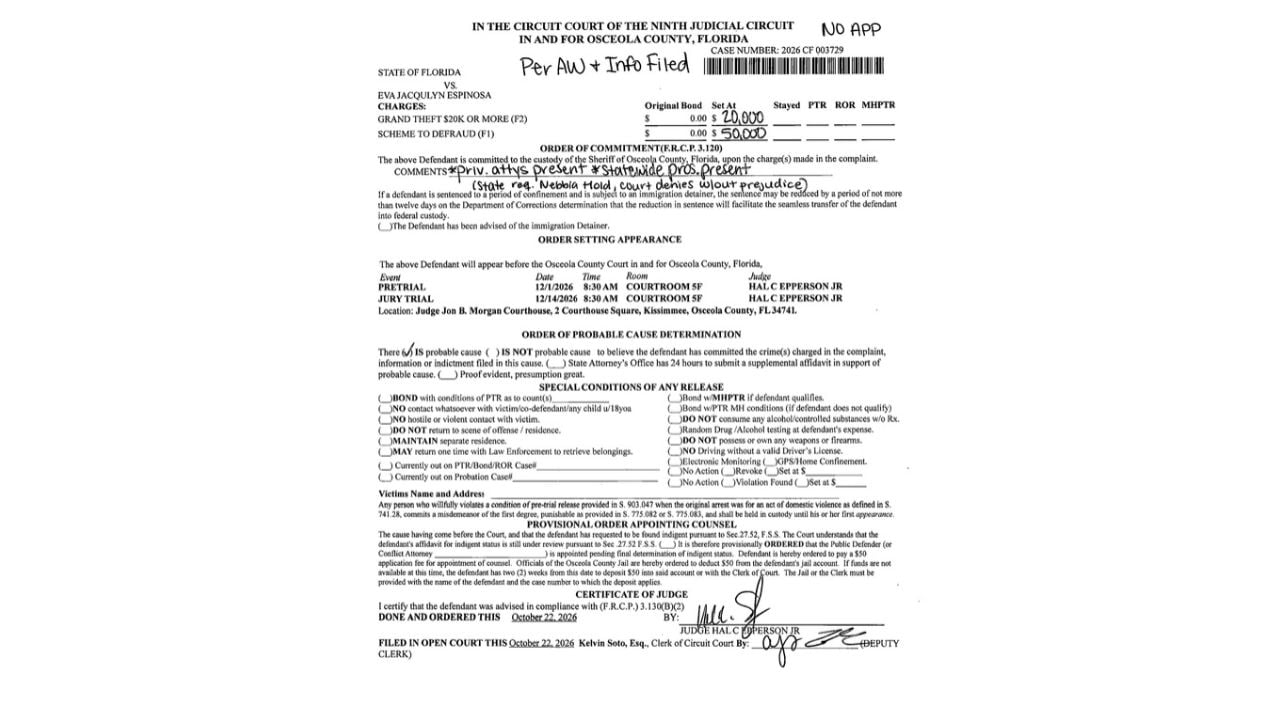
Espinosa was arrested on October 21. Prosecutors filed a first amended charging document the following day in Osceola County Circuit Court, case 2026 CF 003729, alleging grand theft involving property valued at $20,000 or more, a second-degree felony, and an organized scheme to defraud involving at least $50,000, a first-degree felony.
Her attorney, Migdalia Perez, filed a written not-guilty plea on October 21, waived arraignment and demanded discovery from prosecutors. Perez has maintained that the case concerns a grant program approved in public and administered through city staff rather than a criminal scheme.
At Espinosa’s October 22 initial appearance, Circuit Judge Hal C. Epperson Jr. set bond at $20,000 for grand theft and $50,000 for the fraud charge. She was subsequently released after posting the combined $70,000 bond, according to News 6.
The court docket lists a pretrial conference for December 1 and a jury trial setting for December 14. Espinosa filed a waiver of personal attendance at the pretrial conference on October 23. She remains presumed innocent unless proven guilty.
Espinosa Remains Mayor as Kissimmee Reviews the Grants
The arrest did not automatically remove Espinosa from office. The city said its succession process had not been triggered, and Vice Mayor Angela Eady would perform certain mayoral duties during Espinosa’s absence, according to WFTV. City Manager Steigerwald also authorized an internal review of the Business Boost 2.0 program.
The controversy had already reached the Kissimmee City Commission. Following an outside investigation that recommended impeachment proceedings, commissioners divided 2-2 on whether to move the process forward. The vote left the proposed action stalled before the October criminal charges and final state ethics decision.
Suspected conflicts of interest involving Florida public officials can be reported to the Florida Commission on Ethics. The commission requires sworn complaints based on personal knowledge or other non-hearsay information and does not accept anonymous submissions.