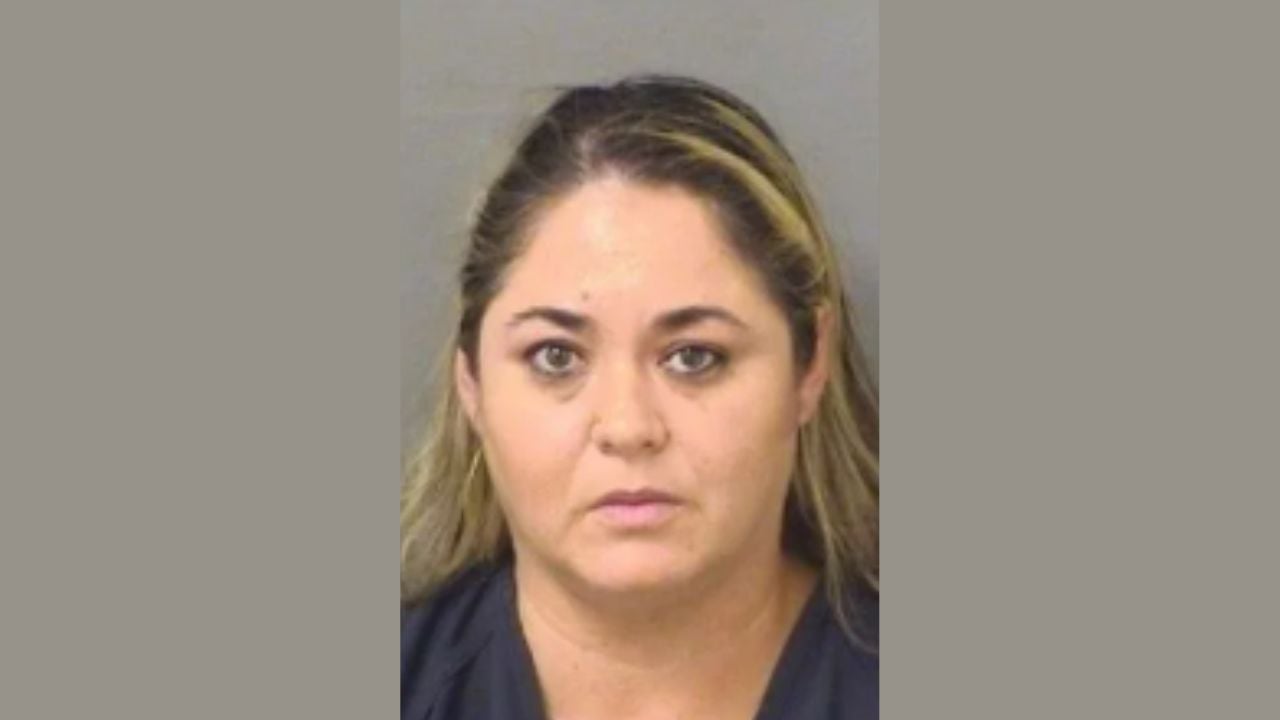
A Florida property manager is accused of diverting more than $100,000 in tenant payments while altering apartment records to conceal money that investigators say never reached the company that owned the units.
Jessyka May Hernandez Ortega, 45, worked as a property manager at the Lucaya community in Delray Beach. According to a Delray Beach Police probable-cause affidavit filed in Palm Beach County court, her duties included collecting rent and move-in payments, providing receipts, depositing the money and entering tenant information into the Yardi property-management system.
The case surfaced after an audit found residents listed as delinquent even though some produced receipts and money-order records showing they had already paid. Detectives then began comparing tenant records with bank and money-order information.
Hernandez Ortega was arrested Sept. 24. Court records list grand theft and organized fraud allegations against her. The cases remain pending.
An Audit Triggered Questions About Tenant Payments
The association began auditing leases in May 2025 to compare paper records with information entered in Yardi. Investigators said Hernandez Ortega resigned after the review began and eventually stopped reporting to work despite efforts to accommodate modified hours she requested.
A regional manager who took over her duties began sending delinquency letters to tenants whose Yardi accounts showed unpaid balances. Residents then started coming to the office with receipts and money-order records showing they had already submitted payments.
Karadi told police that Hernandez Ortega completed receipts when she accepted payments, but alleged that the receipt books disappeared when she left. The company therefore had to rely on records retained by residents and information obtained from money-order companies and banks.
Detectives obtained sworn statements from 22 residents. The affidavit says Delray Beach officers provided Creole and Spanish translation during some interviews. Some residents said they completed their own money orders, while others said they handed them over blank and allowed Hernandez Ortega to help fill them out.
The detective wrote that payments left in the office deposit box or handed to another employee still passed through Hernandez Ortega because she was responsible for entering payments in Yardi and depositing them into the company account.
Investigators Say Payments Were Shifted Between Tenant Ledgers
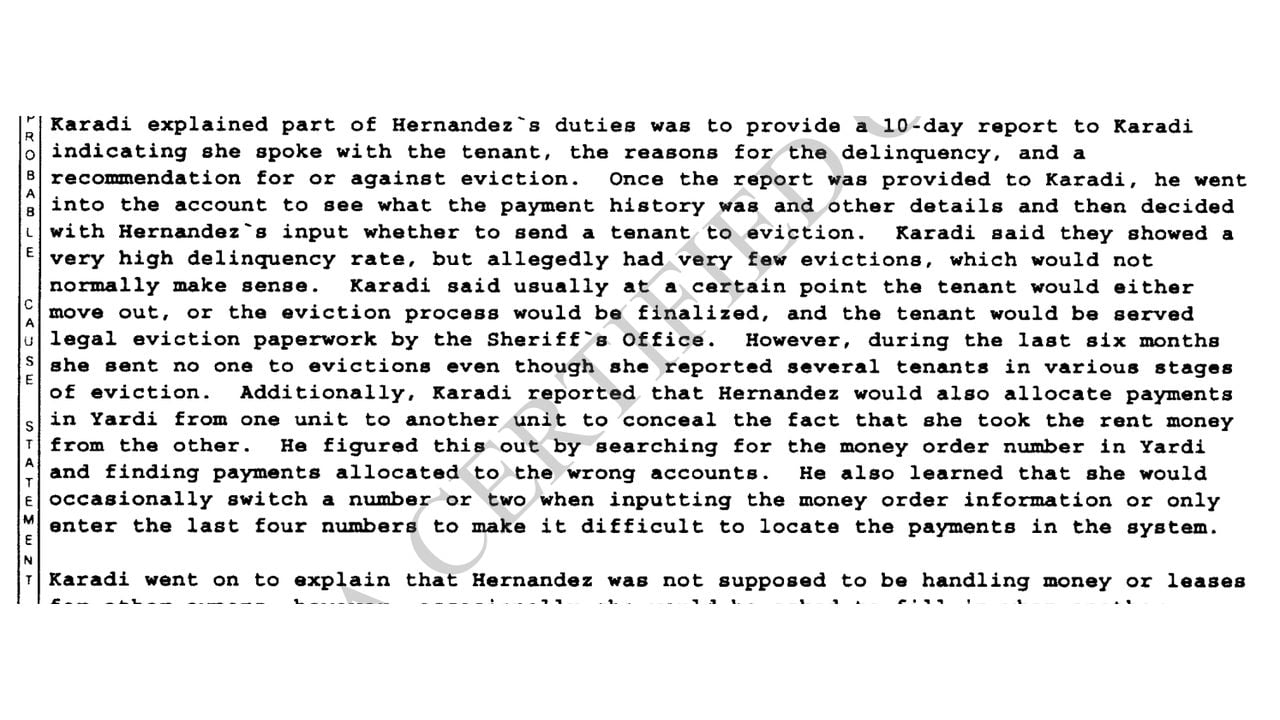
Karadi told police that Hernandez Ortega sometimes allocated a payment associated with one unit to another tenant’s account. Investigators said searches using money-order numbers revealed payments credited to people who had not actually made them.
The affidavit also alleges that money-order information was made more difficult to locate by changing one or two digits or entering only the final four numbers in Yardi.
Karadi raised separate concerns about the property’s eviction pattern. He said Lucaya appeared to have a high delinquency rate but unusually few completed evictions. According to the affidavit, Hernandez Ortega had reported several residents as being in various stages of eviction even though no tenants had been sent through the eviction process during the previous six months.
In one example, investigators alleged that occupants were moved from one unit to another in the system so the original unit’s delinquent balance could be written off. The affidavit says payments connected to that account were then credited elsewhere.
Police described another arrangement involving units owned by a different person in the Lucaya community. The affidavit alleges Hernandez Ortega collected move-in money from tenants of those units, kept the funds and later used rent collected from Prashkovsky tenants to cover amounts owed to the other owner. Investigators said payments later moved in the opposite direction as well, mixing money connected to units owned by separate entities.
Bank Records Showed Hundreds of Money-Order Deposits
Detectives subpoenaed records from Wells Fargo, Bank of America, JPMorgan Chase, Zelle and other financial sources as they attempted to trace the tenant payments.
The affidavit says JPMorgan Chase reported finding no accounts for Hernandez Ortega during the requested period. Wells Fargo produced records for multiple accounts in her name, while Bank of America produced records for a business account belonging to Jessyka Hernandez LLC.
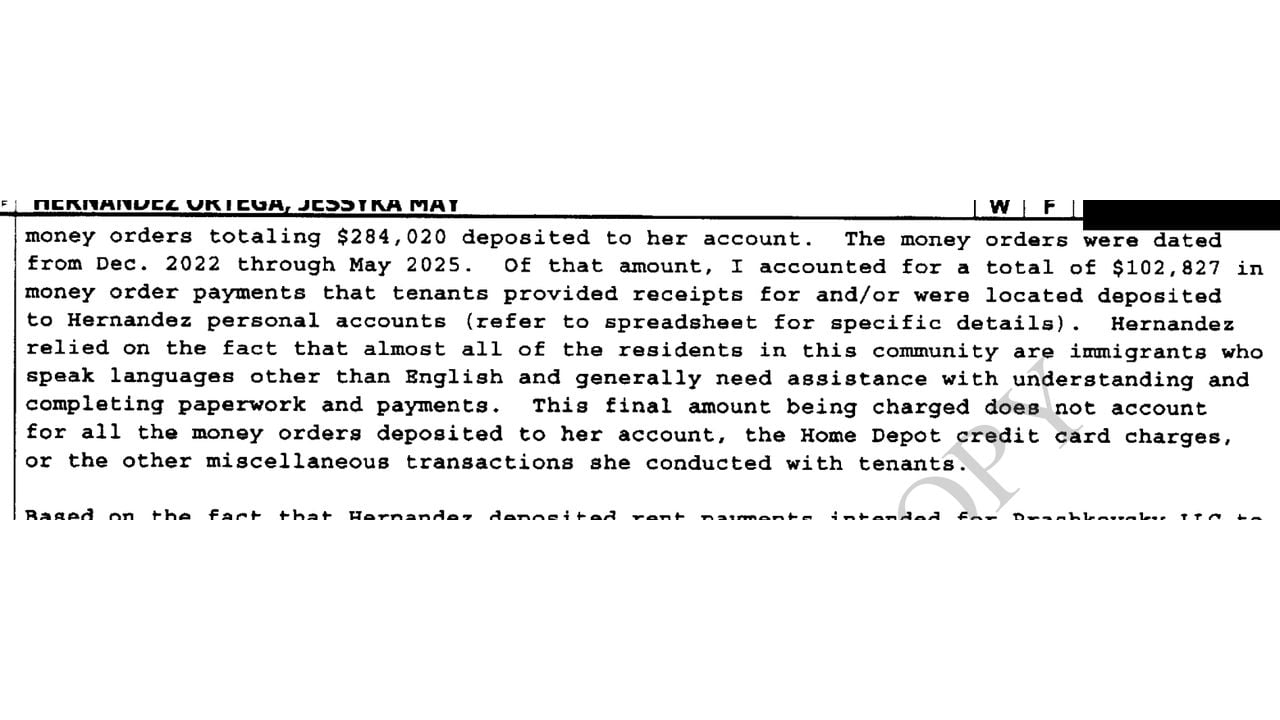
Investigators said the records contained hundreds of money-order deposits. Many were signed by Hernandez Ortega and contained information connected to her, while others carried tenant names, addresses or unit information that helped detectives identify where particular payments had originated.
In the detective’s final accounting, 764 money orders totaling $284,020 had been deposited to Hernandez Ortega’s accounts between December 2022 and May 2025. Investigators did not allege that all $284,020 represented stolen tenant money. Instead, the affidavit says detectives specifically accounted for $102,827 in tenant money-order payments through receipts supplied by residents and deposits found in her personal accounts. That was the amount used for the criminal allegations.
The detective wrote that the $102,827 figure did not include every money order uncovered during the investigation, alleged Home Depot charges or several other questioned transactions involving tenants.
The Affidavit Also Describes Insurance, Notary and Home Depot Allegations
One resident told police that Hernandez Ortega helped him with renter’s insurance and vehicle insurance. The affidavit says he paid $900 in cash for vehicle insurance and gave her his vehicle title, but later discovered the vehicle had not been insured. Investigators said they could not trace the cash payment.
Another tenant told detectives she paid Hernandez Ortega for renter’s insurance but discovered after a fire caused a total loss in her unit that the insurance had never been obtained. The detective wrote that investigators were unable to locate that particular payment.
The Lucaya community also held an annual event that was free to residents but required notarized paperwork for certain activities. According to the affidavit, the association discovered Hernandez Ortega had allegedly been charging residents $20 to notarize those forms even though the service was supposed to be provided without charge.
Investigators also examined purchases made with a Prashkovsky Home Depot credit card. The affidavit says orders were placed under a different name but records connected them to Hernandez Ortega through her email and delivery information. Karadi told police the items, which included cleaning supplies, were unauthorized and were not purchased for the benefit of the community.
Court Records List Two First-Degree Felony Allegations
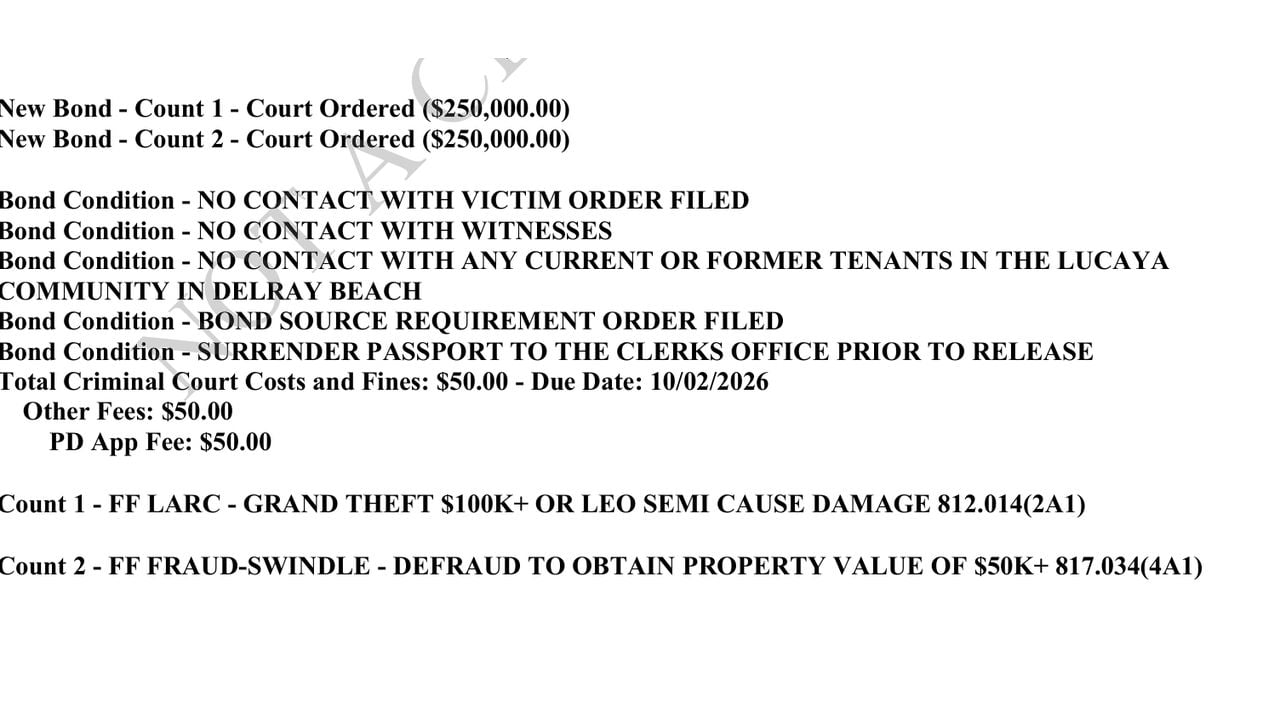
The arrest warrant lists grand theft involving property valued at $100,000 or more under Florida’s theft statute and organized fraud involving an aggregate value of $50,000 or more under the state’s Communications Fraud Act. Both are first-degree felony allegations.
The warrant was signed Sept. 8, and Palm Beach County court records show Hernandez Ortega was arrested Sept. 24. The case, 50-2026-CF-006863-AXXX-MB, remained open when the docket was reviewed Sept. 29.
At her Sept. 25 first appearance, the court set bond at $250,000 on each count, for a combined $500,000. The judge also ordered Hernandez Ortega to have no contact with the alleged victim, witnesses or any current or former tenants in the Lucaya community.
The court imposed a bond-source requirement and ordered Hernandez Ortega to surrender her passport to the clerk’s office before release. The clerk’s bond page listed both court-ordered bonds as open when reviewed Sept. 29.
The docket lists a 30-day return hearing for Oct. 24 and an initial case conference for Nov. 19. The allegations have not been proven in court.
Renters Can Preserve a Record of Payments
The Consumer Financial Protection Bureau recommends keeping dated proof of payments when disputing inaccurate information in a rental background check. Supporting documents can be useful when a report incorrectly shows rent or another housing debt as unpaid.
For people who pay with postal money orders, USPS advises customers to complete the money order and keep the receipt so the payment can be tracked. Postal regulations also instruct purchasers to fill in the names and addresses of both the payee and purchaser rather than leaving those fields blank.