
An elderly California couple who turned to a former Disney actor for help protecting their retirement savings say the gold coins he recommended were sold to them at prices far above their actual value.
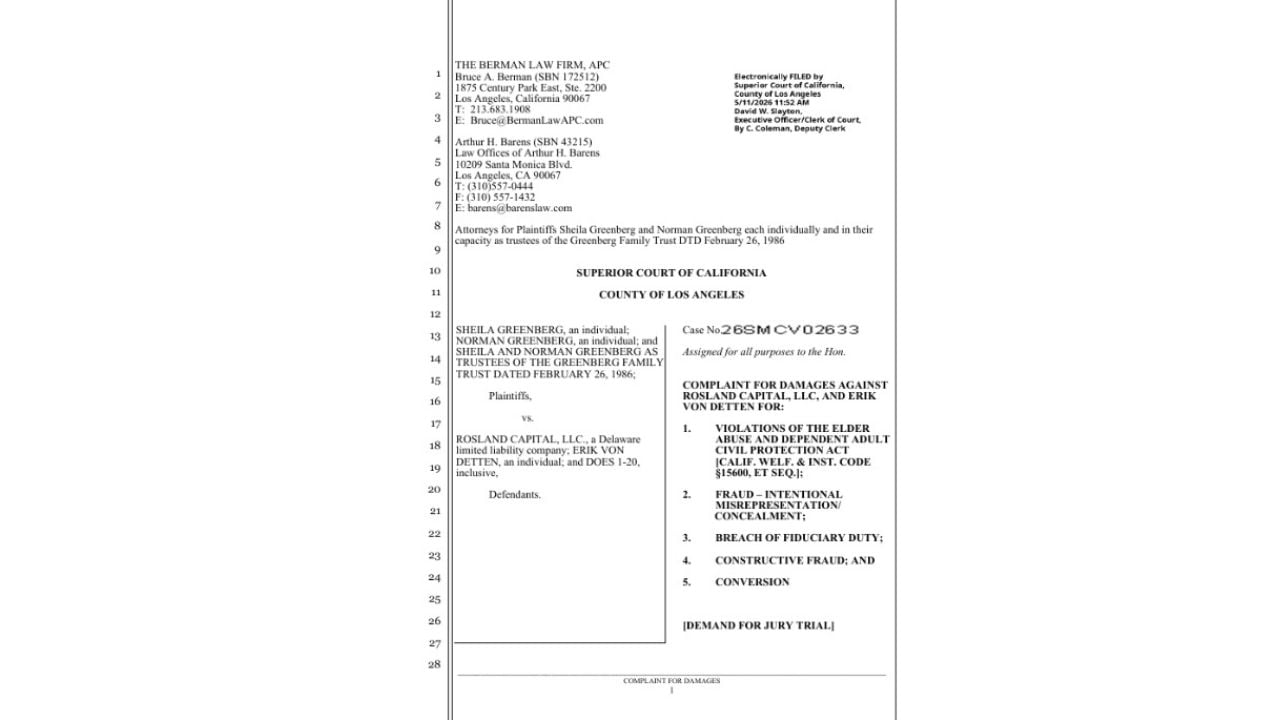
Sheila Greenberg, 85, and her husband, Norman Greenberg, 97, of La Jolla, filed a lawsuit against Erik von Detten and precious-metals dealer Rosland Capital in Los Angeles County Superior Court on May 11, 2026. The civil complaint alleges financial elder abuse, fraud, breach of fiduciary duty, constructive fraud and conversion.
Von Detten, 44, is known for appearing in Brink! and The Princess Diaries, as well as voicing Sid in Toy Story. He joined Rosland in 2018 as an account representative, years after establishing his acting career.
The Los Angeles Times brought renewed attention to the lawsuit on October 20.
The Couple Asked Rosland for Its Top Advisor
The Greenbergs contacted Rosland in 2020 after watching television advertisements promoting precious metals as protection against inflation, economic uncertainty and threats to retirement savings. Their lawsuit alleges that the company’s marketing particularly appealed to older Americans concerned about preserving their wealth.
When the couple requested Rosland’s most knowledgeable advisor, they were connected with von Detten. They explained that they had little experience purchasing gold and were considering precious metals for their individual retirement accounts.
According to the complaint, von Detten presented himself as knowledgeable about gold and precious-metals IRAs and assured the couple he could recommend suitable investments. The Greenbergs say he encouraged them to leave the decisions to him while he guided them through the process.
They ultimately followed his recommendations to roll their traditional retirement accounts into gold IRAs.
Two Gold Coin Orders Came With a Claimed $786,033 Pricing Gap
On October 19, 2020, the Greenbergs purchased 1,328 Lady Liberty gold coins for a combined $999,173.92. According to FOX 11, which examined the complaint through FOX News reporting, Sheila paid $599,654.83 for 797 coins, while Norman paid $399,519.09 for another 531.
The lawsuit calculates their purchase price at approximately $3,009 per troy ounce when gold’s spot price was about $1,903. The alleged premium was roughly 58%, and the couple estimates the coins were worth more than $367,000 less than they had paid almost immediately after the transaction.
A second order followed on November 5, 2020. Sheila allegedly purchased 885 coins for $677,644.50, while Norman purchased 614 for $470,139.80. That brought the second transaction to $1,147,784.30, with another claimed valuation difference exceeding $418,000.
Across the two retirement-account purchases, the Greenbergs paid $2,146,958.22 for coins they valued at approximately $1,360,925 at the time. Their claimed shortfall was $786,033.22.
A retail premium above gold’s spot price is not inherently fraudulent. The dispute concerns the size of the markups, how they were presented and whether the coins had additional collectible value sufficient to justify what the couple paid.
More Purchases Followed After the Retirement Accounts Were Depleted
The Greenbergs allege that von Detten continued encouraging additional investments after the money in their retirement accounts had been spent. In August 2021, they made further purchases through their family trust.
According to Fox News Digital’s account of the complaint, the trust paid $135,487 for 109 PAMP British Museum Lewis Chessmen coins that the plaintiffs valued at approximately $48,832.
Fox News Digital also reported that the trust purchased 50 PAMP F1 Abu Dhabi coins for $64,300, which the complaint valued at approximately $22,420. Together, those reported purchases totaled $199,787 for holdings the couple estimated were worth $71,252.
The Greenbergs say the coins were sent to Delaware Depository for storage rather than delivered to their home. They also continued paying fees associated with their precious-metals retirement accounts and storage arrangements. Using a third-party depository is not itself unusual for a gold IRA.
The Couple Says They Discovered the Overpricing in 2025
The Greenbergs say they did not discover the extent of the alleged pricing discrepancy until 2025, when they began examining their investments more closely.
Their lawsuit alleges that the coins carried little additional collectible value beyond the underlying precious metals, despite the substantial premiums charged.
The complaint seeks at least $900,000 in damages, along with punitive damages and other relief. According to PEOPLE, a case conference is scheduled for November 9, 2026.
The case remains a civil lawsuit involving allegations that have not been established by a court. The plaintiffs’ valuation calculations are not a court-determined damages award.
Rosland’s Bankruptcy Creditors Also Want Records From Von Detten
Rosland Capital filed for Chapter 11 bankruptcy protection on July 2, 2026, in the U.S. Bankruptcy Court for the Central District of California. Its initial petition listed estimated liabilities between $50 million and $100 million and estimated assets between $1 million and $10 million.
The company’s bankruptcy docket, case 2:26-bk-16650-BB, records a separate development involving von Detten on October 14.
The official committee of unsecured creditors filed docket entry 231, a motion seeking authorization under Bankruptcy Rule 2004 to obtain documents and information from von Detten. The committee also requested permission to issue a subpoena for the production of records.
Additional notices and service-related filings concerning that request appeared on October 19. The motion is part of the bankruptcy proceedings and does not, by itself, establish liability for the Greenbergs’ alleged losses or wrongdoing by von Detten.
How to Check Gold Prices Before Moving Retirement Savings
The Commodity Futures Trading Commission and the Financial Industry Regulatory Authority warn that precious-metals IRA sales can expose retirement savers to high markups, commissions and ongoing account expenses.
Before buying, consumers should compare the dealer’s price with the current spot price per troy ounce and confirm the actual weight of gold in each coin. They should also request a written breakdown of premiums, fees and commissions, along with the amount the dealer would pay to buy back the holdings immediately.
The difference between a dealer’s selling price and buyback price is particularly important. A large spread means gold prices may have to rise substantially before the investor can recover the original purchase amount.
The regulators also caution against assuming that coins marketed as collectible or semi-numismatic necessarily carry meaningful additional resale value. Buyers should independently verify any claimed rarity or collectible premium rather than relying solely on a salesperson’s assurances.
People considering a gold IRA should review custodial and storage costs, obtain independent financial or tax guidance before transferring retirement savings, and preserve purchase confirmations and account statements. Those records can help establish what was purchased, what was charged and what the holdings may actually be worth.