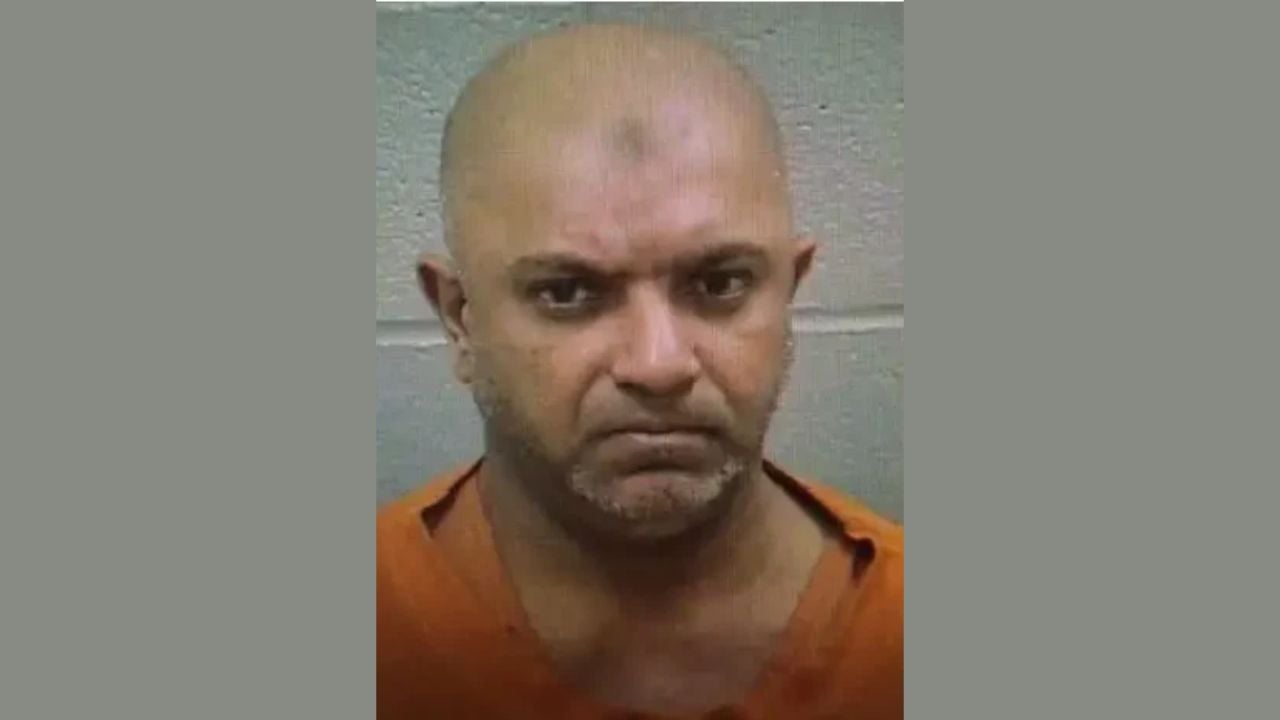
A courier connected to nearly $500,000 taken from a Georgia senior was arrested after collecting a box he believed contained another victim’s gold. Deputies had already removed the precious metal and filled the package with rocks and dirt before he arrived.
Javed Ashiq, 52, of Decatur, Georgia, pleaded guilty to conspiracy to commit wire fraud. U.S. District Judge Dudley H. Bowen sentenced him to 14 years in federal prison on October 6, according to the U.S. Attorney’s Office for the Southern District of Georgia.
The two victims had been approached through different computer warnings. In each case, scammers invoked government authority to convince an older resident that their financial accounts were compromised and that valuable assets needed to be moved for protection.
The Columbia County victim, a 90-year-old woman, was represented at sentencing by her son, who read statements on behalf of his mother and himself. Investigators from Columbia County and Sandy Springs also testified as the federal case brought the two fraud investigations together.
A Microsoft Pop-Up Led to Nearly a Dozen Cash Pickups
In July 2024, the Sandy Springs resident received a fraudulent Microsoft notification warning that their identity and financial accounts were in danger. Someone posing as a representative of the Federal Deposit Insurance Corporation then convinced the victim that their savings needed to be protected, according to an October 22 report by Atlanta News First citing Sandy Springs police.
Ashiq arranged approximately 10 meetings with the resident, collecting large amounts of cash during the encounters. Police said he used different vehicles when visiting the victim, whose losses were estimated at approximately $500,000.
Another Woman Was Told to Move Her Savings Into Gold
In Columbia County, a separate victim encountered a computer notification that appeared to come from cable provider Xfinity. After calling the number displayed, she spoke with someone claiming to represent the company and was transferred to a supposed Federal Trade Commission official. The caller alleged suspicious activity involving her Wells Fargo account and instructed her to purchase gold for safekeeping, according to WJBF’s reporting, based on an interview with Columbia County Sheriff’s Office Investigator William Bonsack.
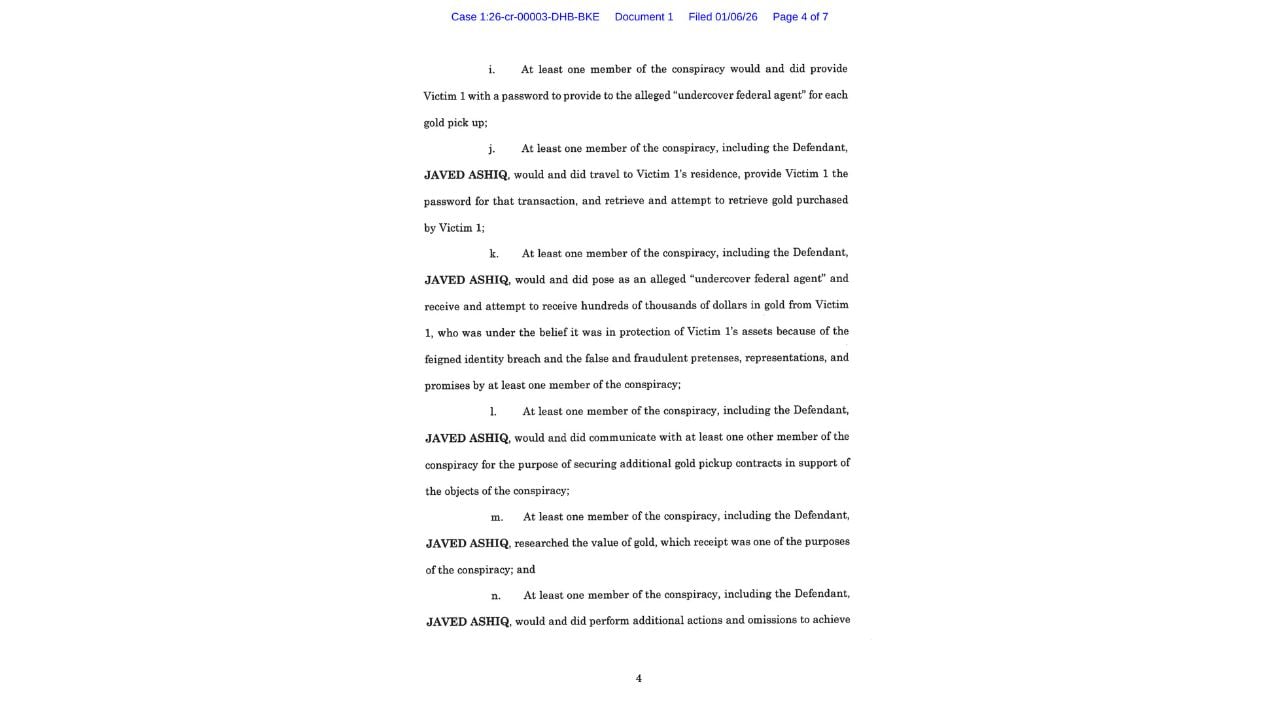
A seven-page federal indictment alleged that members of the conspiracy gained access to the woman’s computer and financial accounts, directed cryptocurrency transfers to a Bitcoin account, and requested photographs of gold-purchase receipts and tracking information. The woman was also instructed to prepare the bullion for collection by someone presented as an undercover federal agent.
Prosecutors alleged that passwords were used during the gold handoffs to make the supposed agents appear legitimate. The indictment specifically identified Ashiq as someone who traveled to the victim’s home, posed as an undercover agent and collected or attempted to collect gold. Bonsack said investigators connected him to four pickups involving the woman, who had already suffered losses before deputies intervened.
Deputies Replaced $241,000 in Gold With Rocks and Dirt
When investigators learned that another pickup was scheduled, they prepared a substitute package. The woman had three one-kilogram gold bars valued at approximately $241,000. Deputies opened the underside of the box, removed the bullion, filled the container with rocks and dirt, and resealed it to resemble the shipment the courier expected.
Undercover investigators positioned themselves nearby and recorded Ashiq arriving to collect the package. He took the box and drove away, but deputies stopped him shortly after he turned a corner and placed him under arrest in 2024.
License Plate Cameras Connected the Investigations
After the arrest, investigators examined vehicle movements through automated license plate camera systems. Bonsack said the searches connected Ashiq to Sandy Springs and showed travel into Alabama and Louisiana. A Sandy Springs detective traveled to Columbia County to help with the investigation and interview the suspect, while the FBI also became involved.
Bonsack told WJBF that Ashiq initially denied knowing what was inside the packages he collected. During the later federal investigation, however, the detective said Ashiq acknowledged opening packages and communicating their contents to associates. Investigators also learned that he took valuables to gold shops and jewelry stores in the Atlanta area, where gold was sold and he received a portion of the proceeds.
A Federal Judge Ordered Nearly $887,000 in Restitution
Judge Bowen ordered Ashiq to pay $886,799.84 in restitution, an amount confirmed by the Justice Department. WJBF reported that the restitution covered victims in both Columbia County and Sandy Springs.
Ashiq’s sentence also includes three years of supervised release after imprisonment. There is no parole in the federal prison system, and prosecutors said he would be processed for deportation after completing his prison term. Assistant U.S. Attorney Kelsey L. Scanlon prosecuted the case.
What to Do When a Pop-Up Says Your Money Is Unsafe
The Federal Trade Commission says government employees will not instruct people to purchase gold, withdraw cash or hand valuables to a courier to protect their financial accounts. Anyone receiving an unexpected computer warning should avoid calling the number displayed in the message. Instead, they should independently locate the bank’s or company’s official contact information and verify any claimed problem directly.
People who have already transferred money or arranged a pickup should immediately contact their financial institution and local police. The FBI recommends preserving phone numbers, messages, financial records and details about the people who collected valuables. Victims can also report government-impersonation schemes through IC3.gov and submit a fraud report to the FTC at ReportFraud.ftc.gov.