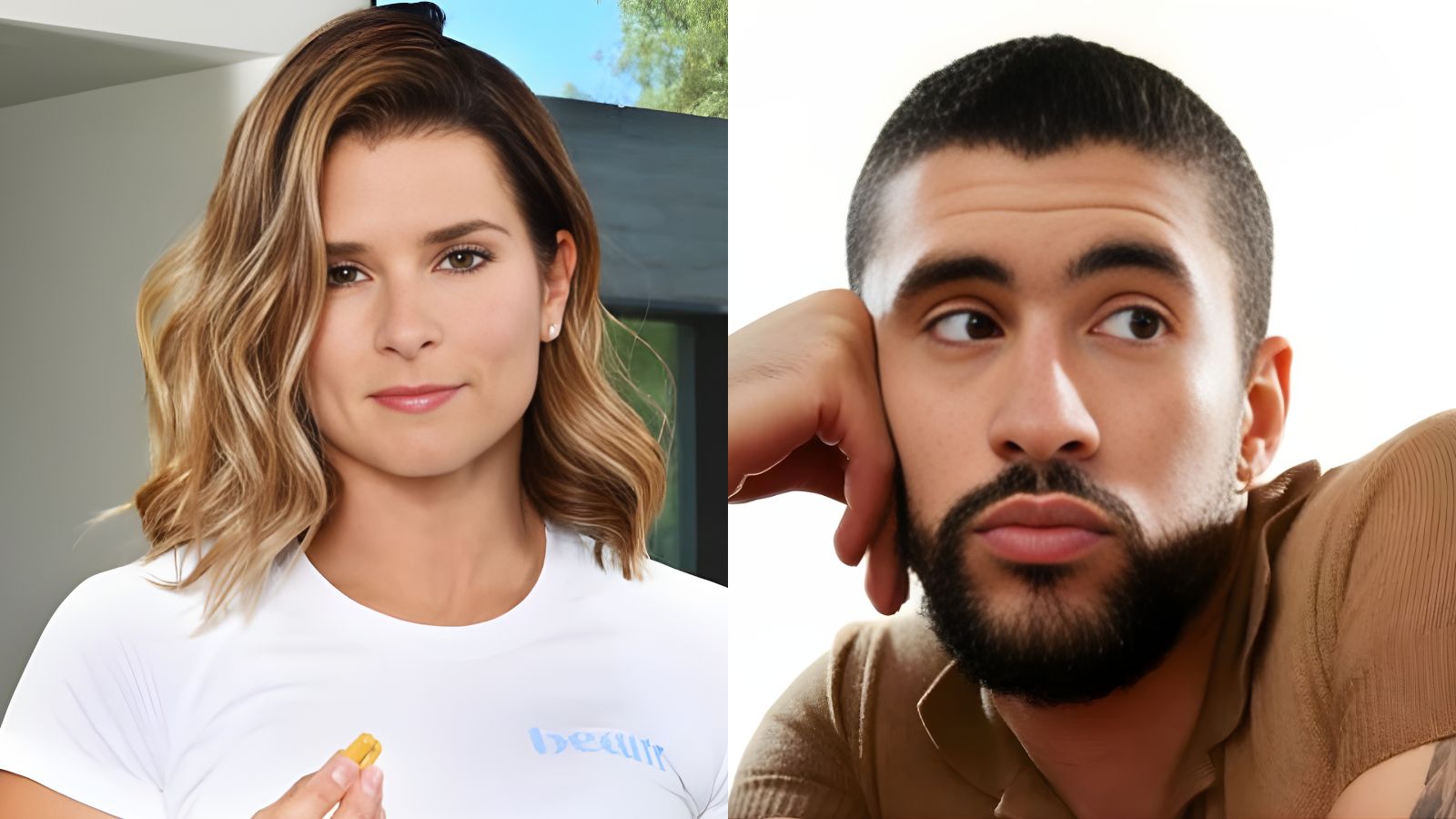
Former NASCAR driver Danica Patrick jumped into the spotlight again with sharp comments about the NFL’s choice for the Super Bowl 2026 halftime show. Bad Bunny, the Puerto Rican superstar, was announced as the headliner for Super Bowl LX on February 8, 2026. Patrick’s reaction? She said performers with no songs in English “should not be allowed” at one of America’s biggest TV events.
The backlash came fast. Fans called out her take as out of touch, while others defended the pick as a nod to Bad Bunny’s massive global appeal. The debate has kept rolling online, especially as the Super Bowl approaches.
What Danica Patrick Actually Said
Patrick posted on X shortly after the announcement in late September 2025. She replied to a post highlighting Bad Bunny’s lack of English-language tracks and his past political stances. “Oh fun,” she wrote with an eye-roll emoji. “No songs in English should not be allowed at one of America’s highest rated television events of the year… not just for sports.”
Bad Bunny, born Benito Antonio Martínez Ocasio, dominates charts worldwide with reggaeton and Latin trap hits like “Tití Me Preguntó” and “Moscow Mule.” He’s the most-streamed artist on Spotify for years running. Puerto Rico is a U.S. territory, so he’s an American citizen, but his music stays mostly in Spanish.
The NFL stood by the choice, calling it a way to reach diverse audiences. Past halftime shows have featured Shakira and Jennifer Lopez blending Spanish and English, and those performances drew huge praise.
The Online Firestorm That Followed
Social media exploded with reactions. Many users mocked the idea that English is required for America’s biggest stage. One reply pointed out Patrick’s NASCAR record: zero wins compared to Bad Bunny’s cultural dominance. Others brought up Shakira’s 2020 show, asking why Spanish elements worked then but not now. Here are some top reactions:
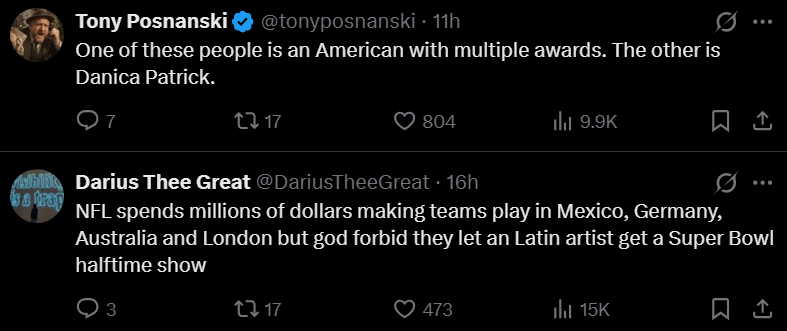
WELCOME TO BLACK TWlTTER’s post/X
Critics accused Patrick of cultural insensitivity. Fans defended her view, arguing the Super Bowl should prioritize broad accessibility. Some tied it to politics, noting Bad Bunny’s support for causes like Puerto Rican independence and criticism of certain U.S. policies. Bad Bunny hasn’t responded directly. The focus stays on the halftime slot, which often draws over 100 million viewers and shapes pop culture moments.
How Past Halftime Shows Set the Stage
To understand why Danica Patrick’s comments landed so loudly, it helps to look at how past halftime shows shaped expectations. For decades, the Super Bowl Halftime Show was built around artists with deep, cross-generational recognition. Acts like marching bands and legacy rock stars were chosen to feel safe and familiar to the broadest possible audience.
That approach shifted dramatically in the 2000s, when the National Football League realized the halftime show could be more than background entertainment. It could be a global pop culture moment. Ratings mattered, but so did online buzz, replay value, and next-day headlines.
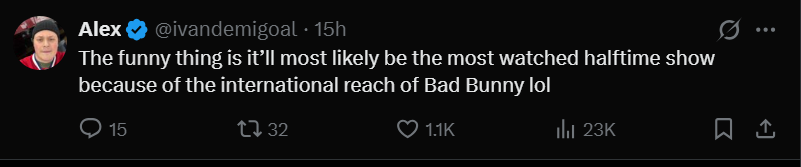
WELCOME TO BLACK TWlTTER’s post/X
Some performances became instant benchmarks. Prince performing in the rain is still widely cited as one of the most iconic halftime shows ever. It appealed to longtime fans while also feeling electric and current. That performance raised the bar and set the idea that halftime shows should feel unforgettable, not just pleasant.
As the years went on, the NFL leaned harder into artists dominating contemporary charts. The co-headlining performance by Shakira and Jennifer Lopez marked another turning point. For many viewers, it felt like overdue representation. For others, it was a signal that halftime shows were no longer designed with them in mind.
Patrick’s comments make more sense in that historical context. She is reacting not to one artist, but to years of change that have steadily moved the halftime show away from nostalgia and toward cultural relevance.
Why This Debate Keeps Heating Up
The Super Bowl halftime show is no longer just about music; it’s a platform for messages, culture, and spectacle. Choosing Bad Bunny highlights growing Latin influence in U.S. entertainment. Patrick’s comments tap into bigger questions: Who gets to perform on America’s biggest stage? Does language matter for national events? Should performers reflect certain values?
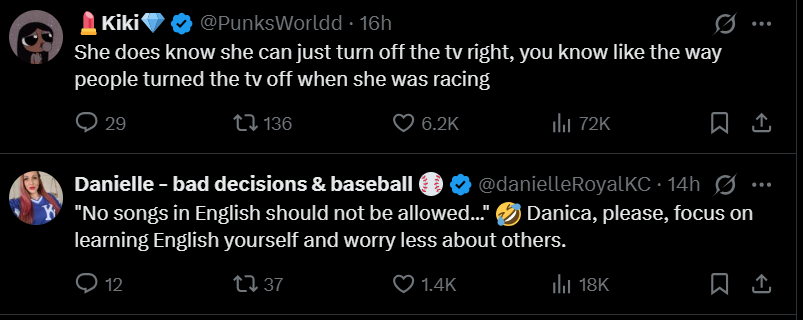
WELCOME TO BLACK TWlTTER’s post/X
Some see her stance as outdated in a multicultural country. Others worry it pushes away fans who want familiar lyrics. Either way, the NFL’s decision shows they’re betting on global stars to keep viewers hooked.
As February 8 gets closer, expect more chatter. Bad Bunny’s set could break records or spark even more debate. Patrick’s words started the talk, but the performance will finish it. The real question lingers: In a country built on different voices, does one language define what makes an event truly American? That answer might say more about us than any halftime.
What do you think?