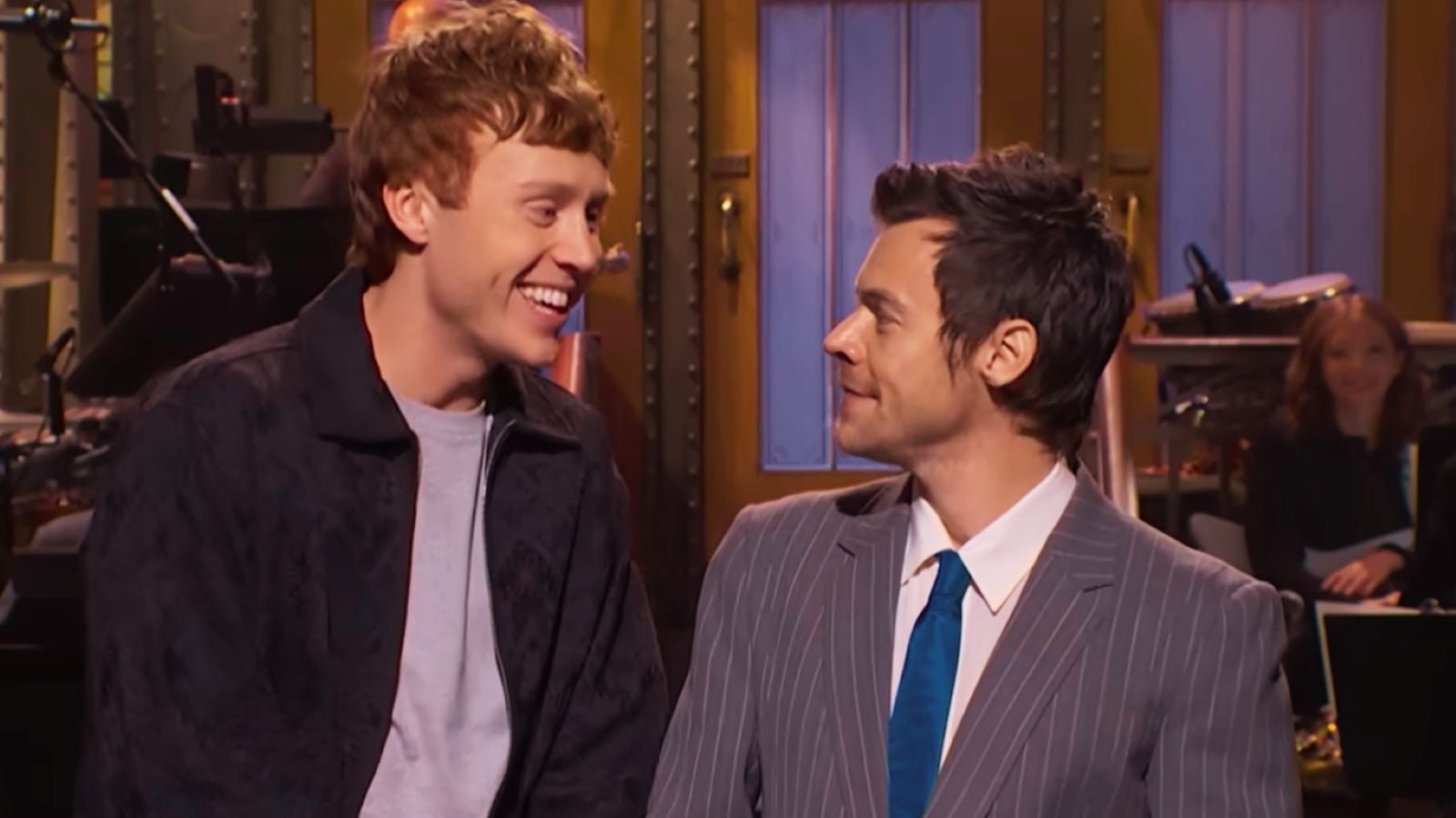
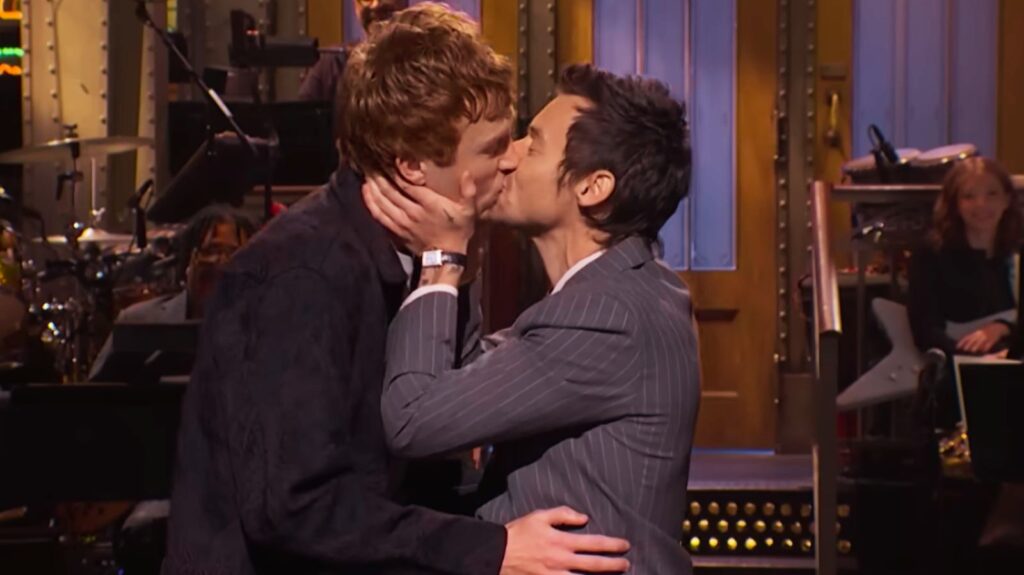
Saturday night, Harry Styles returned to SNL, joked about queerbaiting accusations, turned away female cast members stepping in for a kiss, kissed Ben Marshall instead, and delivered the line: “Now that’s queerbaiting.” By Sunday morning, the reaction had split into two predictable camps: people calling it a clever clapback, and people saying it proved the exact thing it was supposed to dismiss.
But what Styles pulled off was simpler. He did not answer the criticism. He turned it into content.
What He Actually Said
The monologue was built with precision. Styles opened by joking that he had become “tremendously boring,” then worked his way to the queerbaiting discourse with a mock-weary setup about how much attention people used to pay to the clothes he wore. Then came the line that did most of the work: “But did it ever occur to you that maybe you don’t know everything about me, Dad?”
It is funny. It is perfect.
It sounds revealing without revealing anything. It hints without confirming. It gives defenders something to point to and critics something to chew on. In other words, it does exactly what the Harry Styles brand has been doing for years.
He then tied the bit to kissing, a wink at his new album title, Kiss All the Time. Disco, Occasionally. Chloe Fineman and Sarah Sherman stepped in and got rejected. Then Marshall appeared. Styles admired his body, kissed him, turned to the camera, and delivered the punchline.
The Bit That Proves the Criticism
What happened on that stage was not a reckoning. It was a repackaging.
Nobody owes the public a label. Nobody is entitled to a celebrity’s private sexual identity. That was never the real issue.
The issue was that ambiguity itself became part of the product.
For years, Styles has occupied a profitable space between suggestion and refusal. The fashion, the flirtation, the evasiveness, the refusal to clarify. All of it generated speculation that keeps a pop star culturally sticky long after a release cycle should have cooled off. Styles has also been consistent that he does not think he needs to publicly define his sexuality. Saturday’s monologue did not challenge that pattern. It refined it.
He took the accusation that his image trades on queer suggestion, wrapped it in a glossy live-comedy bit, added a same-sex kiss for discourse value, then treated the reaction itself as the joke. That is not accountability. That is brand maintenance.
Why the Reaction Split Was Instant
Defenders are treating the moment like a power move. Styles is in on the joke, they argue. He is reclaiming the narrative. He is telling people they do not know him, and maybe never will, on his own terms.
Critics see something colder. They see a bit built around heterosexual expectation and male-male surprise. Two women are turned away. One man gets chosen. The whole structure depends on the kiss landing as a twist. That is why so many people did not read the moment as honest. They read it as performance. Not a confession. Not a clarification. Just another instance of queer signaling being used for atmosphere, provocation, and applause.
That is why the “Now that’s queerbaiting” line does not feel as self-aware as Styles probably wanted it to. It does not puncture the criticism. It monetizes it.
The Album Is Called Kiss All the Time
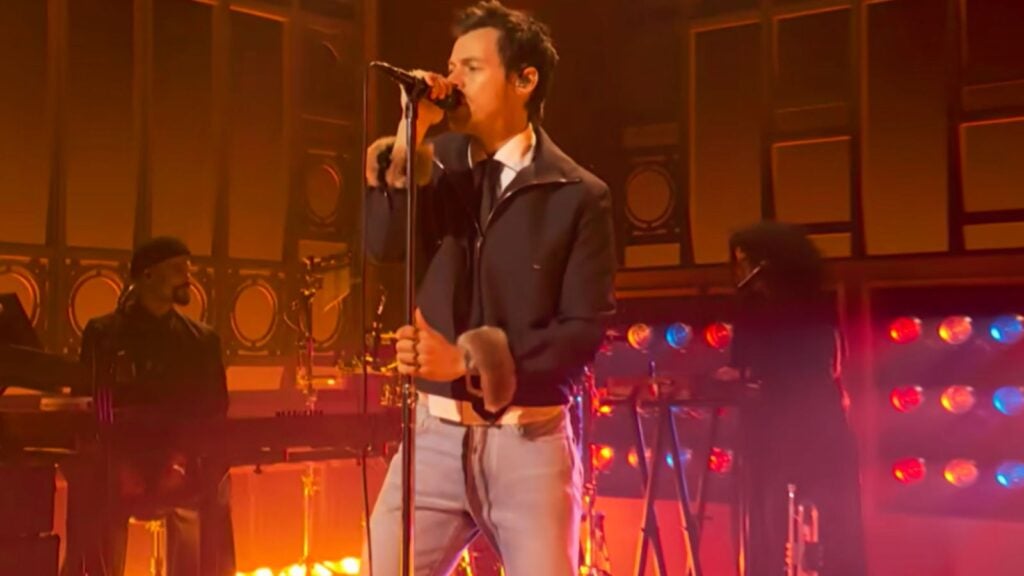
Styles’ new album dropped on March 6. He is also heading into the 50-date Together, Together tour. The SNL appearance was a promotional stop, and the monologue was built to travel. It was polished, funny, and engineered to dominate the discourse without forcing him to say anything concrete at all.
Styles has always understood that the conversation about who he is can be more valuable than anything he might actually say about himself. Speculation keeps him in the bloodstream. Ambiguity keeps both sides emotionally invested. Saturday’s bit gave everyone exactly enough to keep fighting while giving him exactly what he needed: attention without obligation.
So, Did It Solve Anything?
If you went into Saturday night thinking Harry Styles was queerbaiting, nothing he did changed that.
If you went in thinking the accusation was overblown, the bit probably felt like vindication.
If you were hoping for an unscripted, vulnerable moment where a 32-year-old global star might say something real about the identity discourse that has followed him for years, that was never going to happen on SNL, and Styles knows that better than anyone.
What he did instead was smarter, colder, and more effective.
He turned the accusation into entertainment.
And the question that lingers after the applause is not whether the bit was funny. It was. The question is whether transforming the criticism into a joke is worse than ignoring it, because at least silence leaves open the possibility of honesty later.
A bit does not.