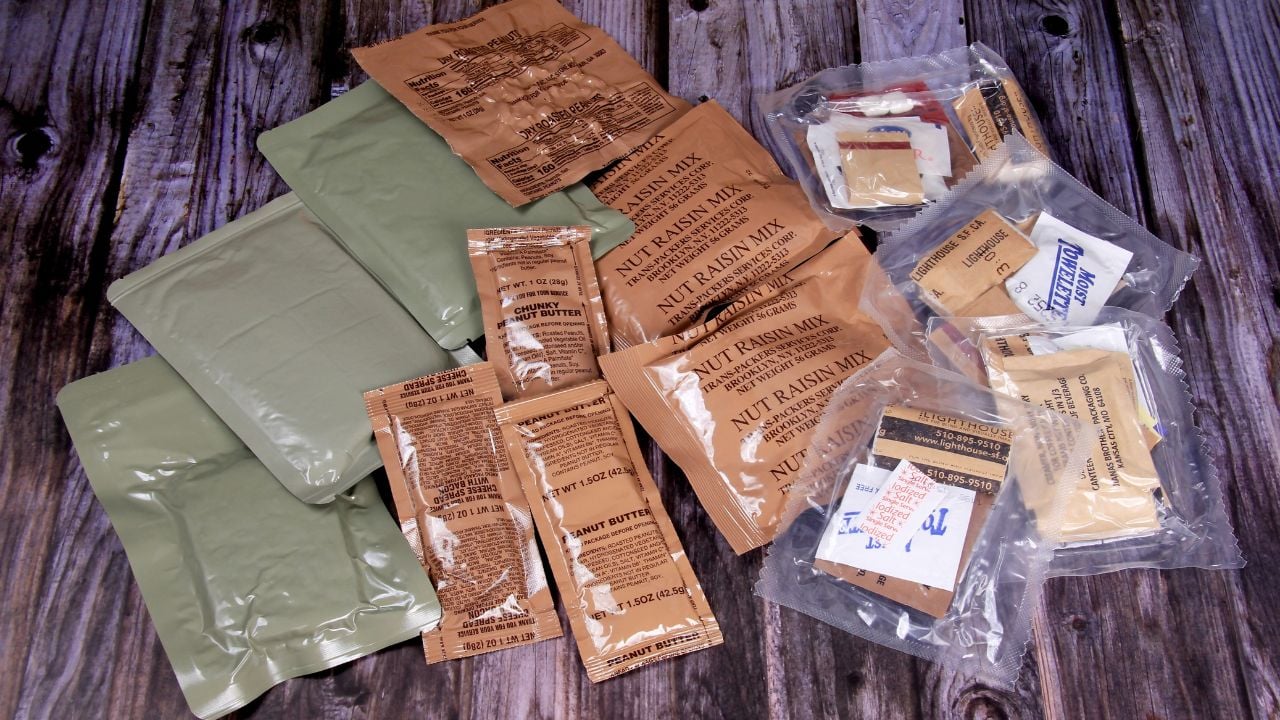
A former U.S. Army soldier who later worked as a civilian contractor at Fort Bliss has been convicted in a federal case involving more than 200 pallets of military Meals, Ready-to-Eat.
KTSM reported that Joseph Lavar Davis, 47, was found guilty in El Paso after prosecutors said he helped steal MREs from Fort Bliss. The U.S. Attorney’s Office for the Western District of Texas said the stolen meals were valued at approximately $1,120,000.
Davis was convicted of conspiracy to commit theft of government property and one count of theft of government property. Federal prosecutors said the thefts happened between February 24, 2020, and August 12, 2020.
The case is now past the allegation stage for Davis because a jury returned guilty verdicts. Sentencing has not yet been announced.
Prosecutors Say The Scheme Used False Requests And Rented Trucks
According to DOJ, Davis had previously held a food service supply position while serving in the Army. After retiring, he was hired into a similar role as a civilian contractor and used his knowledge of the MRE request process to exploit the system.
Federal prosecutors said Davis created false requests, rented trucks to transport MRE pallets, and picked up or arranged for others to pick up the meals from Fort Bliss.
He also coordinated other people involved in obtaining, delivering, and receiving payment for the MREs, according to DOJ. Prosecutors said Davis negotiated the sales price and received payment for the stolen military meals.
The Justice Department described the operation as a coordinated scheme involving multiple roles: a civilian contractor who knew how to request and pick up the MREs, a soldier who helped pick up and transport them, an intermediary between the buyer and the people obtaining the MREs, and a civilian who sold the MREs online.
Agents Found About 100 Pallets In An El Paso Warehouse
The investigation reached a major break on August 12, 2020, when FBI agents and Department of the Army Criminal Investigation Division agents executed a search warrant at a civilian warehouse in El Paso.
Inside, agents found about 100 pallets of MREs, according to prosecutors. Investigators determined that the owner of the company using the warehouse had been buying MREs from people who stole them from Fort Bliss.
The total theft involved more than 200 pallets, DOJ said. Task & Purpose reported that each pallet contained roughly 576 MREs, based on federal court documents, which would put the total at about 115,200 meals.
The MREs were not ordinary groceries. The Defense Logistics Agency describes MREs as operational rations for military personnel and says a case contains 12 meals.
Other Defendants Were Also Named In The Case
Davis was named with three other co-defendants in a two-count indictment filed on February 12, 2025, according to DOJ. The other defendants were tied to different parts of the supply chain, from pickup and transportation to resale.
Stars and Stripes identified the other defendants as Jatavis Lenard Fuse, Tyrone Lamar Odum Turner, and John Broberg. The outlet reported that Fuse pleaded guilty to both charges in February 2026, Turner pleaded guilty to the conspiracy charge that same month, and Broberg pleaded guilty to the conspiracy charge in March.
Stars and Stripes also reported that Broberg, the warehouse owner and operator, paid more than $44,000 over several transactions in exchange for the stolen MREs, according to the indictment.
Those outcomes are separate from Davis’s trial conviction. DOJ said Assistant U.S. Attorneys Lori Hughes and Mallory Rasmussen are prosecuting the case.
Federal Theft Of Government Property Can Carry Prison Time
Theft of government property is covered by 18 U.S.C. § 641. The statute applies to someone who steals, knowingly converts, sells, conveys, or receives a thing of value belonging to the United States or a federal agency.
When the value is more than $1,000, the statute allows a penalty of up to 10 years in prison, a fine, or both. That maximum is not a prediction of Davis’s sentence.
The conspiracy count is covered by 18 U.S.C. § 371, which applies when two or more people conspire to commit an offense against the United States and at least one person takes an act to carry out the conspiracy.
The next major court step is sentencing. The court will decide any prison term, fine, restitution, or other punishment after considering federal sentencing law and the case record.
Military MREs Are Not Sold To Ordinary Consumers By DLA
The Defense Logistics Agency says it can only sell operational rations, including MREs, to the U.S. military services and other authorized federally funded agencies. DLA says it cannot sell MREs to the private sector, including individuals, businesses, or other private organizations.
DLA’s broader operational-rations policy says authorized buyers include military organizations, certain federally funded activities, approved contractors under specific contract authority, and other entities authorized under policy.
The Government Accountability Office warned in 2006 that military MREs sold to the general public may have been improperly obtained and could represent waste of taxpayer dollars or possible criminal activity.
Anyone buying emergency food, camping meals, or preparedness supplies should be cautious with bulk “genuine military MRE” offers, especially if the cases show U.S. government markings, appear in very large quantities, or are being sold far below normal pricing.
Safer options include civilian emergency-ration brands, outdoor retailers, preparedness suppliers, and sellers that can document a legitimate supply chain. Buyers should keep receipts, listings, seller names, messages, photos of packaging, and payment records if a purchase later appears suspicious.