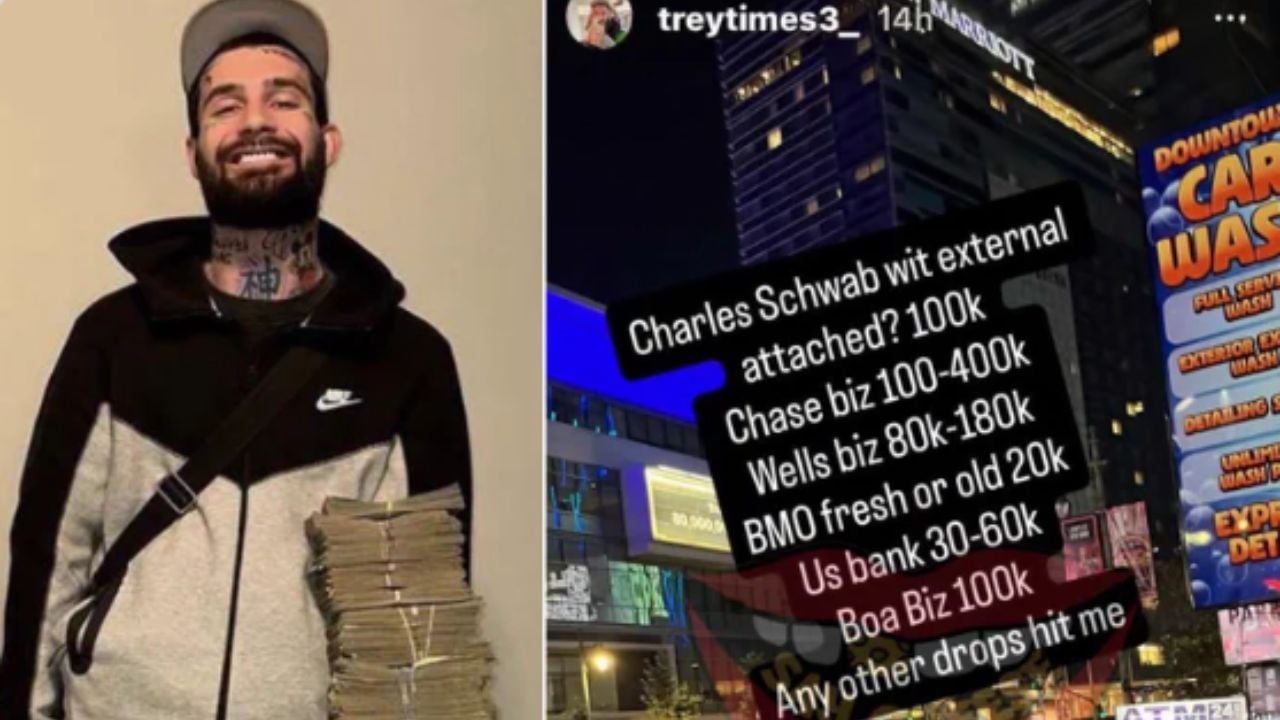
A South Los Angeles street gang member who used Instagram to recruit bank account holders for a stolen-check scheme has been sentenced to nine years in federal prison.
Chase Matthew Griffin, 26, also known as “Trey,” was sentenced to 108 months after pleading guilty to conspiracy to commit bank fraud, according to the U.S. Attorney’s Office for the Central District of California.
Federal prosecutors said the scheme caused $2.8 million in attempted or actual fraud tied to checks stolen from the mail, altered, and deposited into recruited accounts.
U.S. District Judge Josephine L. Staton also ordered Griffin to pay $307,386 in restitution.
The Scheme Started With Checks Stolen From the Mail
26-year-old man sentenced to 9 years in federal prison for his role in a $2.8 million bank fraud scheme that he advertised on Instagram.
He was ordered to pay 307,386 in restitution. 💰 pic.twitter.com/YlJCL4qjSG
— SAY CHEESE! 👄🧀 (@SaycheeseDGTL) July 16, 2026
Prosecutors said Griffin and others obtained checks stolen from the mail between 2022 and September 2025. The checks were then altered or used to create counterfeit versions that appeared payable to accomplices.
The conspirators used real stolen checks, changed the payee information, and moved them through bank accounts recruited for the scheme, according to court documents cited by prosecutors.
Instagram Was Used To Recruit Account Holders
Griffin recruited accomplices online, often through Instagram, according to prosecutors. The DOJ said he posted photos of himself holding stacks of cash more than one foot high and advertised for people with different types of bank accounts to give him access.
After a person was recruited, Griffin and his co-conspirators deposited fraudulent checks into that person’s account. Prosecutors said the checks were usually worth tens of thousands of dollars, which made fast withdrawals central to the operation.
The Money Had To Be Pulled Out Quickly
Prosecutors said the conspirators raced to withdraw funds before banks could detect the fraud.
Deposit a stolen or counterfeit check, move the money out quickly, and leave the bank or account holder exposed once the check was flagged. It was that simple for the conspirators.
The money was not moved only through cash withdrawals. In one example cited by prosecutors, funds were used for ATM withdrawals, Zelle and Cash App payments, a plane ticket, and card purchases at a San Bernardino County casino.
A North Hollywood Business Mailed Three Checks
The DOJ described one December 2023 example involving a North Hollywood business. The business told law enforcement it had mailed three checks totaling about $84,490 from a U.S. Postal Service collection box in Tarzana.
Those checks never reached the intended recipients. Prosecutors said they were stolen and deposited into JPMorgan Chase accounts that did not belong to the proper payees.
The business later provided images of the deposited checks and confirmed that the payee names had been changed.
Investigators Found More Fraud Through One Chase Account
A law enforcement review of one Chase account connected to the deposits revealed another suspicious transaction.
Prosecutors said the account had previously received an approximately $22,487 check deposit at an ATM in Upland. That check, along with another check worth about $29,081, had been stolen and used to create counterfeit checks.
The counterfeit versions kept the same date, check number, and amount as the originals, but listed different payees, according to prosecutors.
Griffin Pleaded Guilty Before Sentencing
Griffin pleaded guilty on March 5 to one count of conspiracy to commit bank fraud. He has been in federal custody since September 2025.
The DOJ identified Griffin as a member of a South Los Angeles-based Crips street gang and said he had lived in Atlanta, Ontario, and South Los Angeles.
Mailed Checks Can Be Changed Before They Arrive
The U.S. Postal Inspection Service says check-washing scams can involve changing the payee name and dollar amount on a stolen check, then depositing it fraudulently. Some checks are stolen from mailboxes, while others are copied or scanned to create fake versions.
Businesses and consumers who still mail checks can reduce risk by using secure payment options when possible, taking outgoing checks inside the post office instead of leaving them in an unlocked mailbox, and checking bank accounts to confirm when mailed checks clear.
After a mailed check clears, the image matters. The payee name, amount, check number, endorsement, and deposit history should match the original payment. If a recipient says a check never arrived but the account shows it cleared, the sender should ask the bank for the check image immediately.
What To Save After a Check Is Stolen or Altered
Anyone who finds a changed payee, unfamiliar endorsement, missing mailed check, or counterfeit version of a real check should contact the bank’s fraud department, ask whether funds can be recalled, and request copies of the deposited check images.
Save the original check record, bank statement, check image, envelope or mailing receipt, recipient messages, payment records, account alerts, and any documents showing the intended payee.
Mail-related check fraud can be reported to the U.S. Postal Inspection Service at USPIS.gov/report or 1-877-876-2455. Internet-related financial fraud can also be reported to the FBI’s Internet Crime Complaint Center at IC3.gov.