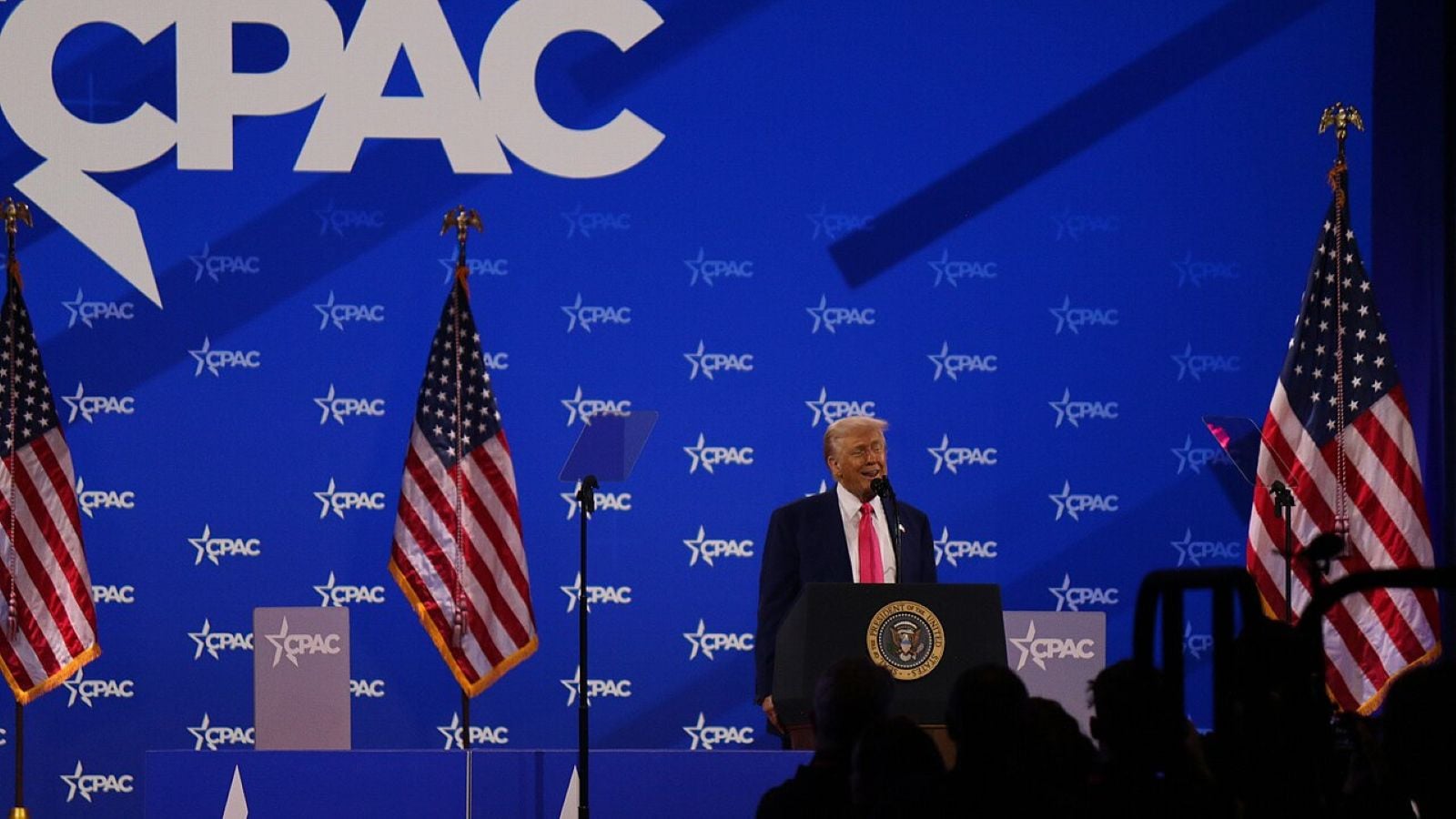
CPAC 2026 was supposed to look like a show of strength. Instead, it opened like a pep rally for a party trying to clap over the sound of its own polling. The ballroom in Grapevine had the usual applause lines, the usual loyalty tests, the usual demand for unity. Outside that room, though, the numbers looked brutal. Donald Trump skipped CPAC for the first time in a decade, and Reuters/Ipsos had his approval at 36%, the worst mark of his second term so far. That is not what momentum looks like.
CPAC 2026 Wanted to Project Strength
That disconnect is what made day one feel so strange. CPAC chair Matt Schlapp said the point of this year’s conference was to rein in Republican infighting before the midterms. The official theme was “action over words.” But the first real message out of the event was not action. It was reassurance. It was a plea for Republicans to stop tearing at each other long enough to survive November. When a party has to spend its marquee gathering reminding itself to stay united, that is already a tell.
The bigger problem is that the warning lights are not just flashing in one poll. Reuters/Ipsos found Trump at 36% overall, with just 29% approving of his handling of the economy and only 25% approving of his handling of the cost of living. Quinnipiac had him a little higher overall at 38%, but still deep underwater at 56% disapprove, and it found Democrats ahead 51% to 40% on the question of who should control the House. Fox News, hardly a hostile venue, put Trump at 41% approve and 59% disapprove, with 47% strongly disapproving. That is a pattern, not one bad night.

The Room Could Not Hide the Polling Slide
Now, the story stops being “Republicans are fighting again” and starts getting interesting. CPAC did not really behave like a conference for a party staring at that kind of data. It behaved like a confidence exercise. Reuters reported that no speaker on opening day criticized the Iran war outright. The stage stayed loyal. The crowd got the message. Stay on script. Praise the president. Focus on the enemy. Pretend the only real threat is Democrats, the media, or whoever else is convenient that hour.
But even inside the conservative base, the split is getting harder to hide. Associated Press reporting from the conference found younger conservatives openly talking about “betrayal,” arguing that Trump’s strikes on Iran cut against the “America First” promise that helped build his coalition. One 25-year-old attendee said, “It does feel like a betrayal, for sure.” A 20-year-old student said the issue had “put a line through the conservative movement.” Mercedes Schlapp’s answer from the stage was not exactly the language of a confident movement either: “We cannot divide from within.” People only say that when division is already in the room.
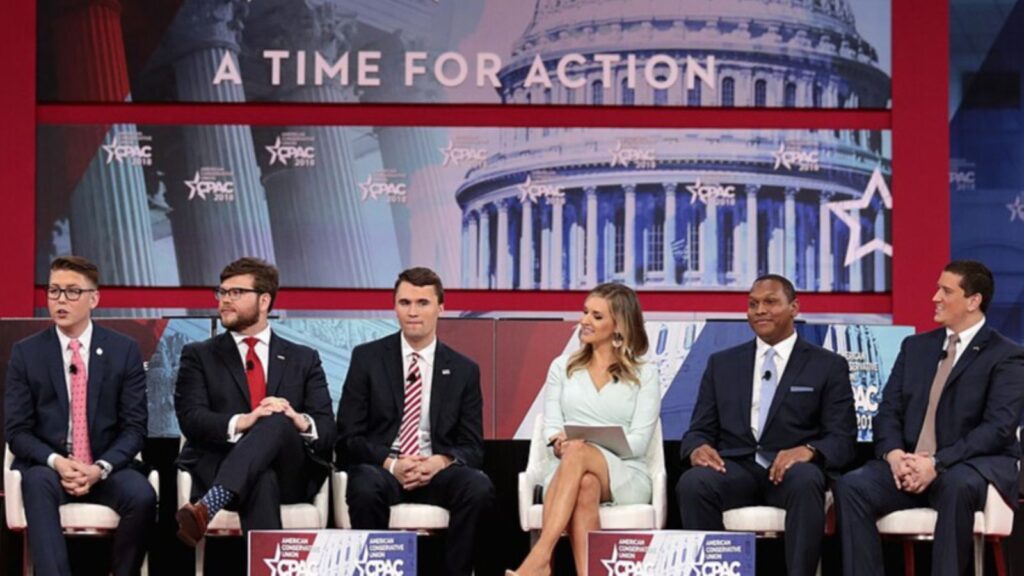
Even CPAC’s Own Crowd Sounded Uneasy
That is what makes the day one optics so damaging. The conference was trying to sell unity at the exact moment its own attendees were describing disappointment, slippage, and fatigue. Steve Bannon, another featured figure hanging over the event, warned earlier this month that if the war turns into “a hard slog,” Republicans will “bleed support.” AP also noted that CPAC opened just one day after a Democrat flipped the Florida legislative seat that includes Trump’s Mar-a-Lago estate. None of that proves Republicans are doomed. But it absolutely wrecks the fantasy that everything is fine.

There is also a deeper problem here that Republicans do not seem eager to confront. Even when the polls are bad, they can still tell themselves Democrats have not closed the deal. Reuters found Republicans still leading Democrats on the economy, immigration, and crime. That matters. It means the GOP is not dead. But it also means CPAC had an actual strategic choice to make. It could have used this week to wrestle with why Trump’s approval is sagging anyway, why his economic numbers are getting wrecked, and why a midterm environment is forming against him even with Democrats still weak in key areas. Instead, the conference seemed far more interested in performing unity than diagnosing weakness.
CPAC 2026 opened like a movement still drunk on its own mythology while the outside indicators kept saying the hangover had already started. The stage said strength. The polls said erosion. The younger activists said betrayal. The organizers said stay united. If that gap keeps widening, what exactly is CPAC doing this week: building a midterm strategy, or rehearsing excuses for a loss Republicans still do not want to admit is coming?