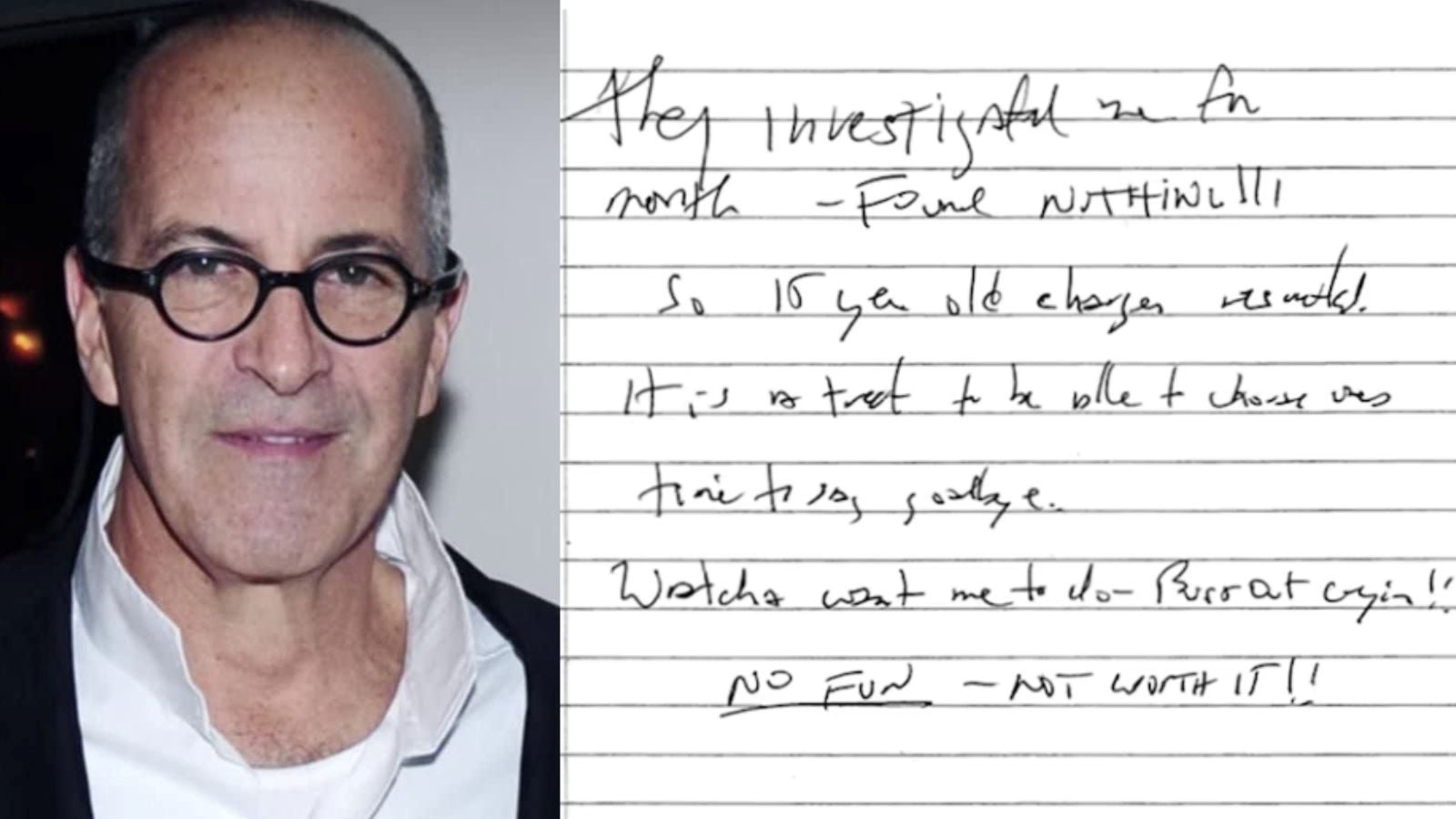
Mark Epstein has a theory. Whoever forged his brother’s purported jail note did not have to guess at how Jeffrey would sound. They had a cheat sheet.
“It’s public knowledge,” Mark told Business Insider, pointing to emails later released in the Epstein files. He says the phrasing was lifted to make the note sound like Jeffrey.
His argument is specific: a forger used Jeffrey Epstein’s emails, the kind now available through the Justice Department’s Epstein Files releases, to mimic the financier’s voice and writing patterns. The note, reportedly found by Jeffrey’s former cellmate Nicholas Tartaglione after a suspected July 2019 suicide attempt, includes a version of the phrase “time to say goodbye” and the odd line “watcha want me to do.” Mark says none of it happened the way Tartaglione claims.
He told Business Insider that forging a note would not be hard. That is the easy part of his argument. The hard part is the calendar.
The Timeline His Theory Requires
Here is the specific problem with Mark’s explanation.
The note was sealed in May 2021, according to the unsealing order signed by Judge Kenneth Karas of the Southern District of New York. It had been submitted to court as evidence in Tartaglione’s quadruple murder case and locked away in a dispute over his legal representation.
The emails Mark says a forger used, including Jeffrey’s familiar “bust out cryin” phrasing, became public through the Justice Department’s Epstein Files releases in 2025 and 2026.
For Mark’s theory to hold, a forger would have needed private access to those emails before the public had them. That is possible in theory. It is not impossible. But it directly collides with his own framing. “Public knowledge” was not true in 2021 when the note was sealed. It was not true in 2019 when Tartaglione first told his lawyer about the note. The emails were not public during the years when the note was already moving through court.
The timeline gets harder to square the further back you go. A chronology in the Epstein files says multiple people tried to authenticate the note in 2019 and 2020, before the relevant emails were publicly known. Tartaglione also described the note in a 2025 podcast interview, again before the files made the disputed phrasing public. The note was not included in the DOJ’s Epstein Files release, nor in the 128-page inspector general report that followed a four-year investigation into Jeffrey’s death.
What the Language Actually Tells You
The specific phrases Mark finds suspicious are the same ones that make the forgery argument harder to sustain, not easier.
The “bust out cryin” line appears in Jeffrey’s earlier emails, according to Business Insider. Mark argues that a forger lifted that phrasing to replicate his brother’s voice. But the note was supposedly written in July 2019, years after the email and years before the phrase became public.
That leaves two possibilities. Either a forger had private access to Jeffrey’s correspondence years before the files came out, or Jeffrey reused a phrase he had used before. The first possibility is not impossible. The second is not exactly exotic human behavior.
No independent forensic examiner has publicly verified or rejected the note’s handwriting. NPR, ABC and TIME have all stressed that the note has not been authenticated. The note has no signature. The authorship question is genuinely open, which is different from saying Mark’s specific theory about how the alleged forgery happened has been explained.
Tartaglione’s Lawyer Says Jeffrey Wrote It
Bruce Barket, one of Tartaglione’s attorneys, was direct: he believes Jeffrey Epstein wrote the note, and his client did not kill him.
Barket told NPR the note mattered in Tartaglione’s case because prosecutors had initially sought the death penalty, making his conduct in jail important for any jury. A note suggesting Tartaglione tried to protect Epstein, rather than harm him, helped his client’s position. Barket said he believed the note was genuine, but he also said his team never officially authenticated it through real handwriting analysis.
Mark Epstein says Jeffrey recanted the claim that Tartaglione attacked him not because it was false, but because he did not want to be known as a snitch. Mark has maintained for years that Jeffrey was murdered and that the DOJ is covering it up. He has never accepted the official suicide finding.
On the note, his position is simple. If Jeffrey had planned to die, Mark does not believe he would have needed to explain it to anyone.
He may be right about how his brother thought. He may be right to doubt an unsigned note that the Justice Department says has not been authenticated.
What he has not explained is how a forger used emails in 2021 that the public would not see until years later.