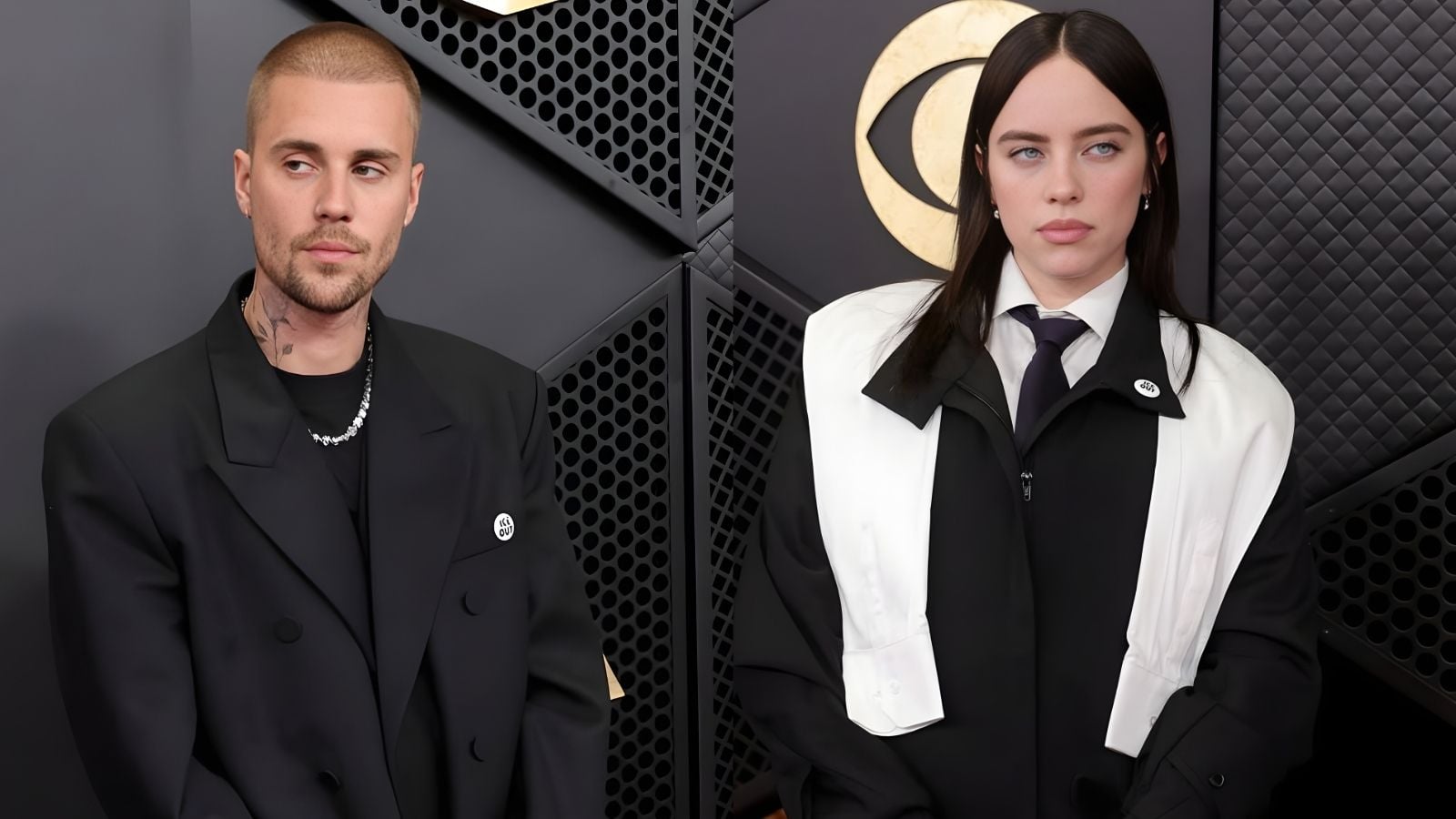
The 2026 Grammy Awards were supposed to be a night of music, celebration, and dazzling performances. Instead, it turned into a moment that many viewers will remember not just for chart‑topping hits but for political protest. Big stars used the world’s biggest music stage to push back against President Donald Trump’s immigration policies and speak out against U.S. Immigration and Customs Enforcement (ICE).
The event in Los Angeles became something more emotional than applause and gold gramophones. It became a platform. Artists, winners, and even red‑carpet attendees made their feelings known. If you were watching, it was impossible to miss that politics was front and center.
‘ICE OUT’ Takes Over the Red Carpet
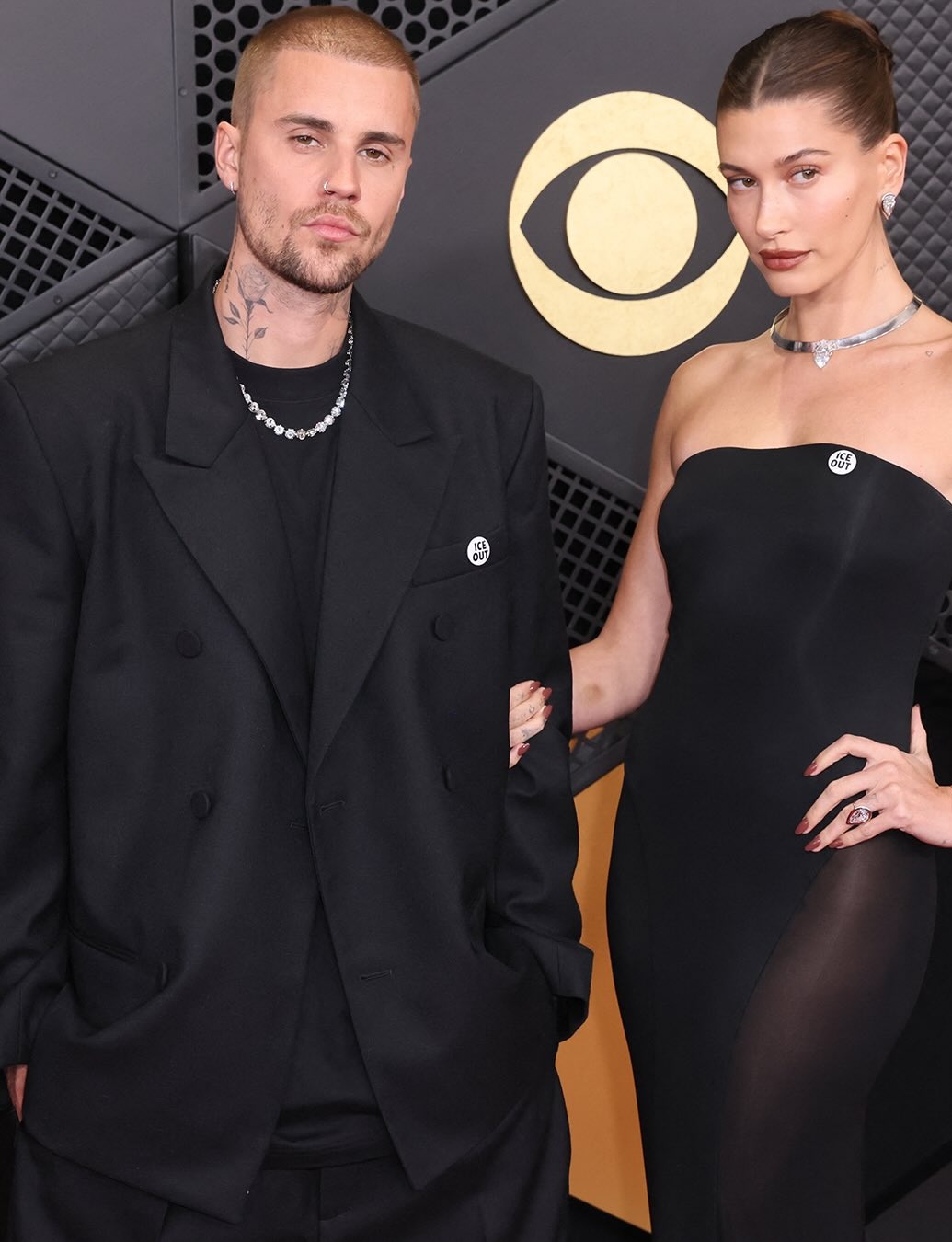
From the moment stars walked the red carpet, it was clear that this year was different. Several musicians, including Justin Bieber and Hailey Bieber, showed up wearing pins reading “ICE OUT.” These buttons weren’t fashion statements; they were protest symbols calling for ICE to be removed from communities and for compassion in immigration enforcement.
Not everyone used words on stage, but many did. Artists such as Kehlani cursed at ICE during their acceptance moments. Other creators stood with pins, speeches, and bold expressions of support for immigrants and their families.
The “ICE OUT” pins spread through the ceremony like a visible badge of solidarity. Stars who don’t usually wade into political waters wore them too. Seeing someone like Justin Bieber embrace a movement this visibly showed how widely discussions about immigration and ICE have spread into pop culture.
Billie Eilish and Bad Bunny Speak for Millions

Some of the most talked‑about moments came from artists in the spotlight. Billie Eilish was a central part of the protest energy. When she accepted Song of the Year for Wildflower, she took a breath, looked at the crowd, and said “No one is illegal on stolen land.” Her words echoed long after her win, and she ended her remarks with a raw call against ICE.
Eilish wasn’t alone. Bad Bunny, who made history earlier in the night as the first artist to win Album of the Year for a Spanish-language album (Debí Tirar Más Fotos), delivered a powerful protest during his acceptance speech for Best Música Urbana Album.
In a moment that earned a massive standing ovation from the audience, he declared: “We’re not savages, we’re not animals, we’re not aliens. We are humans, and we are Americans.” He went on to emphasize rejecting hate in favor of love, noting that “the only thing that is more powerful than hate is love” and urging people to “fight… with love,” reminding viewers of the humanity of immigrants amid the ongoing ICE crackdown.
Artists also highlighted the immigrant experience in other ways. Olivia Dean, when she accepted Best New Artist, talked about being the granddaughter of an immigrant and why that matters. Others referenced shared heritage and human dignity.
Reactions, Responses, and the Bigger Picture
Politics at awards shows is never smooth, and the Grammys turned out to be no exception. Host Trevor Noah opened the night with humor that touched on the political tension in the air, roasting those connected to Trump and setting a lively tone for the protest‑filled evening.
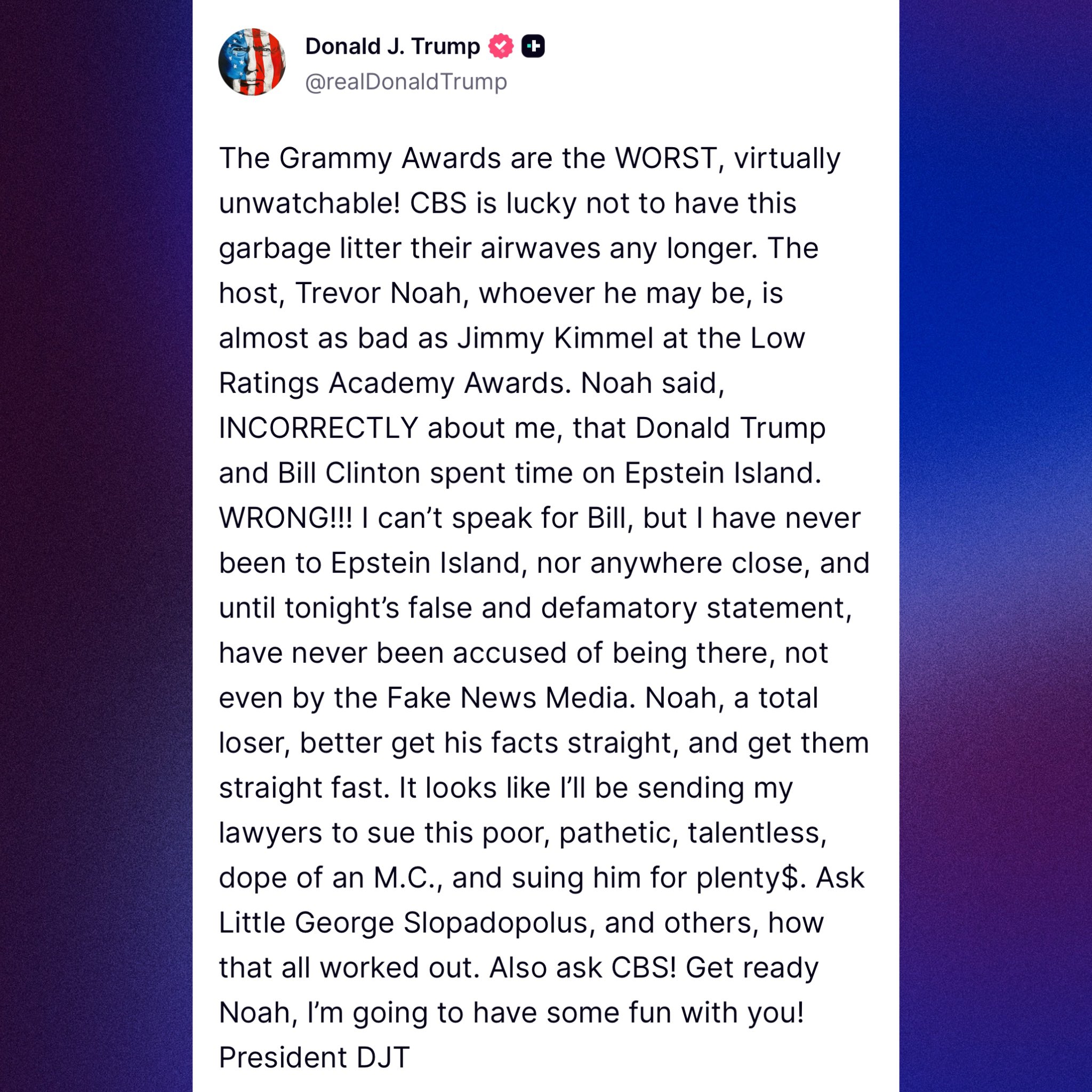
But it didn’t stop with jokes. Trump himself took to social media after the show to criticize the ceremony and lash out at the host. He called the event “the WORST, virtually unwatchable” and threatened legal action for one of the jokes made during the broadcast. This reaction only fueled the social media fire and made the political moments feel even bigger.
Fans, critics, and commentators have taken different sides on what happened. Some praised the performers for standing up for human rights and using their platforms for good. Others believe awards shows should stick to music.
A Night That Won’t Be Forgotten
The 2026 Grammys were never meant to be quiet. But what unfolded was louder than anyone expected. From Billie Eilish’s bold words to Bad Bunny’s powerful message, the ceremony became something more than just awards and performances. It became a cultural moment. A reminder that music is not just entertainment. It is influence. It is voice. It is protest.
As debates over immigration and identity continue across the country, this year’s Grammys stood out not for ignoring the conversation, but for stepping directly into it.
And in the most powerful words of the night, Bad Bunny reminded everyone watching: “We’re not savages, we’re not animals, we’re not aliens. We are humans, and we are Americans.”
What do you think?