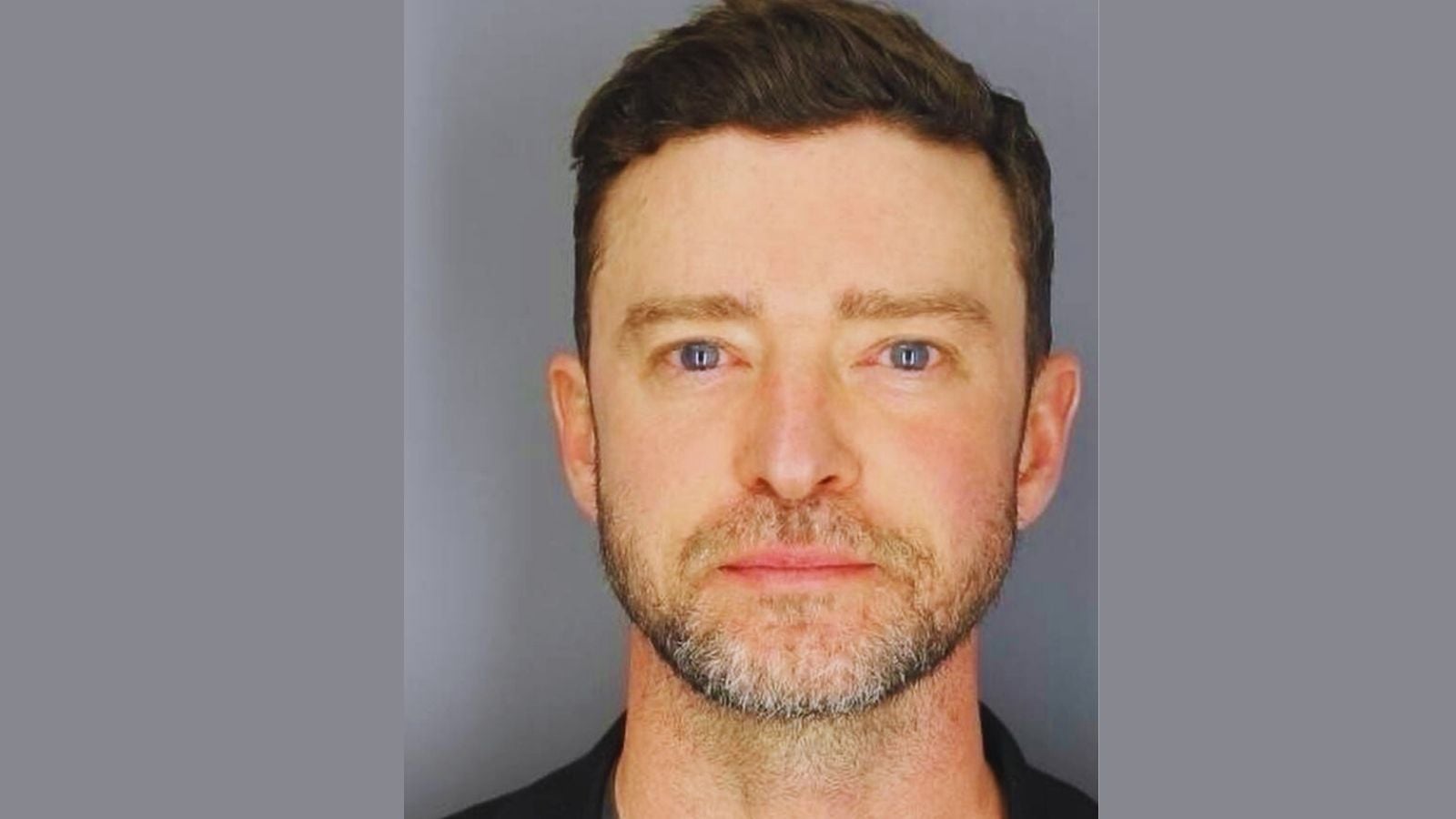
Justin Timberlake is officially taking his fight for privacy all the way to the Suffolk County Supreme Court, and let’s just say he is not exactly looking for a “Mirrors” moment here. The 45-year-old singer filed a legal petition on March 2, 2026, to block the public release of police body camera footage from his June 2024 arrest in Sag Harbor. It seems someone, including entities has filed a Freedom of Information Law request to get their hands on the video, and JT’s team is essentially saying: “Not on our watch.”
With the original DWI charge now a distant memory thanks to a 2024 plea deal, this move is all about one thing: making sure a single night in the Hamptons does not become a permanent viral loop.

The petition targets the Sag Harbor Village Police Department and its chief, in a move to keep that digital record under lock and key. Timberlake’s lawyers, Edward Burke Jr. and Michael J. Del Piano, are not just asking for a favor; they are seeking an emergency stay and a court order to bar the footage from ever seeing the light of day.
Their argument, as reported by Entertainment Weekly, is that the video contains personal details that have absolutely nothing to do with whether the police did their jobs correctly. They have even asked the court to let them sit down and review the footage together so they can suggest redactions, essentially trying to edit the public record before anyone else can hit play.
A Legal Shield for Family and Medical Privacy

Timberlake’s legal team is not just claiming this video is “embarrassing” or “bad for the brand,” which is the usual celebrity defense. Instead, they are leaning hard on the idea that this footage would cause “severe and irreparable harm” to his personal and professional reputation, while serving no public interest.
According to the filing, the video captures “intimate, highly personal, and sensitive details”, including “medical and familial” information. It is a savvy legal pivot: they argue that the camera didn’t just record an arrest; it invaded a private life. By making it about family and health rather than just a roadside sobriety test, they are moving the goalposts on what the public actually has a right to see.
The attorneys are being very specific about what they think is behind that “play” button. They claim the video would expose the interior of Timberlake’s car and various confidential details that do not help the public understand how the Sag Harbor police operate. This approach suggests that whatever is on that tape is a far cry from a standard traffic stop. By citing “medical nature” and “familial” details, the defense is trying to build a wall around the evidence that treats the body camera as an intruder.
It is a high-stakes gamble that challenges the very idea of transparency, suggesting that if you are famous enough, your “public” arrest might actually be a private matter.
The Long Tail of a Sag Harbor Night

If you thought this story ended when the headlines died down in 2024, think again. It all started in June of that year when Timberlake left the American Hotel and got pulled over for allegedly running a stop sign and failing to stay in his lane.
While he was hit with a DWI charge, his lawyer spent months insisting he was “not intoxicated” at the time. Fast forward to September 2024, and he walked away with a plea deal for a lesser offense, seemingly putting the whole Sag Harbor saga in the rearview mirror. But here we are, nearly two years later, and the ghost of that night is back because of a simple FOIL request.
This ongoing drama proves that for a global superstar, the legal “win” is only half the battle. Even though the criminal case is technically over, the threat of the actual video surfacing is clearly keeping his team up at night.
The petition filed this week is a proactive move to keep the record “clean” before a third party turns it into a social media spectacle. It shows that in the age of body cameras, the evidence can live much longer than the legal penalties. Timberlake is fighting to control the visual narrative of that night because he knows that in 2026, a video clip can do more damage to a career than a judge’s ruling ever could.
Redefining Transparency in the Digital Age

This case is basically a giant litmus test for how much “public” is actually in a public record. If Timberlake wins this, it creates a “celebrity blueprint” for anyone with enough money to litigate their way into digital obscurity. He won’t just be clearing his name; he’ll be providing the ultimate “how-to” guide for anyone else looking to keep their worst moments from going viral.
The core of the argument is a direct shot at New York transparency laws, claiming that “unwarranted invasion of personal privacy” should trump the public’s right to see what the police are doing. It’s a fascinating collision of a person’s right to move on from a mistake and the world’s demand for total access. JT isn’t just fighting a DWI video; he’s fighting the idea that his every move belongs to the internet just because an officer was wearing a camera.
As the court weighs this emergency stay, the entire entertainment industry is likely taking notes. The request for private review and redactions suggests a “middle ground” that could eventually allow wealthy defendants to sanitize their own arrest records.
This isn’t the old days of a blurry mugshot; this is a fight over gigabytes of high-definition data that can be sliced, diced, and meme’d into eternity. The final ruling will signal whether body cameras are truly tools for government accountability or if they can be switched off by a well-timed petition. It’s a reminder that even when the handcuffs come off, the digital battle for a reputation is just getting started.