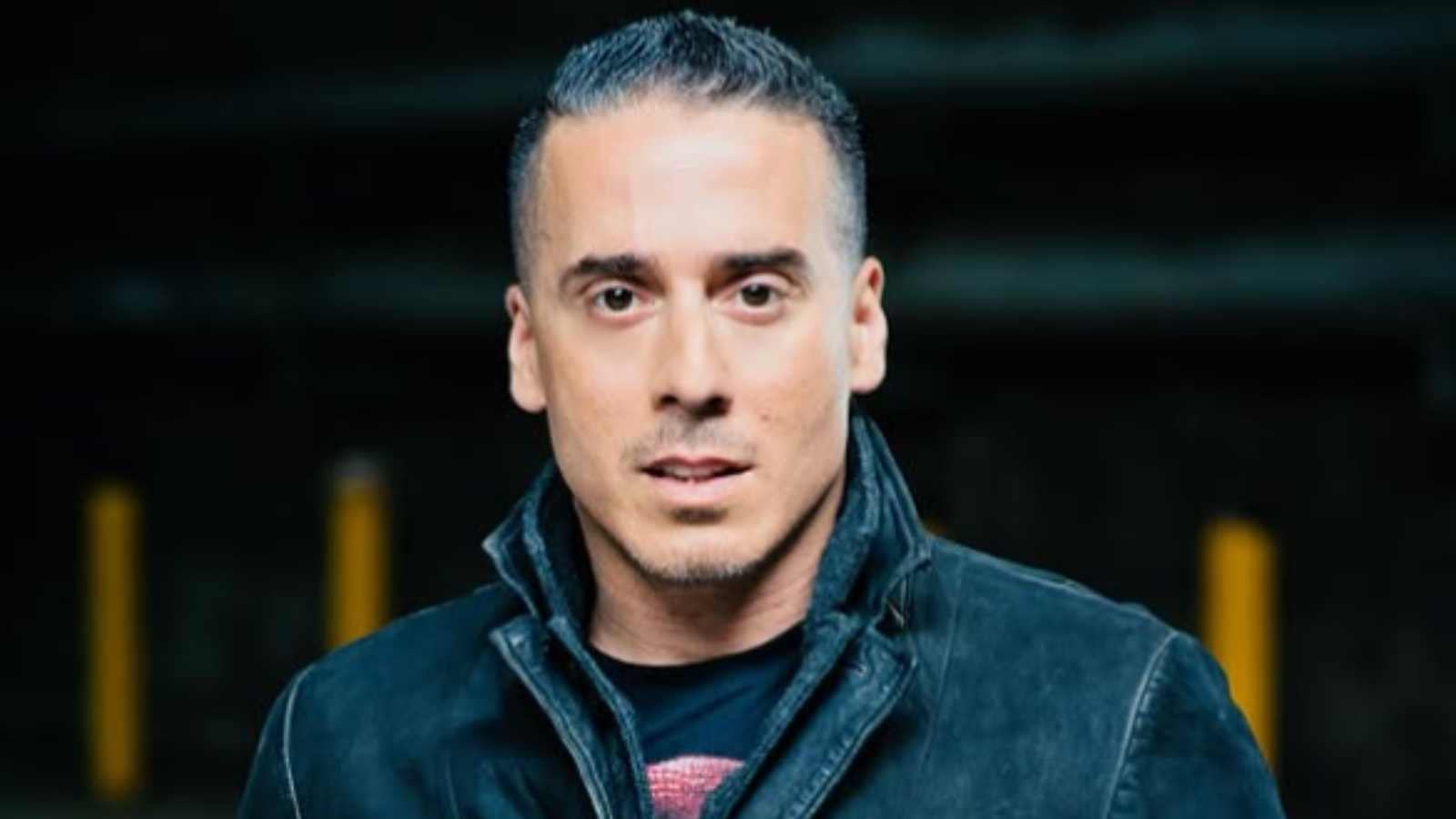
There is a loud, aching silence that settles over a home when the boxes are finally taped shut, when the walls that once echoed with the vibrant, chaotic energy of a life built on years of hard-won roles are suddenly stripped bare.
For Kirk Acevedo, a man whose face has become a fixture in our living rooms… from the brutal corridors of Oz to the harrowing trenches of Band of Brothers and the sci-fi complexity of 12 Monkeys, that silence isn’t just about moving house.
It is a deafening testament to a seismic shift in the entertainment landscape that is quietly, ruthlessly erasing the very backbone of Hollywood: the middle-class actor.
When you see a performer of his caliber, someone with such an undeniable, enduring resume, forced to make the ultimate surrender of selling his home, you have to stop and ask: if the ground is shifting beneath someone as established as him, what hope is there for the thousands of talented, working-class performers who never quite reached that household name status but kept the industry’s gears turning?
This isn’t just about one actor; it is a chilling canary in the coal mine for the death of a sustainable career in the arts.
The Breaking Point
The decision to sell one’s home is rarely a purely financial transaction; it is an emotional severing of roots, a surrender to the harsh reality that the life you worked decades to build is no longer sustainable under current conditions. For Kirk Acevedo, the choice to list his property was the final, inevitable move in a long game of professional attrition.
During a transparent, deeply raw discussion on the An Actor Despairs podcast, Acevedo pulled back the curtain on the mechanics of this decline, offering a glimpse into the life of a career actor navigating a landscape that no longer honors the “journeyman” model.
His account of this period is not merely a tale of bad luck; it is a clinical breakdown of the structural rot currently hollowing out the middle tier of the entertainment industry.
View this post on Instagram
For years, Acevedo occupied a space that most working actors would consider the “gold standard”… a consistent, high-functioning professional with a resume packed with recurring roles and critical prestige. Yet, even with that pedigree, the tectonic plates of the industry shifted beneath him.
He described a demoralizing cycle in which he would consistently reach the final stages of casting for major projects, landing in that dreaded “close second” spot, only to find the roles evaporate due to market pressures or studio preferences.
This, combined with the industry’s pivot away from the traditional, residual-heavy network model toward the current streaming paradigm, meant that the “off-season” between projects, once a manageable bridge, turned into an unbridgeable chasm of lost income and mounting overhead.
The pressure did not arrive in a single, clean strike but rather in a series of compounding, brutal shocks. Acevedo noted that the financial strain was exacerbated by the pandemic’s fallout, which effectively paused production for the better part of two years, leaving even the most prolific actors without a reliable income stream.
To make matters infinitely more complex, he faced a harrowing, personal health battle during this same window: a hemorrhagic stroke just before his 50th birthday. While he recovered, the dual reality of a physical crisis and a professional drought meant the math simply stopped adding up.
Selling the home was not a sign of failure, but a strategic, painful necessity to reclaim autonomy in an industry that had, for the moment, stopped offering the stability he had spent his entire career earning.
His story serves as a raw, cautionary reality check. When a recognizable face… a name that producers and casting directors have trusted for over two decades, reaches the point where real estate assets must be liquidated to survive a career gap, it is time to stop pretending this is just a “tough patch.” It is a structural failure.
Acevedo’s transparency about this transition… the reality of the “hustle,” the toll of the auditions that didn’t go his way, and the sobering necessity of downsizing, strips away the glamour that usually cloaks Hollywood.
It forces us to confront the question: if the infrastructure is too broken for the veterans who built the shows we love, what does that mean for the longevity of the art form itself?
The home is gone, but the larger problem remains firmly rooted in the industry’s refusal to protect middle-class talent, the lifeblood of our screen culture.
Why Hollywood’s Architecture is Failing Its Actors
We often talk about the “star system” as if it’s some abstract, untouchable tier of existence, but for the vast majority of performers, acting has traditionally been a profession… not a lottery win. It was a job, one that provided for families, paid mortgages, and allowed for the dignity of a career trajectory.
But that model is being dismantled piece by piece. The current industry climate is characterized by an extreme consolidation, where the “middle” is being hollowed out, leaving us with a stark, brutal landscape: massive, celebrity-driven tentpoles at the top, and a desperate, oversaturated scramble for scraps at the bottom.
The loss of traditional network television models, which acted as a vital, consistent paycheck for working actors, has been replaced by a streaming ecosystem that, while prolific in output, is often stingy in the compensation that sustains a life.
The residuals, once the lifeblood of an actor’s retirement and stability, have been slashed, turning a career that was once a marathon into a series of increasingly precarious sprints.
What we are witnessing is the “K-shaped” professional economy manifesting in real-time within the arts. While the A-list stars and the massive IP-driven franchises consolidate more wealth and control than ever, the reliable, journeyman actor, the one who brings depth to supporting roles and gives a show its texture… is finding that their seat at the table is being revoked.
The trend of casting massive stars in roles that were once the province of career actors is further accelerating this collapse. Why hire a professional who has spent decades honing their craft when you can drop a recognizable, headline-grabbing celebrity into the role, regardless of whether they bring the necessary gravitas?
It is a business decision, certainly, but one that ignores the long-term health of the creative ecosystem. When you replace the nuance of a career craftsman with the marketing power of a celebrity cameo, you aren’t just changing the cast; you are degrading the final product and ensuring that the next generation of “middle-class” talent has no ladder to climb.
Is the Industry Actually Changing, or Are We Just Seeing the End of the “Dream”?
Here is the double-edged, perhaps unpopular, truth that rarely makes it into the glossy trades: we may have been selling a romanticized, outdated version of an acting career for far too long.
For decades, the public perception of the “working actor” was built on the back of a mid-20th-century boom, a unique historical anomaly in which television was a massive, centralized industry with an insatiable appetite and sustainable compensation structures.
We hold that era up as the gold standard, yet we are effectively demanding that a drastically different, digital-first, decentralized economy perform under the same rules.
Is it possible that the “middle class” of Hollywood was always a fragile construction, and we are now just witnessing its natural, inevitable collapse under the weight of globalization and technological disruption?
While it is easy to point fingers at streamers and corporate consolidation, there is a harder question to face: has the audience’s own behavior, our constant demand for content, our devaluation of art by treating it as a utility to be consumed in the background, our insistence on “star power” over narrative integrity, actually dictated this shift?
By favoring algorithms and viral moments, we have inherently voted for a system that rewards spectacle over substance. If we want a middle class of actors to survive, we cannot simply rely on union negotiations or corporate altruism.
It requires a radical shift in how we value performance, how we incentivize original content, and how we, as the consumers of this art, choose to spend our attention. Without a fundamental recalibration of what we value in our entertainment, the “squeeze” won’t just continue; it will become the permanent state of affairs.