A postcard arriving in the mail tells recipients that $309.64 in grocery and gas vouchers is waiting for them, but the Better Business Bureau says responding to the offer can instead lead to card charges, recurring subscriptions or no vouchers at all.
The mailers use the name “AAPP,” provide recipients with a personal claim number and tell them to call a phone number or scan a QR code immediately before the supposed vouchers are automatically forfeited.
People who respond can then be asked to pay a small processing, activation, shipping or handling fee to receive the promised reward. Reports submitted to the BBB describe consumers later finding additional unauthorized charges, being enrolled in monthly subscriptions or never receiving the gas and grocery vouchers they expected.
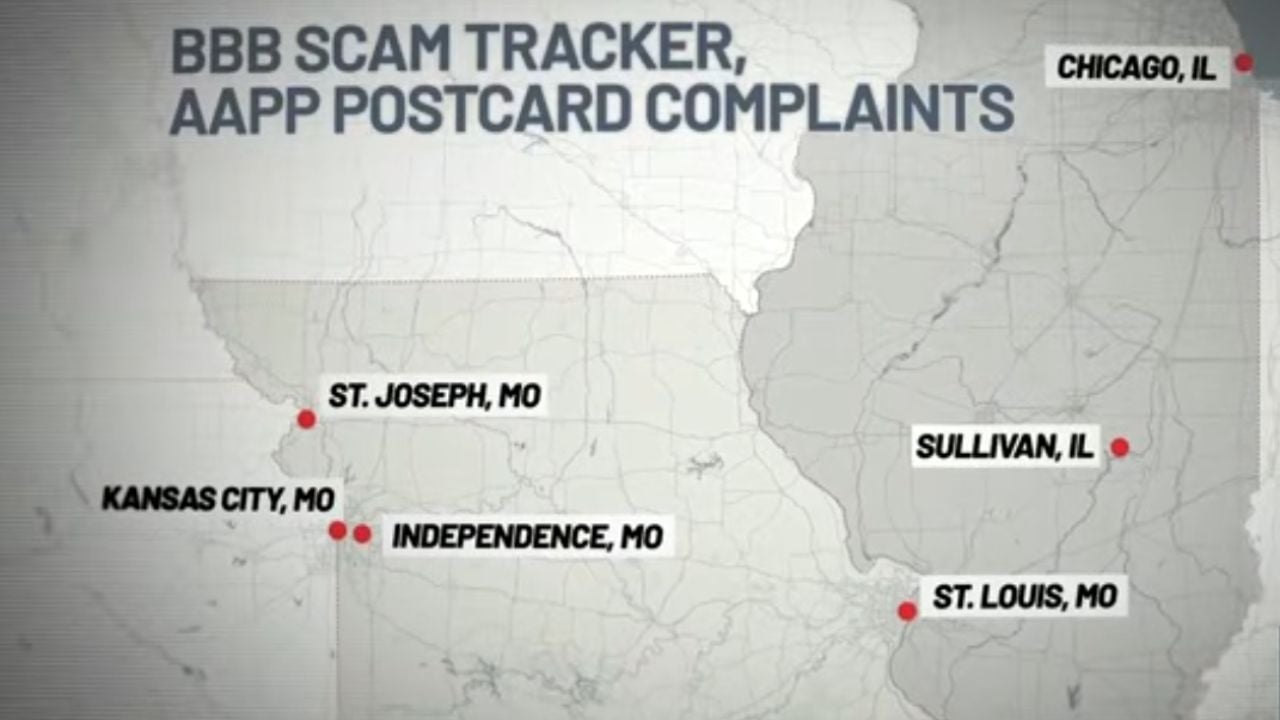
First Alert 4 reported that complaints have surfaced in St. Louis, St. Joseph, Kansas City and Independence in Missouri, several Illinois communities and other cities around the country.
The Postcard Says More Than $300 Is Already Waiting
One O’Fallon, Missouri, resident told BBB Scam Tracker that a postcard claimed $309.64 in grocery and gas vouchers was being held for them and warned that failing to respond would result in “automatic forfeiture.”
Similar versions of the mailer have appeared elsewhere in the country. A BBB Scam Tracker report filed by a recipient in Litchfield, Michigan, described an unsolicited mailing using the AAPP name, the same $309.64 figure, an urgent call to action, a personal claim number, a QR code and a telephone number.
That Michigan recipient reported having no existing relationship with AAPP. The mailing was described as Presorted First Class Mail and listed a Tampa, Florida, permit, adding some of the details that can make an unsolicited postcard look like ordinary business correspondence.
Another BBB Scam Tracker report, this one from Toledo, Ohio, described essentially the same offer. After calling the number, the recipient said they were told a $5.95 payment was required before the $309.64 voucher could be received.
The Mailers Use Urgency and Official-Looking Details
The Better Business Bureau says these offers can look more credible because they arrive as physical mail rather than through a suspicious text or pop-up advertisement. Some versions include barcodes, tracking-style numbers, expiration language, customer-service telephone numbers and personalized claim codes.
The language is also designed to create urgency. Recipients may be told they need to respond immediately, that the offer is a “final notice” or that failure to claim the vouchers will cause them to be forfeited. That can make someone feel as though researching the company first could cost them money that already belongs to them.
In its July 30 scam alert, the Better Business Bureau said it had received multiple reports involving postcards promising gas and grocery cards or vouchers. The BBB also noted that the economic pitch is well suited to current consumer concerns. Gas and grocery savings can be especially attractive when households are looking for ways to reduce routine expenses.
A Small Fee Can Lead to More Charges
Sarah Wetzel of the Better Business Bureau told First Alert 4 that the initial request is typically for a relatively small payment after someone calls the number or visits the website connected to the postcard. The problem may become apparent only after the consumer provides card information.
BBB reports describe additional unauthorized transactions appearing on accounts, people discovering that they had been entered into recurring monthly subscription programs and consumers who never received the gift cards or vouchers they believed they were buying. The BBB documented one report in which a woman said her sister agreed to a $5 processing fee after receiving an AAPP postcard. According to the complaint, another $46 was taken immediately afterward, bringing the reported loss to $51.
Another June 2026 Scam Tracker report described a consumer who said they paid $5.95 for a purported $300 grocery and gas voucher and later found additional charges of $44.79 and $38.40. The person said attempts to obtain help led to a telephone number for an unrelated medical business and calls being disconnected.
Extra charges are not the only outcome described in the complaints. The BBB says some consumers report that the promised cards or vouchers simply never arrive, while others may receive low-value coupons or promotional materials.
The Phone Pitch Changed the Offer Into a Visa Gift Card
First Alert 4 called one of the telephone numbers printed on the mailers to find out what callers were actually being offered. The man who answered described the product as a Visa gift card worth roughly $310 that could supposedly be used at major retailers including Walmart, Target and Best Buy.
That description differed from the postcards’ framing around grocery and gas vouchers. When the reporter asked to speak with a manager, the man said the call would be transferred, but nobody answered. The station called another number associated with the voucher offer, and the woman who answered hung up after the reporter asked for a manager.
The telephone numbers printed on the postcards have not always been identical. Some reports list numbers with Tampa-area 813 codes, while others identify a 656 number.
Do Not Pay a Fee to Claim an Unexpected Voucher
The BBB recommends independently searching the company name and checking its business profile, complaints and Scam Tracker reports. A request for a processing, activation, shipping or handling fee is a major warning sign when the offer is presented as a prize or free reward.
The Federal Trade Commission warns that genuine prizes do not require recipients to pay upfront fees to collect them and advises consumers not to provide credit card, bank-account or sensitive personal information to claim an unexpected prize. Recipients should also avoid scanning an unfamiliar QR code simply because it appears on professional-looking mail.
The BBB advises people who lose money to contact their bank promptly and report the incident to police, while questionable mailers can be reported through BBB Scam Tracker. Consumers can also report suspected fraud to the FTC through ReportFraud.ftc.gov. Because this campaign uses physical mail, suspected fraudulent mailings can also be reported to the U.S. Postal Inspection Service.