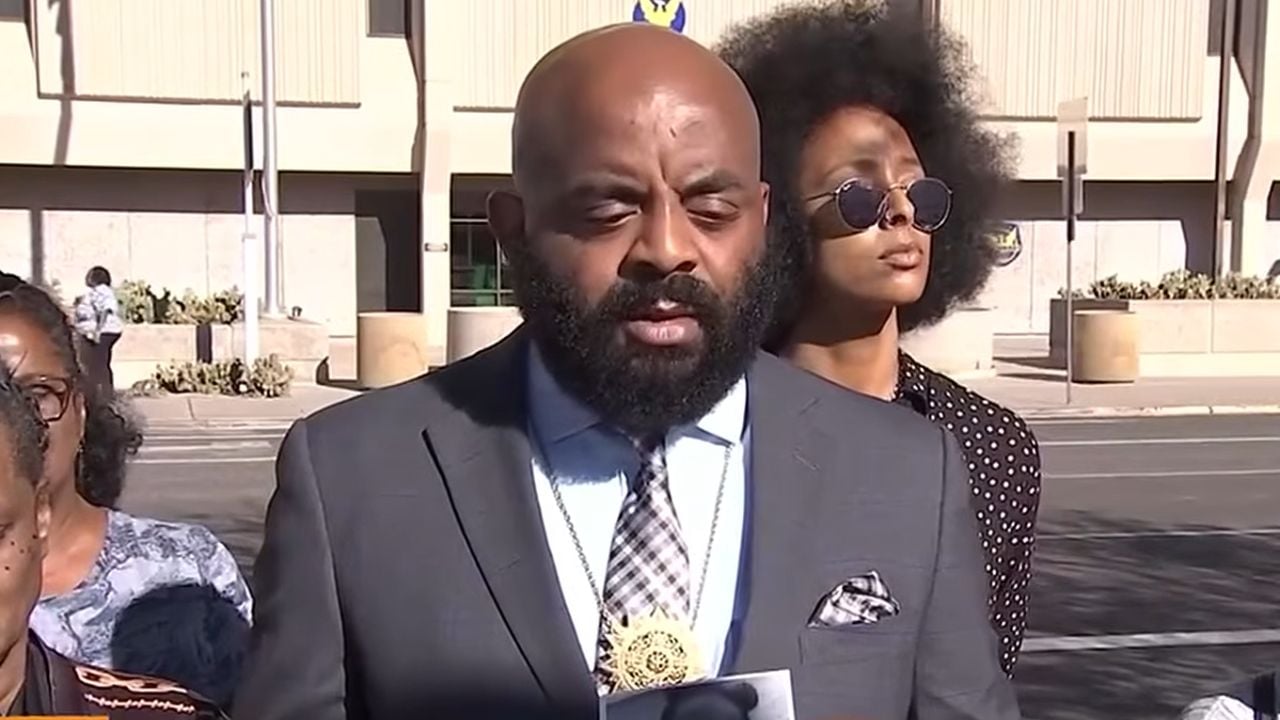
A Phoenix civil-rights activist known for speaking on behalf of families in police-violence cases has pleaded not guilty to a new indictment involving allegations of check fraud.
Jarrett Maupin was indicted on nine felony counts, according to Arizona’s Family.
Prosecutors allege Maupin fraudulently cashed checks in incidents dating back to 2022. His attorney, Robert McWhirter, told the station Maupin is innocent and that the defense looks forward to showing that in court.
The Arizona Attorney General’s Office is prosecuting the case and declined to comment to Arizona’s Family.
The Indictment Includes Nine Felony Counts
Court documents reviewed by Arizona’s Family show Maupin is accused of cashing personal checks belonging to two people and a cashier’s check from a business.
The checks date back to March and November 2022. Records show each check was for less than $25,000, according to the station.
Jason Lamm, a criminal defense attorney who is not involved in the case, told Arizona’s Family the alleged loss amount is relatively limited compared with larger fraud cases.
“The charges themselves are not overtly serious because the amount of loss is relatively minimal, under $25,000,” Lamm told the station.
His Attorney Said He Is Not Leaving Town
Maupin appeared in court for his arraignment and did not have to pay bail, Arizona’s Family reported.
McWhirter pointed to Maupin’s community ties and said his client is currently a Phoenix City Council candidate.
“So he’s not going any place,” McWhirter told the station.
Maupin is due back in court in July. The charges remain allegations unless proven in court.
Check Fraud Cases Often Start With The Bank
The public record cited by Arizona’s Family does not identify the two people or the business tied to the checks. It also does not list the exact amount allegedly cashed.
For anyone who sees a check clear in the wrong hands, the first call should go to the bank or credit union. The Consumer Financial Protection Bureau says a person who wrote a check that was stolen and cashed should contact the bank or credit union right away.
The Office of the Comptroller of the Currency also advises consumers to notify their financial institution, dispute unauthorized transactions, consider closing the affected account, and report check fraud to law enforcement and the Federal Trade Commission.
If the check may have been stolen from the mail, the U.S. Postal Inspection Service should also be contacted. That guidance applies broadly to check-fraud victims; it is not a claim about how the checks in Maupin’s case were obtained.