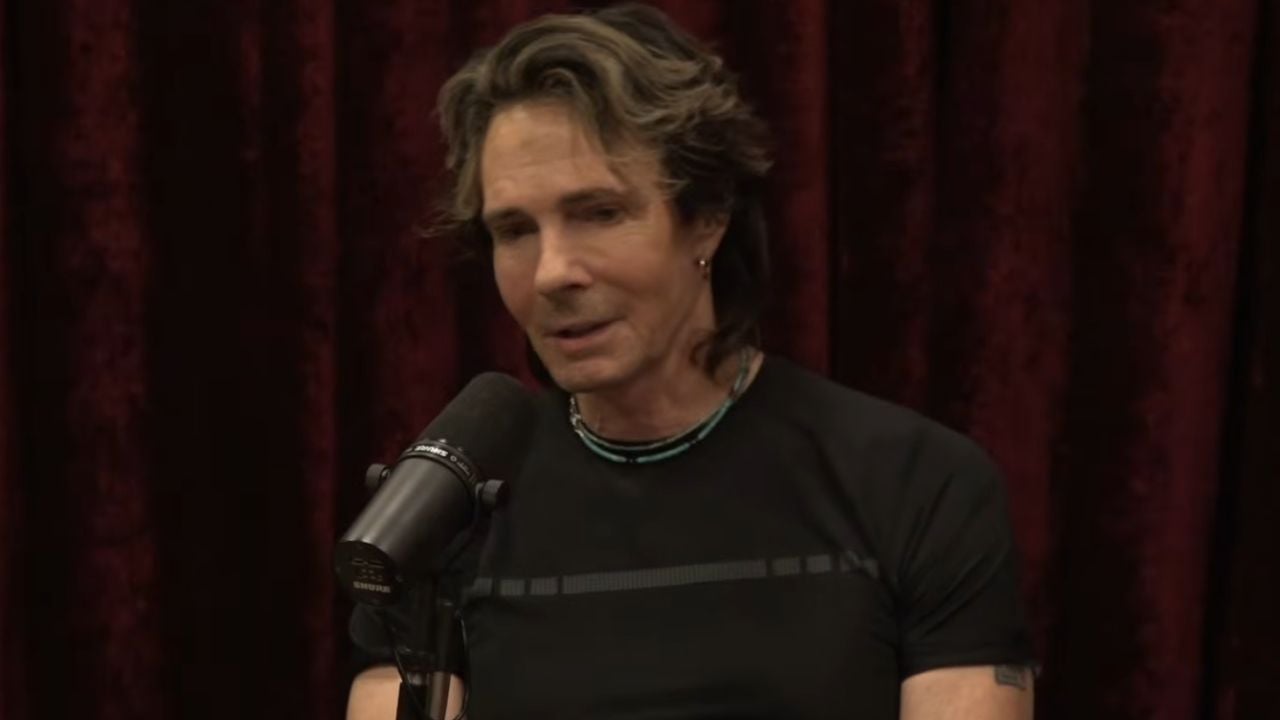
Rick Springfield says one memory followed him home from Vietnam and never found an easy place to go, being told that one of the mortar rounds he fired during an attack had struck a Viet Cong fighter.
The 77-year-old singer revisited the experience on the Sept. 8 episode of The Joe Rogan Experience episode, No. 2550, nearly six decades after traveling through Vietnam with an Australian band to entertain troops. Springfield said the group had befriended Navy personnel at Marble Mountain, outside Da Nang, and returned to give them a free performance before staying overnight, according to Page Six.
During an attack, Springfield said he remained in a radio shack while his bandmates went to perimeter positions. After a radio check indicated there were no friendly forces in one target area, somebody invited the young guitarist to fire mortar rounds. Springfield says he dropped about five or six down the tube.
The following morning, he remembers being told, “You got one,” and that one of the rounds had “hit a VC.” Springfield says he has spent decades grappling with the belief that he may have ended another person’s life.
Springfield Says the Memory Still Hasn’t Found a Place to Land
When Joe Rogan asked what it was like to decompress after returning home, Springfield did not begin with the rockets, bunkers or gunfire he had already described. He went directly to the mortar attack. “The hardest thing for me was that I’d thrown a mortar down and it had hit somebody,” Springfield recalled.
Springfield said that became the part of the experience he “couldn’t really find a place for.” Asked how long it remained with him, his answer was immediate: “I think it’s still there.” He described having difficulty facing the possibility that he had been responsible for ending a life, even though he was a civilian teenager caught inside a war zone and had little understanding of what he was doing at the time.
Springfield’s explanation for his mindset that night was far less complicated. He called it “John Wayne time,” remembering himself as a young man suddenly given an opportunity to fire a weapon and reacting to the excitement before fully considering what the rounds could do.
He Had Gone to Vietnam to Play Music, Not to Fight
Springfield was still years away from “Jessie’s Girl,” General Hospital and the fame that would follow him in the United States when he went to South Vietnam as a young guitarist.
His current recollection places the trip across 1968 and 1969. Springfield said promoters operating out of Saigon and Da Nang hired Australian acts to entertain troops, and his group spent about four months in the country. Music histories identify the band as MPD Ltd., which Springfield had joined after playing with Pete Watson’s Rockhouse.
Springfield told Rogan that the musicians based themselves around Saigon and Da Nang and traveled from Cam Ranh Bay toward the Demilitarized Zone. What initially sounded to him like a way to make money quickly became an experience in which performances and travel took place amid an active war.
He remembered being shot at, rocketed and having mortars land while the band was performing. Springfield also recalled being close to the DMZ around the period after the 1968 Tet Offensive and watching flares illuminate the sky as fighting unfolded nearby.
Marble Mountain became particularly memorable because the musicians had befriended Navy personnel stationed there and chose to return to perform for them without charge. Springfield said the servicemen appreciated the music because it provided some connection to home.
The band stayed overnight. When the installation came under attack, Springfield said the other musicians went to perimeter bunkers while he remained in the radio shack. He remembered radio traffic reporting movement in one area and somebody checking whether any friendly forces were there. After the answer came back that there were not, Springfield says he was invited to put mortar rounds down the tube.
He fired approximately five or six. Only the following morning, according to Springfield, did someone tell him what one of those rounds was believed to have done.
He Had Told the Marble Mountain Story Before
In a 2025 Screamer Magazine interview, he described staying overnight with Navy personnel at Marble Mountain when the position came under attack. He remembered green tracer fire, a helicopter going down and his bandmates taking shelter in surrounding bunkers while he remained in the radio shack.
He also emphasized how dangerous the act was for an untrained civilian, saying he could easily have blown off his own hand. The broader Vietnam experience has been part of Springfield’s story for years. He told a Fort Worth Weekly interviewer while promoting his 2010 memoir Late, Late at Night that his band’s time near the front lines was “pretty harrowing,” and the interviewer described the Vietnam portion of the autobiography as especially intense.
The Experience Still Hasn’t Become a Song
Rogan asked whether Springfield had ever turned what happened in Vietnam into music. He said no. Springfield told him that although he had written about the experience in his autobiography, it had “not yet” become song material.
That could eventually change. Springfield said he has another record coming that deals with getting older and with the thoughts that become harder to avoid later in life. He suggested that elements of the Vietnam experience could potentially find a place within that broader subject matter, without saying he has already written a song about it.
He contrasted those themes with his younger songwriting, joking that when he made Working Class Dog around age 30, his thoughts were dominated by sex. At 77, he said mortality now occupies more space in what he thinks and writes about.