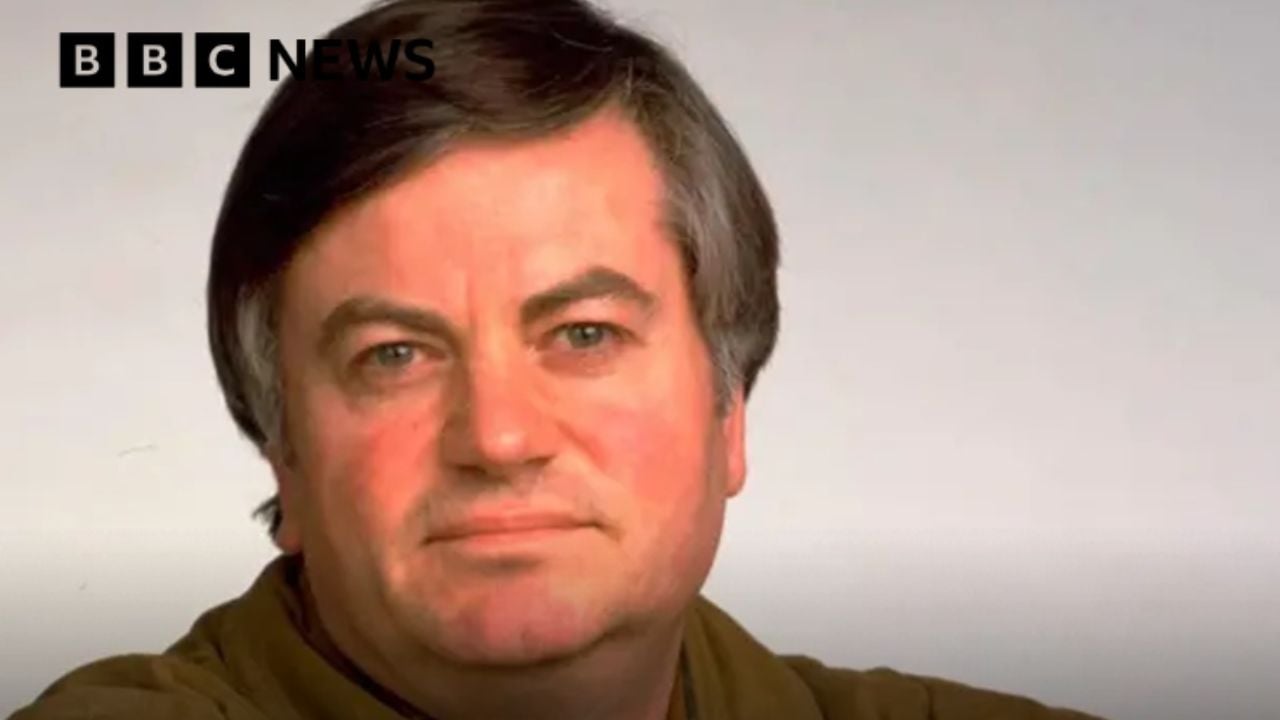
Roger Cook, the investigative journalist whose confrontational reporting made The Cook Report one of British television’s defining current-affairs programs, has died at 83.
Cook’s family said he died peacefully on Saturday after a short illness, according to ITV. The broadcaster reported that he had been treated at Royal United Hospitals Bath for three weeks after doctors found a cancerous tumour at the base of his spine.
“Alongside a distinguished and award winning career in journalism, Roger was first and foremost a beloved husband and father,” his family said in a statement. “He will be deeply missed by all of us, and we ask for privacy as we navigate this difficult loss.”
Cook leaves behind his wife, Frances, and daughter, Belinda. His death ends a five-decade broadcasting career built on undercover reporting, doorstep confrontations and investigations that often carried real physical danger.
The Cook Report Made Him a TV Investigative Landmark
View this post on Instagram
Cook was best known for The Cook Report, the ITV current-affairs series that ran from 1987 until 1999. ITV said the show ran for 16 series and more than 120 episodes, with Cook pursuing criminals, con men and corrupt officials on camera.
The program investigated subjects including protection rackets in Northern Ireland, baby trading in Brazil, the tainted blood scandal, the illicit ivory trade, illegal immigration, war criminals in Bosnia and the black market in weapons-grade plutonium, according to ITV.
The broadcaster said the series drew up to 12 million viewers, won 11 national and international awards and earned Cook a special BAFTA award in 1997. ITV also said a number of his programs were followed by police prosecutions or major changes in the law.
ITV paid tribute to Cook as “one of broadcasting’s most trusted and respected figures,” saying he “worked tirelessly to expose criminal wrongdoing and injustice.”
His Reporting Often Put Him in Physical Danger
Cook’s reputation came from a style of reporting that put him directly in front of the people he was investigating. The Guardian reported that he has been credited with helping pioneer the TV doorstep confrontation format.
That approach brought repeated threats and injuries. ITV reported that Cook was once described as the “bravest – and most beaten up” journalist in Britain. In 1981, while working on a Newsnight report, he was beaten with an iron bar by an antique dealer in Brighton after exposing the sale of fake antiques. He broke three ribs.
The Independent reported that Cook was known for never shying away from confrontational doorstep interviews. The Guardian also reported that his undercover stings led to police investigations and criminal convictions, including work connected to a money-laundering exposé involving Johnny “Goldfinger” Palmer.
Cook Built His Career Before ITV
Cook was born in New Zealand and raised in Australia, where he began his career as a reporter and newsreader with the Australian Broadcasting Corporation. He moved to the U.K. in 1968 and worked for the BBC on programs including The World at One, PM, Nationwide and Newsnight.
He created the investigative BBC Radio 4 program Checkpoint in 1973. ITV said the radio show exposed con men, major criminals and official incompetence before Cook moved to ITV in 1985 to launch The Cook Report for Central TV in Birmingham.
Cook returned to the format in 2007 with a 90-minute special, Roger Cook’s Greatest Hits, revisiting some of his earlier investigations. The Independent reported that he said during the special that he had received death threats because of the series.
His influence also reached comedy. The Independent reported that his doorstepping style was parodied by Vic Reeves and Bob Mortimer, while Stephen Fry mocked the format in Channel 4’s This Is David Lander.