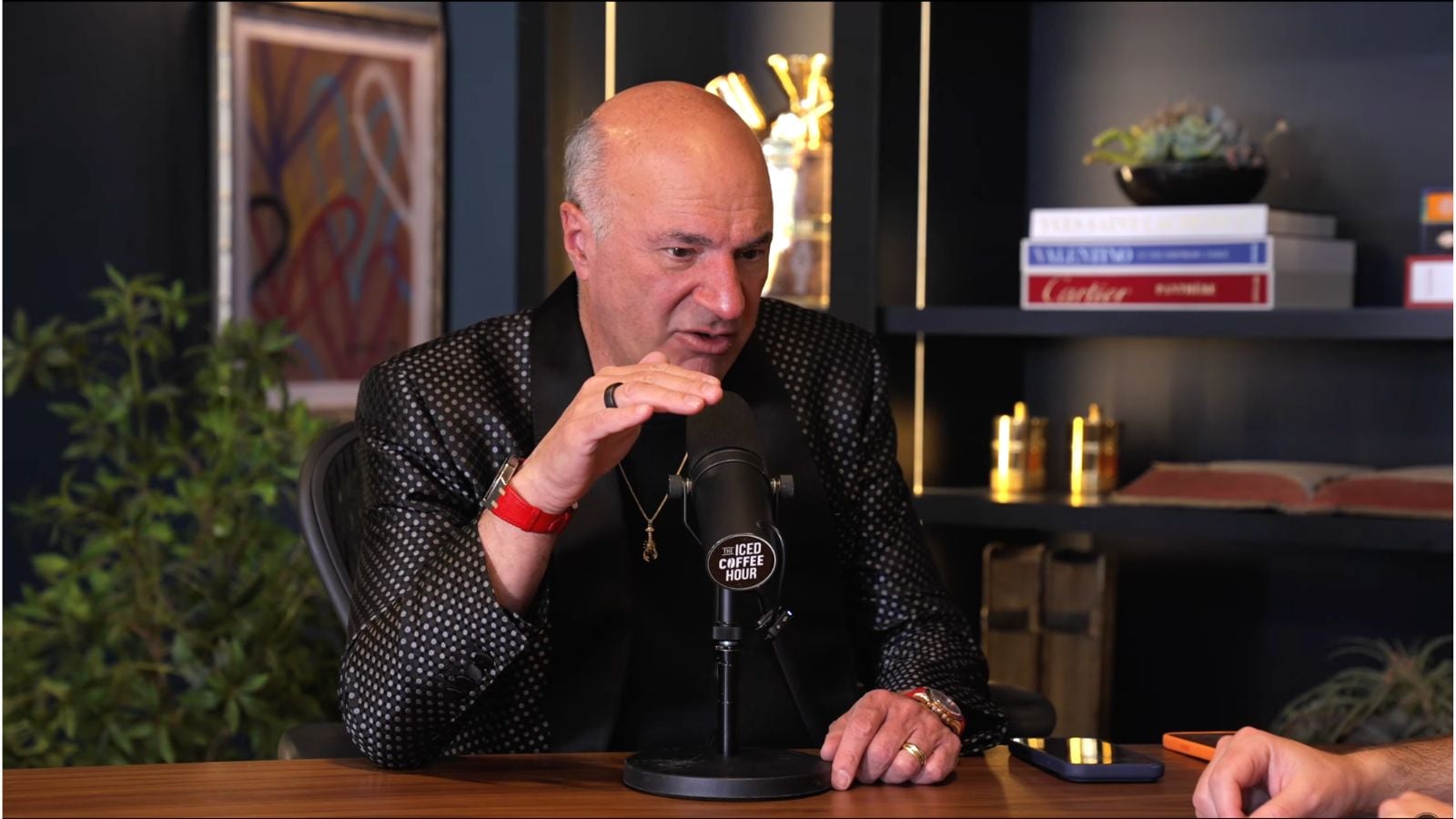
A 26-second clip of Shark Tank’s Kevin O’Leary is making the rounds, and it’s not going the way Mr. Wonderful probably hoped.
O’Leary appeared on The Iced Coffee Hour podcast in a clip posted Saturday that has now racked up over 5 million views on X. In it, O’Leary delivers the kind of advice that sounds clean on a podcast set: “Take 20% of your salary of $69,000 and put it into the market each week and don’t touch it.” Do that, he says, and you’ll become a millionaire.
The clip went viral. But not for the reason O’Leary probably wanted.
Kevin O’Leary reveals you’ll become a millionaire on $69,000/year by investing 20% of your paycheck each week👀
“Take 20% of your salary of $69,000 and put it into the market each week and don’t touch it” pic.twitter.com/jAjtG2loBa
— The Iced Coffee Hour (@TheICHpodcast) March 29, 2026
The Part Where Someone Actually Ran the Numbers
Tech investor Adam Cochran, who has over 283,000 followers on X, quote-tweeted the clip and tore it apart. Even if someone earning $70,000 somehow had 20% of their paycheck left after rent, groceries, insurance, and everything else it takes to stay alive, and even if they got the average market return, Cochran pointed out it would still take roughly 30 years to reach $1 million — and that’s before taxes take their cut.
Then Cochran went further, calling O’Leary “desperate for relevance” and pointing out that he “became a media personality who lost money on investments while pretending to be good at it.”
The post was vicious. It was also not wrong about any of the numbers.
If somehow you had 20% of your $70k paycheck left to invest after cost of living
AND you got the average rate of return in the markets…
Then it’d still take you **30 years** to reach $1M (excluding tax hits)
Meanwhile Kevin did a sleazy takeover of a company sold it with… https://t.co/67Uztq1GSS
— Adam Cochran (adamscochran.eth) (@adamscochran) March 29, 2026
A Track Record That Tells Its Own Story
Mr. Wonderful’s investment advice might land differently if his own investment history weren’t sitting right there, in public, waiting to be Googled.
His company SoftKey, later renamed The Learning Company, was acquired by Mattel in 1999 for $4.2 billion. What followed was a disaster. Mattel had projected a $50 million profit from the acquisition. Instead, it posted a $105 million loss. The company’s stock cratered, erasing more than $2 billion in market value in a single day. O’Leary was fired within six months. Mattel later paid $122 million to settle a class-action lawsuit from shareholders who alleged that TLC’s leadership had used accounting maneuvers to hide losses and inflate revenue. The settlement included no admission of wrongdoing.
Then there was FTX. O’Leary was a paid spokesperson for Sam Bankman-Fried’s crypto exchange, collecting $15 million for the gig. He pushed the platform hard across social media, telling followers that FTX had solved his compliance concerns around crypto. When the exchange collapsed in 2022, O’Leary told CNBC he’d lost roughly $9.7 million in crypto held on the platform, plus a $1 million equity stake — all effectively wiped to zero. His own words to the hosts of Squawk Box: “We all look like idiots.”
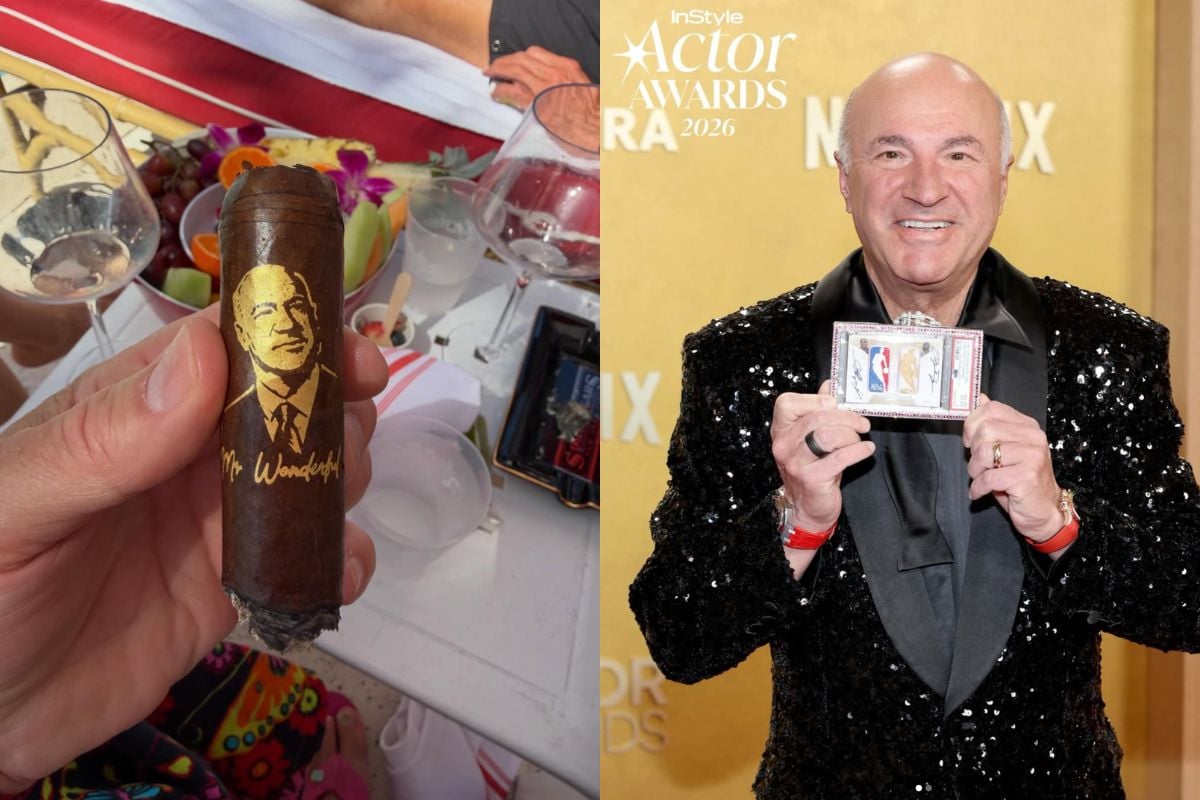
His own fund company, O’Leary Funds, didn’t fare much better. The funds bled money — critics pointed to poor performance — before O’Leary sold the operation to Canoe Financial in 2015.
The Coffee Lecture, Again
None of this has slowed O’Leary’s appetite for telling working people how to manage their money. He’s been running some version of this sermon for years — the one where he tells people making $60,000 to stop buying $5.50 coffees and $15 sandwiches and start investing instead. He once told an audience he “can’t stand” watching young people spend $28 on lunch.
This is the same man who collects vintage guitars and launched a vanity wine brand. His net worth is often estimated around $400 million — built not through compound interest on a middle-class salary, but through a corporate acquisition, television deals, and paid endorsements. One of those endorsements was for a crypto exchange that turned out to be, by O’Leary’s own description, “not a good investment.”
5 Million Views, One Question
The Iced Coffee Hour clip has 5 million views and climbing. The ratio in the replies is brutal. The math doesn’t add up. The track record doesn’t help.
But here’s the part nobody in the comments has quite landed on yet: O’Leary didn’t become a millionaire by investing 20% of a $69,000 salary. He became a millionaire by selling a company to Mattel for what was initially valued at $4.2 billion — a deal BusinessWeek later named one of the “Worst Deals of All Time.”
He’s not teaching what he did. He’s teaching what he tells other people to do.
Whether there’s a difference is something the comments section is currently working out.