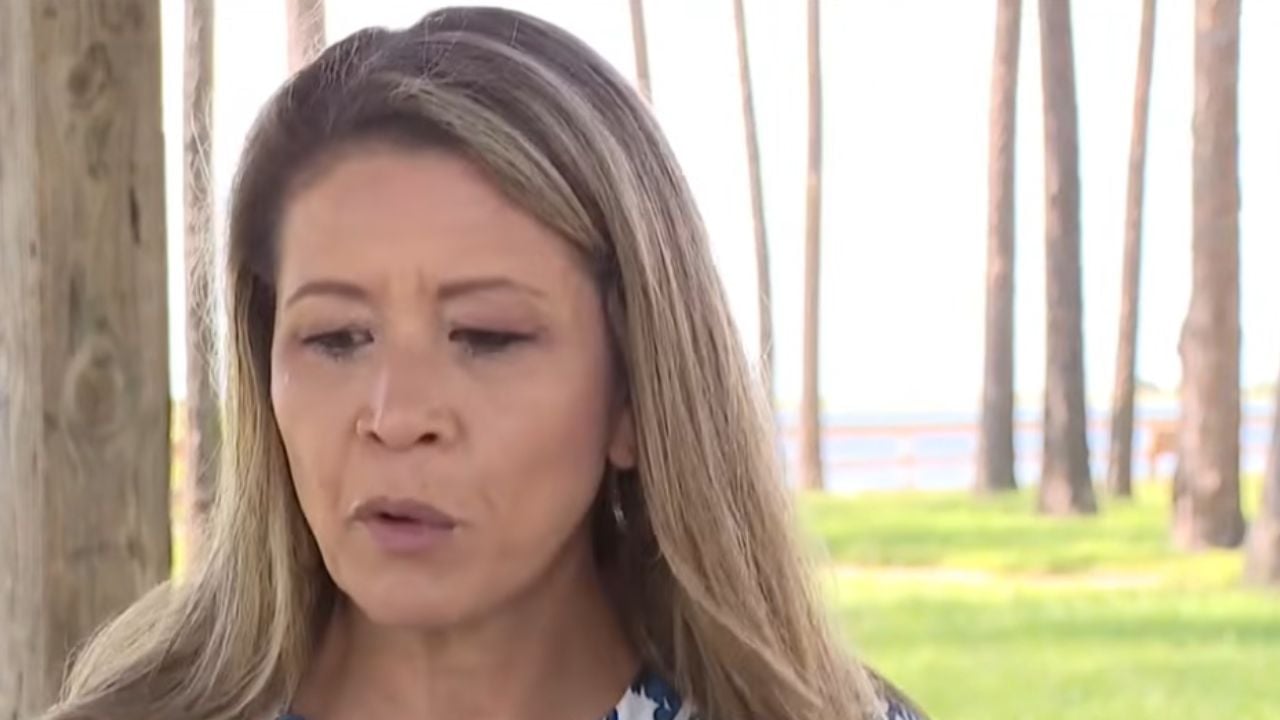
Narissa Jenkins was familiar with scam calls, but this one arrived with a detail that made the story unusually believable. The Okaloosa County woman really had received a federal jury summons.
The caller claimed Jenkins had failed to appear for federal jury duty in August and now needed to resolve the problem. Her actual summons was for September, leaving her wondering whether the court might have sent her the wrong date.
The person identified himself as an Okaloosa County sheriff’s deputy and gave Jenkins the name of a real officer. When she questioned the call, the scammers made another call appear on her phone as though it were coming from the sheriff’s office’s legitimate main number.
Then came the demand. WEAR reported that Jenkins was told to pay $25,000 at what the caller described as a federally approved depository. The address led her to a Shell gas station on Miracle Strip Parkway, where the supposed federal payment location was actually a Bitcoin ATM.
Her Real Jury Summons Made the Story Believable
Jenkins said she was accustomed to recognizing common impersonation scams and had even called obvious IRS scammers back in the past. This call was different because the story happened to overlap with something genuinely occurring in her life.
She had received a real federal jury summons for September. When the caller claimed she had failed to appear for jury duty in August, Jenkins began wondering whether there had been a mistake with the date instead of immediately dismissing the call as fraudulent.
The caller used that supposed failure to appear to build a story around possible legal consequences and an urgent payment.
The Caller Used a Real Deputy’s Name and Spoofed the Sheriff’s Number
The person on the phone claimed to work for the Okaloosa County Sheriff’s Office and provided the name of an actual deputy. Jenkins searched the name herself and confirmed that the officer was real.
When she continued asking questions, the people behind the call offered what appeared to be additional proof. They said they could call her from the sheriff’s office’s main number. When the new call arrived, Jenkins saw the department’s legitimate number displayed on her phone.
Okaloosa County Sheriff Eric Aden said scammers are using technology to make impersonation calls increasingly convincing, including artificial intelligence voice manipulation and caller ID spoofing. The available reporting does not establish that Jenkins specifically heard an AI clone of the real deputy’s voice.
The $25,000 Payment Address Led to a Bitcoin ATM
Jenkins was told she needed to pay $25,000 at what the caller described as a federally approved depository. Following the address she was given, she arrived at a Shell gas station on Miracle Strip Parkway and found a Bitcoin ATM inside.
That was where the scheme began to unravel. The machine displayed a warning about jury duty scams, but Jenkins said the caller urged her to ignore it and continue with the cryptocurrency payment.
She Drove to the Sheriff’s Office Instead of Paying
Jenkins did not put the $25,000 into the cryptocurrency machine. Instead, she left and drove directly to the Okaloosa County Sheriff’s Office.
There, she learned that the jury duty story was fraudulent. She did not lose the money.
Sheriff Aden warned that his deputies do not call residents to say they missed jury duty or another court obligation and then demand payment to avoid legal consequences. He advised people receiving such calls to hang up rather than follow the caller’s payment instructions.
How to Verify a Jury Duty Threat Before Sending Money
The Federal Trade Commission warns that jury duty scammers may already know personal information, send official-looking documents and spoof government phone numbers to make an arrest threat appear legitimate. A familiar caller ID does not prove that a call actually came from law enforcement or a court.
The FTC says courts do not demand payment over the phone, and real law enforcement will not threaten to arrest someone for hanging up. A demand to resolve supposed jury trouble with cryptocurrency, gift cards, payment apps or a wire transfer is a sign of an impersonation scam.
The U.S. District Court and U.S. Attorney’s Office for the Middle District of Florida say federal jury summonses are sent through the mail. If someone disregards a summons and is ordered to appear before a judge, that order will be in writing. A fine is not imposed until the person has had an opportunity to appear in court and explain the failure to appear.
Anyone unsure about a jury duty call can independently find the court clerk’s or law enforcement agency’s official number and verify the claim directly, rather than calling a number supplied by the person making the threat. Suspected jury duty scams can also be reported to the FTC at ReportFraud.ftc.gov.