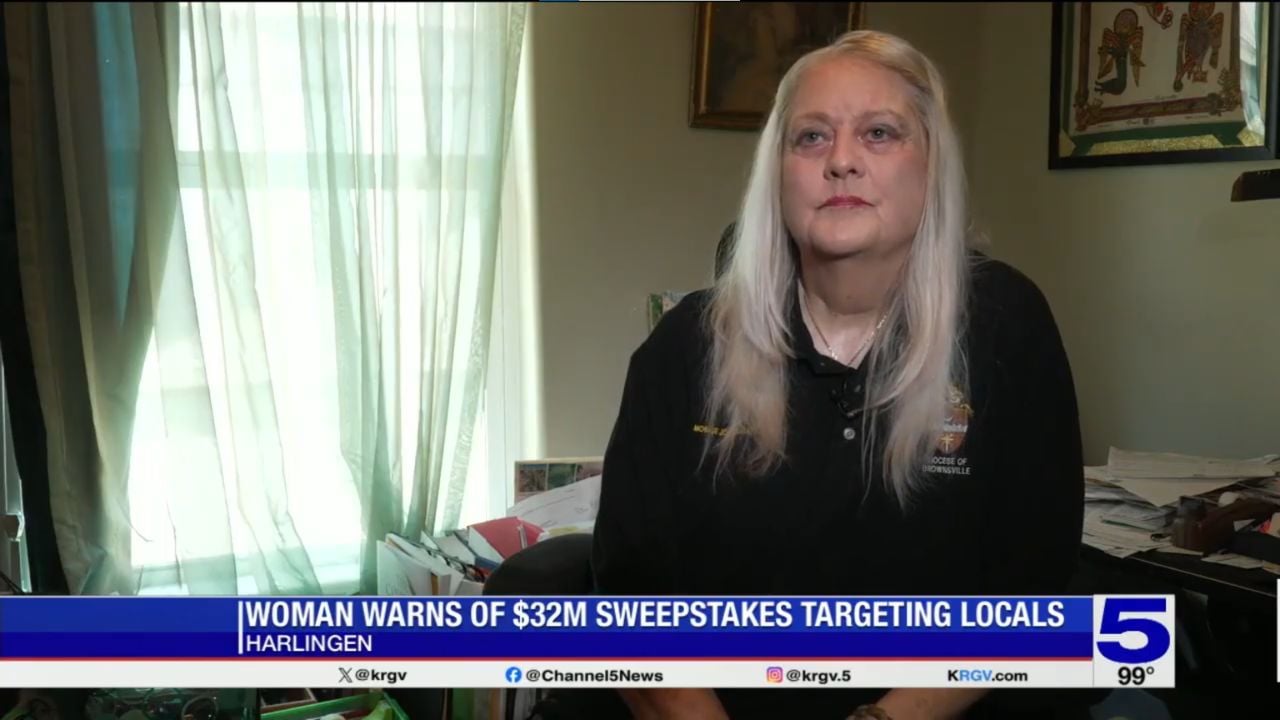
A Harlingen woman says a supposed $32 million sweepstakes win came with one expensive condition: she had to pay $5,000 before she could collect the money and a brand-new car.
Sue Groves told KRGV that callers and emailers from a company calling itself “American Cashaward” kept contacting her with the prize claim. They told her she had won $32 million and a new car, but said she needed to pay money upfront before receiving anything.
Groves did not send the money. She questioned why anyone would have to pay thousands of dollars to receive a prize they had not yet collected.
“Can you tell me why I have to pay money in advance on money I don’t have?” Groves told KRGV.
The Prize Offer Fell Apart When The Address Was Checked
The email included a Las Vegas address, according to KRGV. Channel 5 News checked the location and found it was not a real address.
The company also used the Better Business Bureau logo in the email and claimed to be BBB accredited. KRGV reported that a BBB search showed the company had an F rating and was not BBB accredited.
The BBB business profile for American Cash Awards also lists the business as not accredited and gives it an F rating. BBB said both Las Vegas addresses it had on file for the company were invalid according to the U.S. Postal Service, and the rating cited concerns with the industry and 18 complaints filed against the business.
The $5,000 Demand Came Before Any Prize
Groves said the pitch was tempting, but the payment demand made her stop. “Who does that? From a common-sense perspective, you never pay money or taxes or whatever for something you don’t have,” she told KRGV.
The Federal Trade Commission says real prizes are free. If a caller or emailer says the winner must first pay for taxes, shipping, handling, processing fees, customs duties, or any other charge, the agency says the person is dealing with a scammer.
Anyone who receives a similar prize notice can check the company name directly at BBB.org and search the message text, phone number, and address before responding. The safer move is to ignore the phone number or link inside the message and look up the company independently.
The BBB Says Similar Reports Keep Coming In
Hilda Martinez, president of the Better Business Bureau in the Rio Grande Valley, told KRGV that her office continues to receive reports of similar schemes. She said the office had received about five or six inquiries from last year into this year involving similar prize or sweepstakes claims.
Martinez said a legitimate sweepstakes will never require a winner to pay money before collecting a prize. BBB also told KRGV that it takes action when companies misuse its name or logo, including sending trademark warning letters and pursuing legal options when necessary.
The email used a BBB logo, listed a Las Vegas address that did not check out, and promised a prize large enough to make the payment demand seem small by comparison.
Where To Report A Prize Scam
Groves’ case ended before she lost the $5,000. Other prize-scam victims are often pushed to pay through wire transfers, payment apps, gift cards, cryptocurrency, or cash, which can be difficult to recover once sent.
The FTC takes reports at ReportFraud.ftc.gov. People can also file a report with BBB Scam Tracker and keep copies of the email, caller ID, payment instructions, company name, website, and any address used in the prize notice.
Groves told KRGV she wanted other people to slow down before paying. “It’s very tempting, but just try and use your common sense. Don’t pay money upfront,” she said.