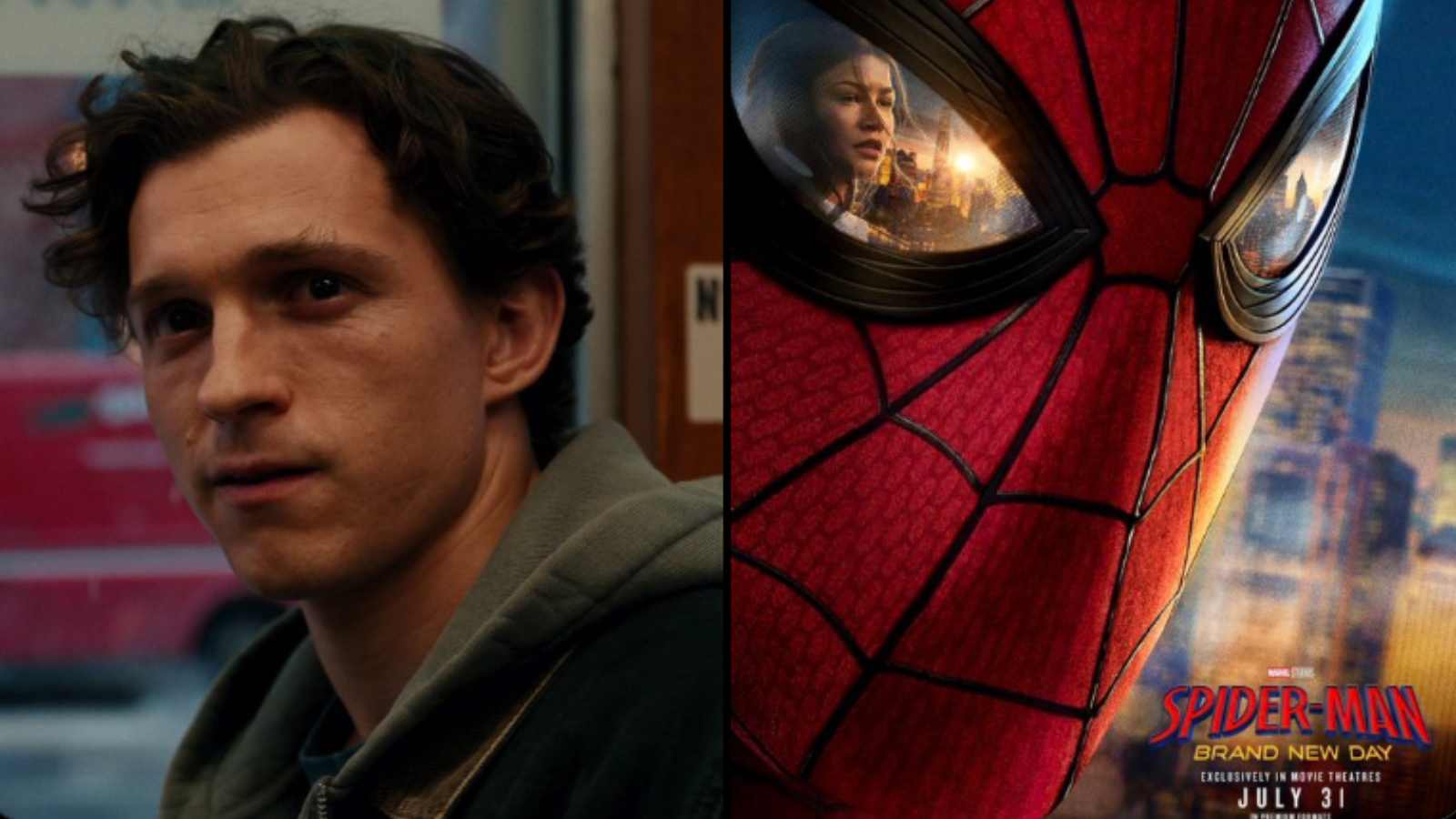
An unexpected, hollow ache settles in your chest the moment you realize you are watching a ghost haunt his own life. At CinemaCon this year in Las Vegas, Sony didn’t just show us a trailer; they ripped the bandage off the wound we’ve been waiting four years to see healed.
We all walked into that room expecting the high-octane spectacle of a blockbuster, the kind of popcorn-chomping excitement that defines the summer movie season.
Instead, we were met with a hologram of Tom Holland, earnest and a bit distant, introducing a scene that felt startlingly quiet… a moment of profound stillness that demanded your attention. It wasn’t loud.
It wasn’t chaotic. It was just a young man standing in the doorway of a housewarming party, watching his best friend and the love of his life toast to a future that doesn’t include him.
It was a brutal, intimate look at what it actually means to be forgotten, and for a room full of industry insiders, it was a sudden, freezing splash of reality that left us all wanting so much more than a glimpse.
The Cost of the Mask
The scene, which has been the talk of the convention floor, peels back the glossy veneer of the MCU to show the raw nerves underneath. We see Peter… or “Maynard,” as he introduces himself, a name that stings with the ghost of Aunt May, stumbling through a world where he is a total stranger to the people who once held the other half of his soul.
Watching him walk into that apartment, seeing the LEGO Star Wars sets that once bonded him and Ned, and then realizing that Ned now sees him as just a neighbor, hit harder than any explosion ever could.
This isn’t just a “lost identity” plot. It’s a study in isolation. What struck me, and what seemed to ripple through the audience, was the sheer ordinariness of it. There is no epic battle here; just a guy realizing that his sacrifice resulted in his friends actually being fine… maybe even better, without him.
MJ, now a roommate of Ned’s, moving on with a new boyfriend, serves as a poignant anchor for the film’s central conflict: the agony of holding onto a past that no longer exists for anyone else.
New posters for ‘SPIDER-MAN: BRAND NEW DAY’.
In theaters on July 31. pic.twitter.com/N51voOjRSw
— DiscussingFilm (@DiscussingFilm) April 14, 2026
The ‘Hero’ Paradox
Let’s talk about the rather bitter truth buried in this footage. We are conditioned to cheer for the noble sacrifice, the grand gesture of selflessness.
Yet, as I watched the footage, I couldn’t help but wonder if Peter Parker’s choice at the end of No Way Home was actually a form of deep-seated trauma disguised as virtue. By forcing everyone to forget him, he didn’t just save them; he abandoned them.
He stripped them of their agency to remember their own lives, their own experiences, and their own growth alongside him. Is it truly heroic to leave your best friend and the person you love to navigate their lives with a permanent, unseen hole in their history?
This film seems poised to lean into that darkness. If Brand New Day follows this thread, it won’t just be the “most emotional” film in the franchise; it will be the most ethically complicated one. It asks whether we have the right to curate the memories of those we love for their own “protection.”
Watching Ned, who, by the way, has developed a “Spider-Tracker” app in his desperate search to find the man who saved his life, highlights the irony perfectly. He is hunting the man he doesn’t know he already lost. It is a brilliant, twisted setup that transforms a superhero movie into a haunting tragedy.
What’s Next?
The transition to a “grown-up” narrative is clearly the goal for director Destin Daniel Cretton. We know the film features a four-year time jump, and the implications of that span are massive. We are looking at a Peter Parker who has spent half a decade in complete isolation, his only companion being the weight of his own double life.
View this post on Instagram
Reports suggest the physical toll of this life is beginning to manifest in dangerous ways, and the introduction of a new threat… The Hand, alongside the heavy-hitter presence of Jon Bernthal’s Punisher, suggests this movie is moving entirely away from the “friendly neighborhood” vibes.
But with this shift in tone comes the questions that remain dangerously unanswered. If you are a fan expecting the typical MCU crossovers and cameos, you might want to adjust your expectations. This looks like a singular, claustrophobic character study disguised as a tentpole release.
Questions for the Studio
To get a clearer picture of where this franchise is heading, there are several details that simply haven’t been provided:
The Nature of the “Physical Changes”: What exactly is the nature of the physical toll or “unexpected changes” Peter is experiencing, and does this relate to his evolving superpowers mentioned in early reports?
The Timeline of the Punisher: How does the arrival of Frank Castle, and the specific “different tonality” Kevin Feige mentioned, fit into a film that is supposedly focused on Peter’s quiet, lonely life in Queens?
The “Hand” Connection: With the reveal of The Hand in the new posters, what is their specific role in this street-level conflict, and are they the primary antagonist or merely the tip of the iceberg?
The “Maynard” Alias: Beyond the nod to Aunt May, is there any specific narrative significance to the name “Maynard,” or is it purely a random choice that backfired in the context of the film?
The “Spider-Tracker” Logic: How deep does Ned’s obsession go? Is the “Spider-Tracker” app a recurring plot device, or just a one-off scene to establish his current mindset?
MJ’s Trajectory: While we know MJ has a new boyfriend, is there any indication of how her character has evolved during the four-year gap since the spell?
The Role of Bruce Banner: With Mark Ruffalo involved, how does he factor into Peter’s life if he is now a professor at ESU, and is his role purely clinical/scientific?