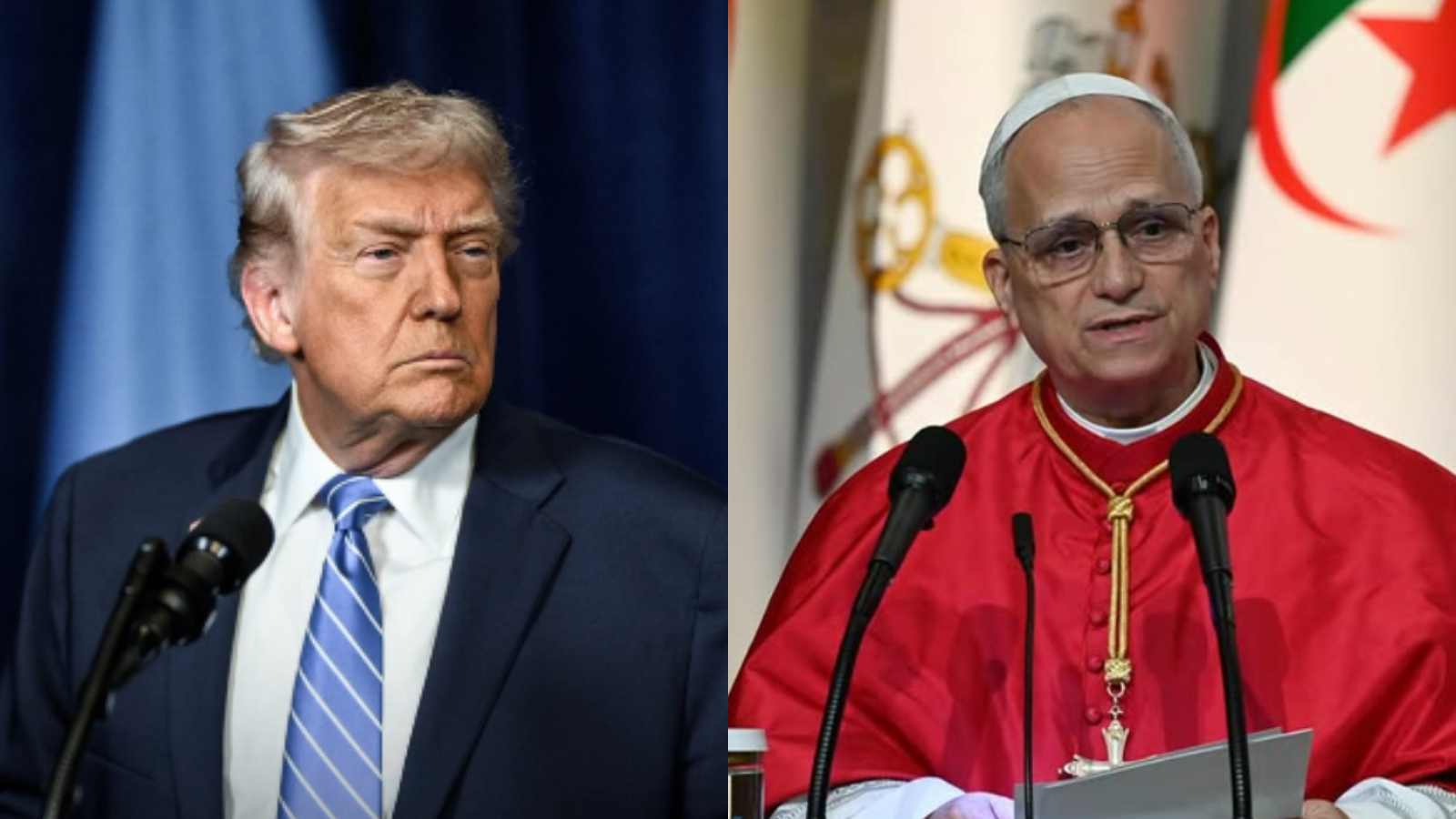
The modern political landscape moves fast, sometimes as fast as the alerts on our phones. But right now, we’re seeing a specific clash of interests that has cut through the noise and captured everyone’s attention.
It is a spectacle that bridges the ancient, storied halls of the Vatican with the aggressiveness of the digital age, creating a narrative tension that feels more like a modern drama than traditional statecraft.
When the leader of the American executive branch squares off against the Vicar of Christ, the reverberations are felt far beyond the confines of geopolitical summits and diplomatic cables, touching the very foundations of international relations and the increasingly strained nerves of major global alliances.
It is a striking moment of friction, underscoring how volatile the current landscape has become, as aggressive social media barrages and bold public rebuttals redraw the familiar boundaries of diplomacy.
The intensity of this standoff isn’t merely about policy; it’s a collision of philosophies, where the demand for absolute alignment confronts a persistent, often inconvenient, call for peace from a source that commands a global following.
A Holy Feud in the Digital Square
The friction reached a boiling point over the weekend when President Donald Trump utilized his digital megaphone to target an unlikely adversary: Pope Leo XIV.
In a flurry of activity on Truth Social, the President didn’t simply voice disagreement; he unleashed a sharp assessment, labeling the first U.S.-born pontiff as “WEAK on Crime” and “terrible for Foreign Policy.”
The catalyst for this outburst appeared to be the Pope’s vocal opposition to the ongoing U.S.-Israeli war with Iran and the administration’s recent military maneuvers in Venezuela.
Trump, known for a direct and often confrontational style, did not hold back in claiming that the Pope’s elevation to the papacy was essentially a lucky break facilitated by the current political climate in Washington.
The President went further, suggesting that the Vatican chose an American specifically to navigate the pressures of his administration, even asserting, “If I weren’t in the White House, Leo wouldn’t be in the Vatican.” It is a rare instance of a world leader so brazenly questioning the legitimacy or internal process of papal selection.
For observers, this isn’t just a political disagreement; it is a fundamental shift in how the Vatican, often viewed as a repository of moral authority, interacts with the United States’ executive branch.
The reaction was swift, with various international figures finding the President’s public evaluation of the Holy Father to be a profound departure from traditional diplomatic decorum.
Navigating the Moral Minefield
Pope Leo XIV, born Robert Prevost in Chicago, has largely avoided the typical political maneuvering that critics sometimes attribute to the office. Instead, he has focused his public messages on the ethics of war and the sanctity of life, particularly amid escalating conflicts.
His response to the President’s barrage was characteristic of his tenure: calm, resolute, and seemingly unbothered by the potential for diplomatic fallout. “I have no fear of the Trump administration, or speaking out loudly about the message of the Gospel,” he told reporters while en route to Algeria for a papal visit.
This refusal to be silenced is precisely what seems to have agitated the White House. The Pope’s recent condemnation of the rhetoric surrounding the threat to “destroy Iran’s whole civilization,” which he termed “truly unacceptable,” placed him directly in the path of the administration’s primary policy objectives.
It is a fascinating, albeit extreme, example of a totally different dynamic: while the world often expects the Vatican to offer general prayers for peace, this Pope is choosing to engage with the specific, brutal realities of current military engagement.
By refusing to stay within the lanes of traditional, vague diplomatic moralizing, Leo has turned the papacy into a concrete obstacle for the administration, forcing a debate that centers not on theology, but on the morality of modern statecraft and the cost of global influence.
The NATO Shadow
While the focus remains on the headline-grabbing feud with the Vatican, an underlying, silent pressure is building in NATO’s corridors. The alliance, already stretched thin by shifting security priorities and varying domestic pressures, finds itself navigating this collision of ideologies with extreme caution.
As the Pope calls for multilateral relationships and dialogue as the path to stability, the administration’s tendency to prioritize unilateral, assertive diplomacy creates an uncomfortable reality for European allies.
They are increasingly caught between a security umbrella they fundamentally rely on and a moral compass that the head of the umbrella’s provider is actively contesting.
It is a delicate balancing act that few world leaders are prepared to navigate. The question for many member nations isn’t just about military spending or borders; it is about the long-term sustainability of an alliance that relies on a cohesive vision of the world.
If the United States continues to prioritize aggressive posturing… as seen in its recent interactions with the Pope, can NATO’s structural unity survive? Or are we witnessing the beginning of a divergence, in which countries turn to their own, perhaps more localized, defense arrangements to avoid being tied to the volatile whims of an unpredictable transatlantic partner?
The Digital Campaign for Narrative Supremacy
Trump is using Truth Social right now to fight on three fronts at once: he’s redefining US foreign policy with some pretty intense threats, positioning himself as a moral arbiter by taking on the Vatican, and constantly circling back to domestic numbers to keep his base focused on the economy.
By firing off these three distinct statements in rapid succession, the President isn’t just reacting to the news; he is attempting to dictate the entire political atmosphere. First, he frames the Western security architecture as obsolete, warning that NATO is fundamentally unreliable.
He then pivots immediately to the pulpit, taking the Pope to task over the volatile situation in Iran, citing staggering… and sobering, casualty figures to position himself as the only leader willing to voice the “unacceptable” reality of nuclear proliferation.
Finally, he anchors this whirlwind tour of grievances and policy goals with a visual punch: a graph showing a dramatic, near-total drop in asylum-seeker entries at the southern border.
By leveraging data from the CATO Institute, an organization he openly acknowledges as a political adversary, he is employing a classic, yet highly effective, rhetorical strategy. He is essentially telling his base that the evidence of his success is so overwhelming that even his fiercest critics are forced to confirm it.
This isn’t just an attempt to change the subject; it’s an effort to reestablish a “results-first” narrative that portrays the current administration as a force for decisive action amid global and domestic instability.
Looking Ahead
This situation raises several critical questions for the coming months: How will other NATO member nations officially respond if the public rift between the White House and the Holy See continues to widen?
What specific, if any, diplomatic channels remain open between the Holy See and the U.S. administration, given the intensity of this current friction?
Will the Pope’s focus on “multilateral relationships” lead to a more formalized, nontraditional diplomatic bloc that opposes the administration’s current foreign-policy trajectory?
How might this rhetoric impact the voting patterns or public sentiment of the Catholic demographic within the United States in the upcoming political cycle?
Are there any behind-the-scenes efforts by intermediaries to de-escalate the tension, or has this become a permanent state of adversarial public relations?
As the world continues to watch, one thing remains clear: the intersection of faith, politics, and digital communication has never been more explosive.
Will this result in a lasting change in how the United States interacts with moral authorities, or will it simply remain a feverish chapter in an already chaotic news cycle? is yet to be determined. For now, the world waits to see who will blink first in a contest that seems determined to ignore the traditional rules of diplomacy.