
On the same Saturday night, two men stood before live audiences and made jokes about powerful people. One walked offstage to applause. The other walked off and opened his phone to find threats and vicious personal attacks. The jokes were roughly equal in nerve. The targets were not. That’s the whole story right there. Except nobody wants to say it out loud.
February 28, 2026 was not a normal Saturday. In the early hours, the U.S. and Israellaunched major strikes on Iran, and by daylight, the news cycle had already turned into wall-to-wall escalation.In the middle of that, Saturday Night Live did what it always does. It tried to catch a breaking story in real time, on live television, with an audience sitting there processing the same headlines.
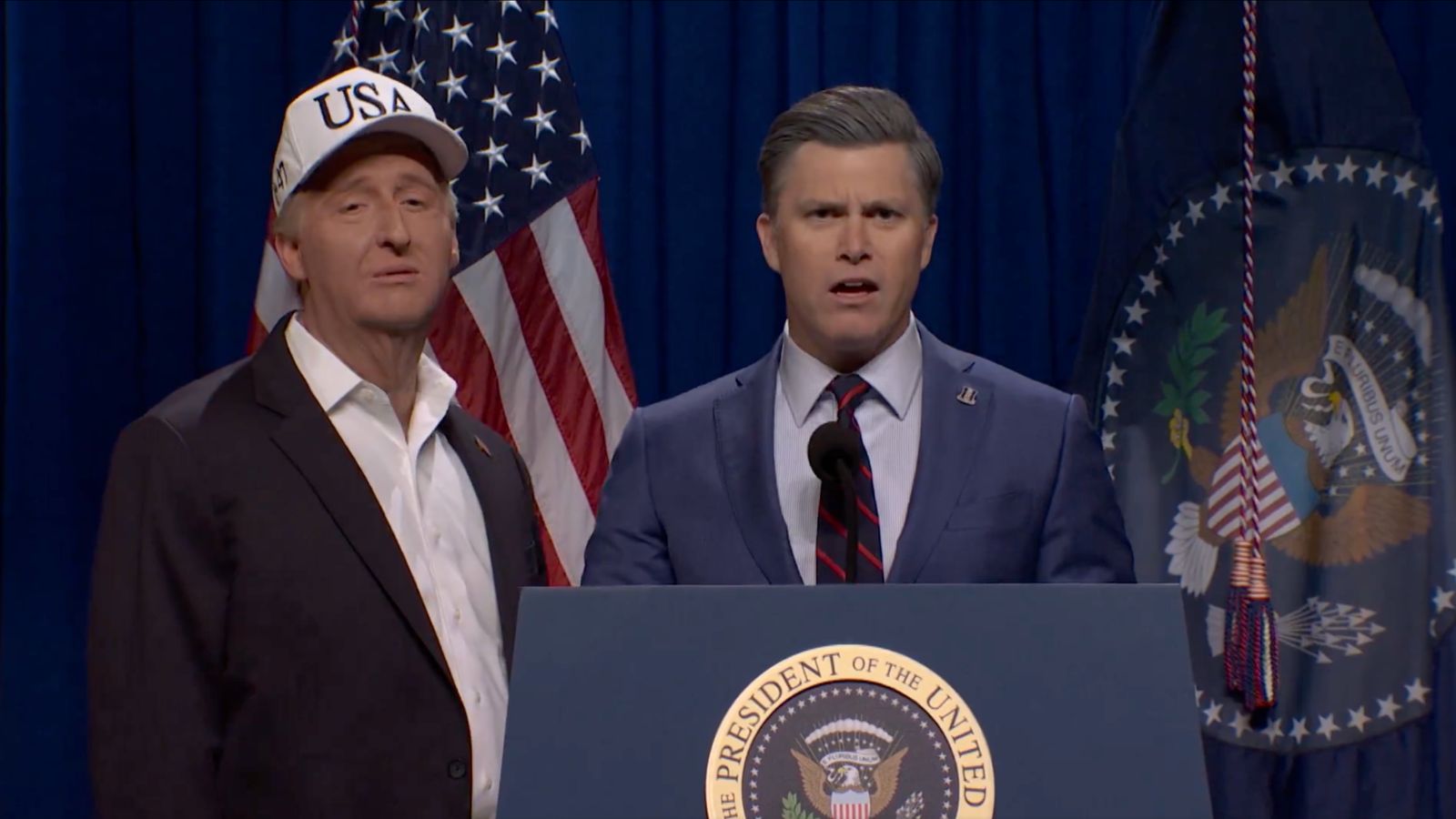
SNL had been preparing a State of the Union cold open. They scrapped it and rewrote around the Iran strikes with hours to go. What Colin Jost and the Weekend Update team put together that night was as close to a primary source as comedy gets.
Jost Didn’t Write the Punchline. Trump Did — Fifteen Years Ago
Jost walked to the Weekend Update desk and did something that didn’t require a writers’ room. He admitted uncertainty, said he wasn’t an expert on Iran, then brought in someone who could explain it. He rolled a 2011 clip of Donald Trump warning that Barack Obama would “start a war with Iran” because he had “absolutely no ability to negotiate” and was “weak” and “ineffective.” Jost looked back at the camera and deadpanned, “See, now that’s the Trump I voted for.”
The audience lost it. Jost didn’t even need the joke. He just needed the edit.
Weekend Update with Colin Jost and Michael Che! pic.twitter.com/1pTFSyRj1p
— Saturday Night Live (@nbcsnl) March 1, 2026
In the cold open, Jost played Defense Secretary Pete Hegseth, full of overcompensating bravado, immediately undercut. “Don’t let my confident demeanor fool you,” he told the room. “I am scared, and I don’t know what I’m doing.” It landed the uncomfortable kind of laugh. The kind where the audience is laughing and flinching at the same time.
By Sunday, the clips were everywhere. Whatever heat Jost drew, there was no comparable public story about him posting screenshots of threatening messages.
Meanwhile, at the NAACP
Same night. Different coast. Same broadcast window. Deon Cole walked onstage at the 57th NAACP Image Awards in Pasadena and delivered a preacher-style mock prayer that roasted multiple celebrities. When he got to Nicki Minaj, he framed it like a blessing, then swerved into a crude line suggesting that whatever was in her body was “affecting her brain.” The room cracked up. The clip went viral before the next presenter hit the stage.
Here’s what Deon Cole said about Nicki Minaj at the #NAACPImageAwards… ✌🏾 https://t.co/rnKry1Ta7u pic.twitter.com/xizc3CPTX9
— 🗝️ (@DiaryOfKeysus) March 1, 2026
By Sunday, Cole was posting screenshots of what he said flooded his inbox. This wasn’t “I didn’t like that joke.” It was vulgar threats and deeply personal attacks, including cruel messages referencing his late mother. The backlash moved fast and loud.
The roast doesn’t end when the host leaves the stage. It ends when the internet gets bored. And it is not bored.
Same Risk, Opposite Consequences
Here’s what both jokes had in common: both comedians targeted public figures on live television, both landed on political material, and both got the laugh in the room. One went home and let the clip do its work. One is still posting screenshots.
The variable isn’t craft. Jost is good, but Cole is no amateur. He’s built a career on exactly this kind of room reading and timing. The variable is the target and the audience attached to the target.
Trump doesn’t have a stan army. He has a political movement, and political movements punish mockery differently. Slower, more institutional, more selective about what gets amplified. Fanbases are faster. More personal. They don’t argue with the joke. They punish the person who told it.
That’s why this weekend is such a clean comparison. A comedy show mocks a sitting president using his own archive during a breaking military crisis, and it goes viral. A host makes a crude joke about a superstar at an awards show, and the viral clip becomes a threats story.
In 2026, it can be safer to joke about a war than it is to joke about a pop star.

So Here’s the Question
Jost pointed a camera at Trump and let the archive do the talking. Cole made a joke that Nicki herself invited — she disclosed the material publicly in 2022 — and he is still posting screenshots three days later.
If the price of joking about a pop star is higher than the price of joking about a sitting president during a live breaking news crisis, what does that tell us about who actually holds power right now?
Think about it for a minute. Colin Jost joked about a war. Deon Cole joked about a butt. One of them needed to check his locks. That’s the point. Not the joke.