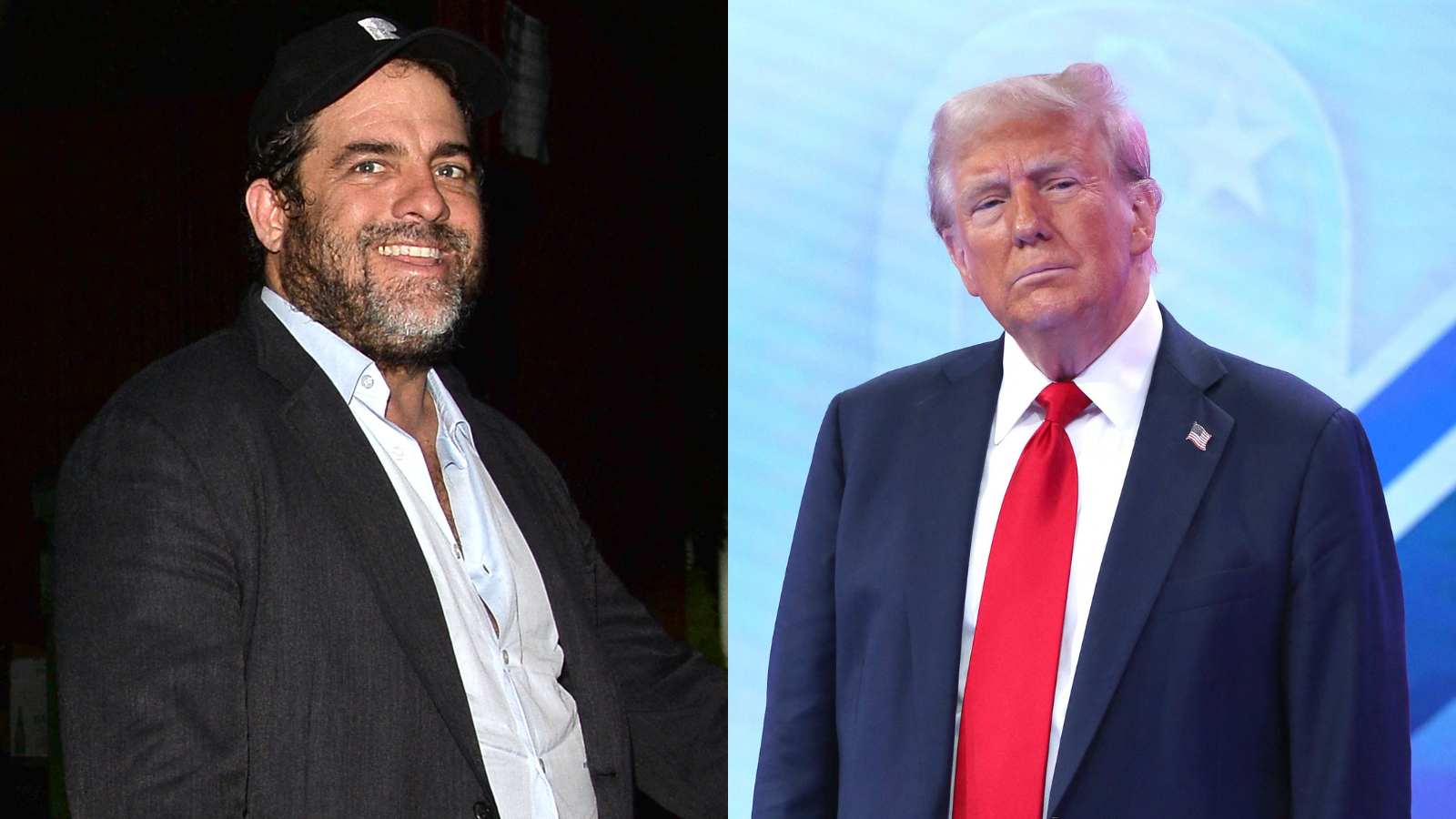
When reporters spotted Brett Ratner stepping aboard Air Force One at Edwards Air Force Base on Tuesday, the image landed somewhere between a Hollywood fever dream and a political tabloid cover nobody asked for, but everyone wanted.
Here was a director who spent nearly a decade in the wilderness, cast out of the industry he once ruled after a wave of sexual misconduct allegations in 2017, allegations he has consistently denied, sitting shoulder-to-shoulder on the most powerful aircraft in the world with the President of the United States.
Not just any trip, either. Trump was headed to Beijing for a one-on-one summit with Chinese President Xi Jinping. This gathering included some of the most powerful names in American business: Elon Musk, Tim Cook, Larry Fink, Stephen Schwarzman, and David Solomon were all reportedly along for the ride.
And then there was Brett Ratner, the guy best known for buddy-cop comedies, wedged into this constellation of billionaires and power brokers. Hollywood has always had an interesting relationship with Washington, but this? This is something else entirely.
Ratner’s spokesperson, Victoria Palmer-Moore, confirmed to the Washington Post that the director made the trip to scout filming locations for Rush Hour 4, the long-awaited fourth installment in the franchise that made him a household name.
According to his team, he plans to shoot a significant portion of the film in China, making the presidential visit a uniquely convenient scouting opportunity. Convenient, sure… but the story of how Ratner ended up on that plane goes much deeper than a location scout.
From the Melania Documentary to the Presidential Inner Circle
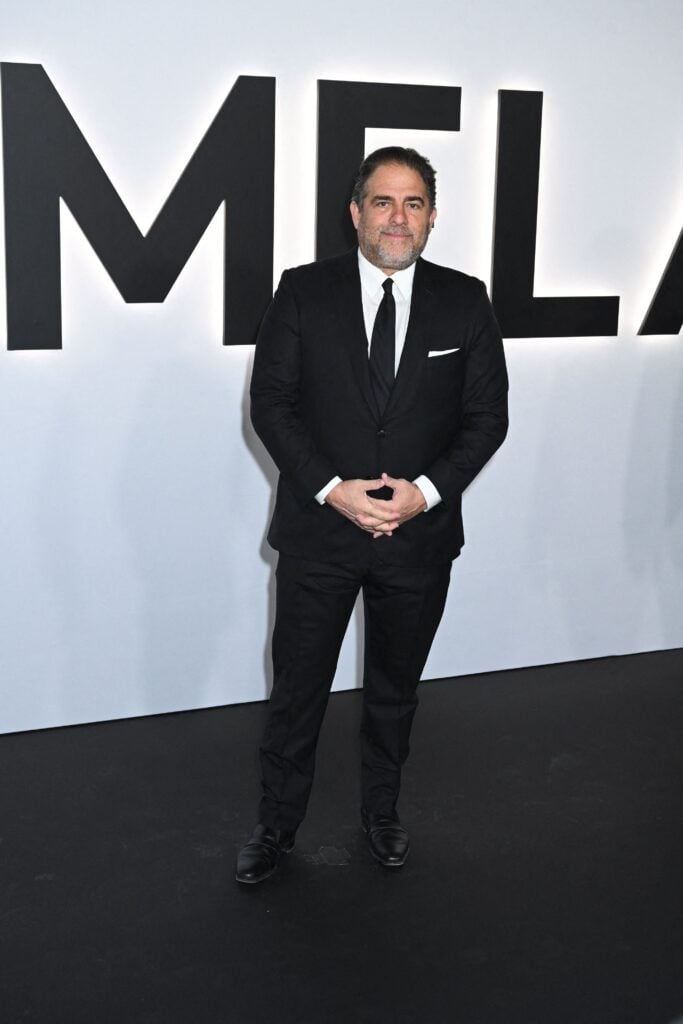
The connection between Brett Ratner and Trump did not spring from thin air. Trump forged a creative relationship with Ratner during the filming of the Prime Video documentary Melania, which followed First Lady Melania Trump in the days leading up to the 2025 presidential inauguration.
The film was a deeply personal project for the First Family, and being invited to tell that story gave Ratner access that very few people in Hollywood, or anywhere, ever get. Once you have that kind of access, friendships form. And this one clearly stuck.
The Melania documentary was released in theaters in late January 2026 and earned north of $16.4 million at the domestic box office before landing on Amazon’s streaming service Prime Video.
Numbers that, depending on who you ask, either signal modest success for a documentary with a niche political audience or represent a disappointing return on what was reportedly a substantial investment. Amazon reportedly paid $40 million for the rights to release it.
By any mathematical standard, those numbers do not add up to a box office triumph. But Ratner himself pushed back firmly on the idea that Melania was ever about the box office.
In a January interview, Ratner dismissed claims that the documentary was a strategic move for his return to Hollywood, saying, “That’s ridiculous. If anything, this was a greater risk due to the polarization and subject matter. I didn’t do this to get me back into Hollywood. That wasn’t my strategy. I’ve been waiting to make Rush Hour 4… that was my strategy.”
Whether you believe that or not, the result is undeniable: Ratner is back. And the vehicle for that return, both literally and figuratively, is a friendship with the most powerful person in the country.
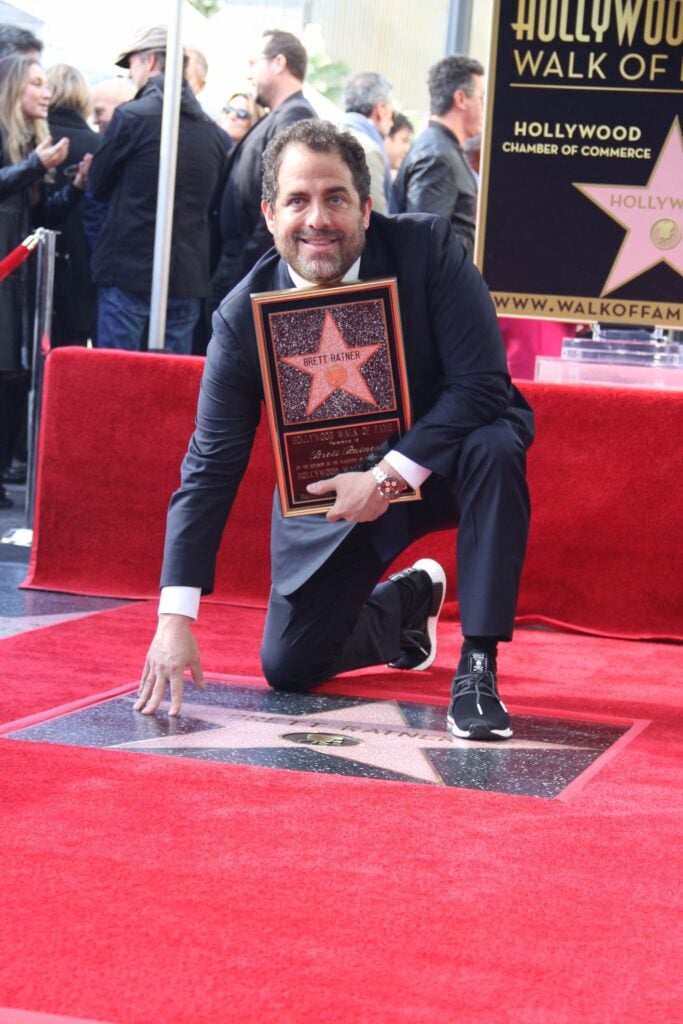
Rush Hour 4: The $100 Million Sequel With a Presidential Co-Sign
Let’s talk about the movie at the center of all this, because the Rush Hour franchise deserves its flowers before anyone gets critical. The original Rush Hour, which follows two police officers who are forced to work together to rescue a Chinese diplomat’s abducted daughter, was a huge hit with $244 million globally.
The two follow-up films, Rush Hour 2 and Rush Hour 3, were even bigger commercial successes with $347 million and $258 million, respectively.
Collectively, the three films earned more than $850 million at the worldwide box office, not adjusted for inflation. That is not a franchise people casually dismiss. That is a cultural institution.
So when Trump decided he wanted to see a fourth film happen, it was not exactly a random personal crusade. Trump is reportedly a huge fan of the Rush Hour franchise.
In November 2025, Trump encouraged billionaire Larry Ellison, the primary financial backer of Paramount Skydance, to bring back the franchise after Paramount went through with its controversial purchase of Warner Bros.
Translation: the President of the United States personally lobbied a studio to greenlight a sequel. In any other era, that would be the strangest sentence in the entertainment news cycle. These days, it barely makes the top five.
The action pic marks Ratner’s first narrative feature film since 2014’s Hercules with Dwayne Johnson, as his career was derailed in 2017 following serious allegations of sexual harassment and misconduct from multiple women, which he has vehemently denied.
The comeback narrative writes itself, which is precisely why so many people in Hollywood have been watching this story with eyes wide open.
But here is where it gets complicated. Despite a planned production start in spring or summer, Rush Hour 4 has been pushed back to September at the earliest, while questions linger about whether its producers have secured all the $100-plus million in funding.
The central problem? Jackie Chan and Chris Tucker have not signed new contracts because they say the offers are far below what they earned on the third film.
The studio offered each star about $8 million. For Rush Hour 3, Chris Tucker received $25 million, while Jackie Chan received $15 million. To put it plainly: the studio wants the stars to take a pay cut of more than 60 percent to reprise the exact roles that made them franchise legends.
The gap between what they made then and what they are being offered now is not a negotiation… it is an insult dressed up as a budget line. Jackie Chan, now 71, publicly criticized Rush Hour 3 last year, claiming the producers wasted money on a $140 million budget.
And yet here we are, with Chan reportedly holding out for compensation closer to what he once commanded, even as his team pushes back against offers that do not reflect his contribution to making this franchise what it is.
A Thread Worth Pulling
Here is the part of this story that deserves a slower, more honest read, because while the Air Force One optics are genuinely spectacular, they also mask a more complicated reality about what Ratner’s rehabilitation actually represents.
Ratner was ousted from Hollywood in 2017 after multiple women, including actresses Natasha Henstridge and Olivia Munn, accused him of sexual misconduct. A former talent agency staffer accused him of rape.
Ratner categorically disputed the women’s accounts. He eventually moved to Israel in 2023. His route back into the industry did not run through any formal reckoning or accountability process.
It ran through a documentary about the First Lady, a friendship with the President, and a presidential phone call to a studio head.
Adding another layer, Ratner was among several high-profile men who appeared in the Epstein files. One image showed Ratner with Jean-Luc Brunel, one of Epstein’s associates. That detail did not slow the comeback.
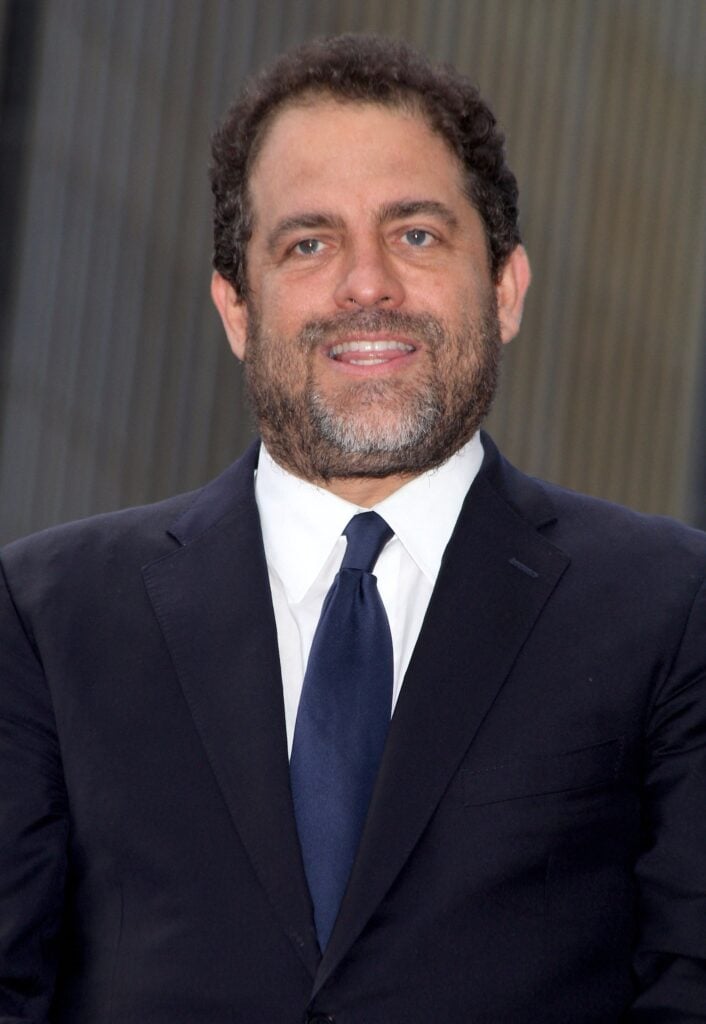
During the China summit, a U.S. official was reportedly overheard verbally sparring with their Chinese counterparts in a bid to get Ratner and his cameraman, Ari Robbins, into the bilateral talks at the Great Hall of the People.
A compromise was eventually found, though specifics were not disclosed. The fact that someone felt the need to fight for a Hollywood director’s entry into a bilateral diplomatic summit between the world’s two largest economies for a movie location scout is either bold ambition or a staggering misread of the room, depending entirely on your vantage point.
Here is the contrarian read that many people in the industry are quietly whispering but few are saying aloud: the Rush Hour 4 comeback may not actually be the win it looks like.
According to reports, several rival legacy studios noted that, while Rush Hour 4 has enormous box-office potential, associating themselves with Ratner wasn’t worth the negative headlines. Paramount is distributing but not financing or producing.
The money is coming from elsewhere… much of the production capital reportedly comes from Middle Eastern investors, creating geopolitical risks in an unstable region.
View this post on Instagram
The stars haven’t signed. The budget is bloating before a single frame has been shot. And the director’s path back to the industry was paved not by the craft community that once rejected him, but by political proximity.
If producers grant $20 million paydays to aging action stars, the film would need a worldwide box office exceeding $350 million to break even. The originals made that comfortably in 1998 and 2001, but franchise fatigue and cultural shifts complicate projections for a potential 2027 release.
Rush Hour 3, released in 2007, scored 12% on Rotten Tomatoes despite grossing $258 million. The franchise’s creative well had already run dry before Ratner’s troubles even began.
None of this means Rush Hour 4 will fail. Jackie Chan and Chris Tucker have real chemistry that transcends time, and nostalgia is a powerful box office engine.
But the circumstances surrounding this particular sequel, a disgraced director rehabilitated by presidential favor, a location scout conducted aboard Air Force One during a geopolitical summit, salary disputes with stars who built the franchise, and financing from sources outside the traditional studio system, paint a picture of Hollywood’s power structures that should make anyone pause.
This is not a comeback story. It is a case study in how access, proximity to power, and the right friendships can rewrite a career narrative that the industry itself had closed the book on. Whether the movie is any good almost feels beside the point.