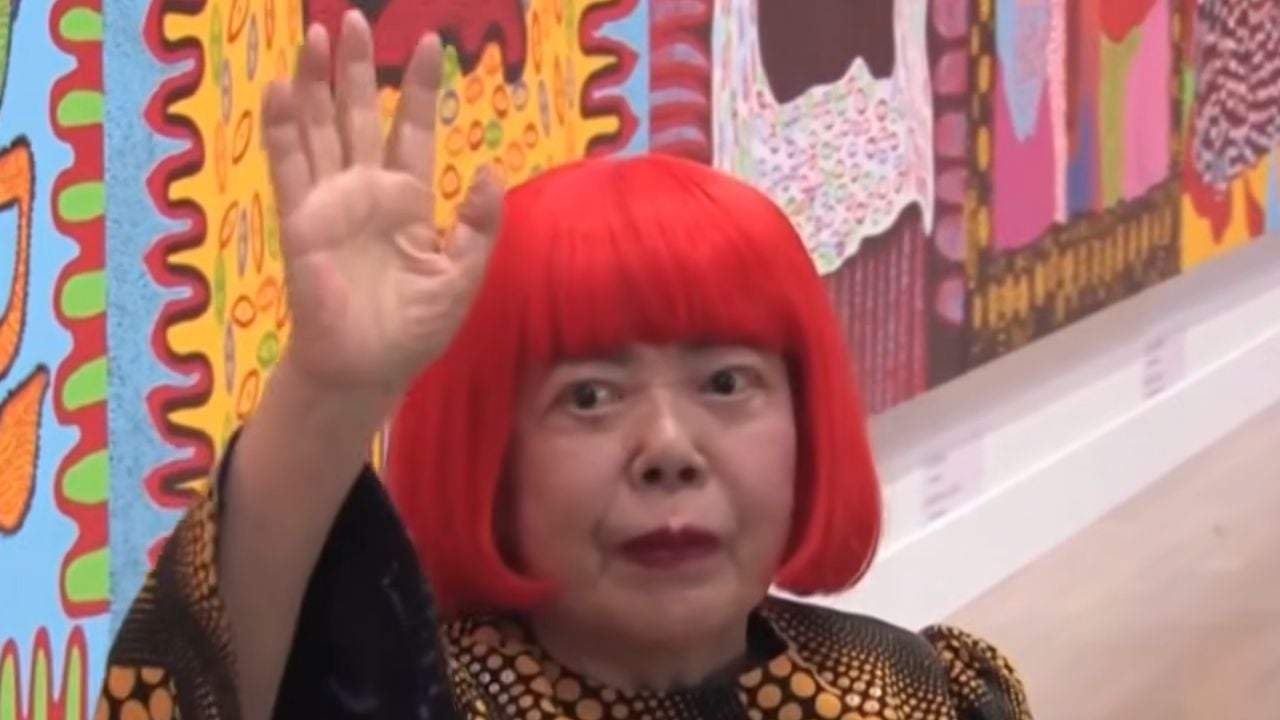
Yayoi Kusama, the Japanese artist whose polka dots, pumpkins and Infinity Mirror Rooms became some of the most recognizable images in contemporary art, has died at 97.
Kusama died at a hospital in Tokyo on Aug. 14, according to an announcement made public Aug. 27 by the Yayoi Kusama Museum and Yayoi Kusama Foundation. Her representatives said she remained at work almost until the end, “continuing to paint until her final days, never setting aside her brush.”
No cause of death was disclosed. Reuters reported that Kusama spent decades transforming the hallucinations and repetitive patterns she experienced from childhood into paintings, sculptures and immersive installations seen around the world.
Her death comes while major exhibitions of her work remain open or scheduled. KUSAMA’s POP at the Yayoi Kusama Museum in Tokyo will continue through Aug. 30 as planned, while the final leg of a major European retrospective is due to open at the Stedelijk Museum Amsterdam in September.
Kusama Died Aug. 14 at a Tokyo Hospital
The Yayoi Kusama Museum and Yayoi Kusama Foundation announced her death nearly two weeks after it occurred. Their statement described a life devoted to creation across visual art, performance, fiction and poetry.
“She continued to paint until her final days, never setting aside her brush,” the organizations said. They also pointed to Kusama’s lifelong belief that “love can save the world” and said they intended to carry her wishes forward through her art. Just Jared was among the outlets reporting the museum and foundation’s statement after news of her death became public.
Polka Dots and Infinity Mirror Rooms Became Her Signature
Kusama had been working with repetition decades before her mirrored installations became some of the art world’s most photographed museum attractions. She said she began experiencing visual and auditory hallucinations as a child, including fields of dots and patterns that seemed to overwhelm the world around her, and those experiences became recurring material in her work.
After studying traditional Japanese painting, Kusama moved to New York in the late 1950s and became part of the city’s avant-garde scene. She produced her large-scale Infinity Net paintings before expanding into soft sculpture, performance, fashion, film and increasingly immersive environments.
Her first Infinity Mirror Room, Phalli’s Field, appeared in 1965. Mirrors allowed Kusama to take the repetition already central to her paintings and sculptures and seemingly extend it without limit, a concept she continued developing in more than 20 distinct Infinity Mirror Rooms over the following decades.
Pumpkins became another enduring motif. Kusama had drawn them since the 1940s and eventually transformed their bulbous forms into sculptures and mirrored environments covered with her signature dots.
She Returned to Japan but Never Stopped Working
Kusama returned to Japan in 1973 after years in New York. She later voluntarily entered a psychiatric hospital in Tokyo and maintained an art studio nearby, continuing a working routine that lasted for decades.
Her international profile grew dramatically again later in her career. Kusama represented Japan at the Venice Biennale in 1993, and major museums increasingly devoted exhibitions to work that stretched back to her earliest experiments in Japan and New York.
The Infinity Mirror Rooms eventually became cultural phenomena in their own right, drawing long lines at museums and spreading widely through photographs and social media. Kusama’s bright pumpkin sculptures, dotted installations and collaborations outside traditional gallery spaces also made her visual language recognizable far beyond the contemporary-art world.
Even as that fame expanded, Kusama continued producing new work in Tokyo. The Museum Ludwig retrospective that closed earlier this month included more than 300 works spanning painting, drawing, sculpture, installation, fashion, performance and literature, as well as a newly commissioned installation with an Infinity Mirror Room.
A Major Kusama Retrospective Is Still Touring Europe
The retrospective was organized in close collaboration with Kusama and her studio and traces more than seven decades of her work. It opened at Fondation Beyeler in Switzerland in October 2025 before moving to Museum Ludwig in Cologne, where it ran from March 14 through Aug. 2, 2026.
Its third and final stop is the Stedelijk Museum Amsterdam, where the current official Kusama exhibition calendar lists the retrospective from Sept. 11 through Jan. 17, 2027. The exhibition follows her work from early pieces made in Matsumoto through her New York period and the latest works created in Tokyo.
In Japan, Kusama’s own museum is also continuing its current exhibition after her death. The museum said KUSAMA’s POP, which opened April 16 and includes paintings, installations and a small mirror room, will remain open through Aug. 30 as originally scheduled. The museum has already listed another exhibition for later this year. The Light Spreads Out, and Glittering Things Start Appearing All Around Me is scheduled to open Oct. 8 and run through Jan. 31, 2027.