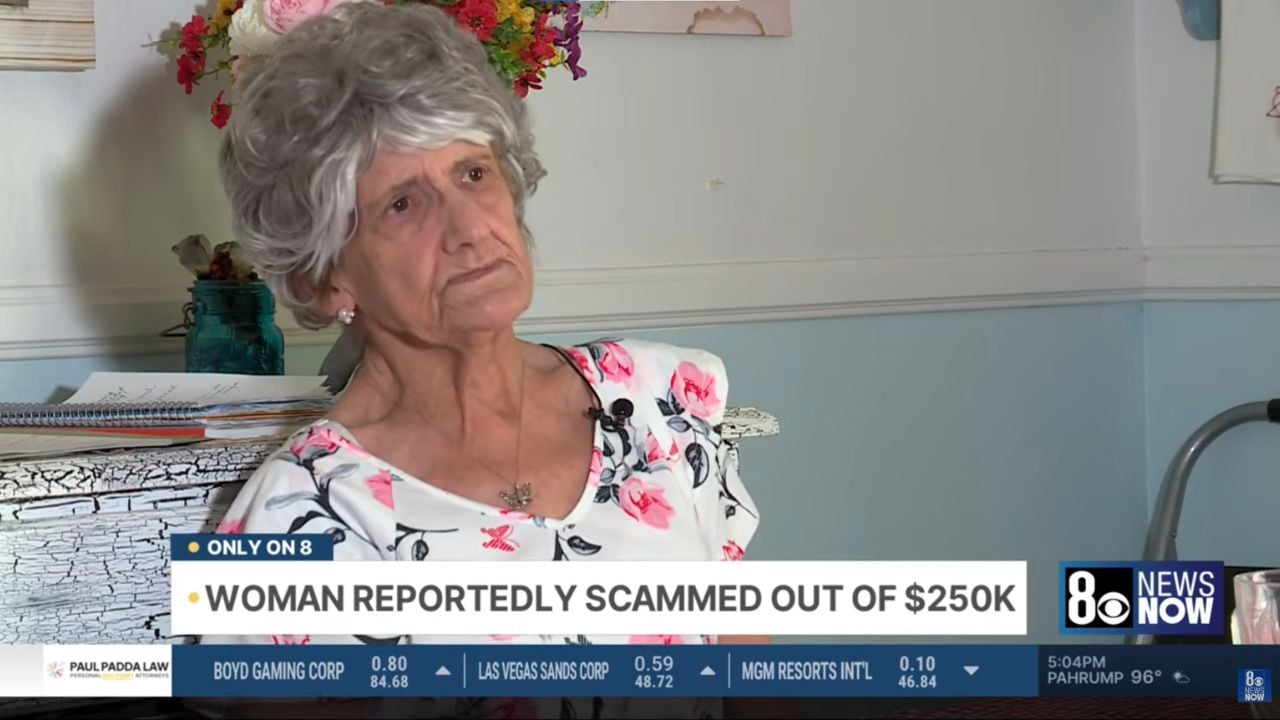
Lynne Crose had already lost her husband and child when she trusted a caregiver with more than daily help.
Esmeralda Mascaro, 49, was hired to care for the Boulder City woman, then convinced Crose that her own family was stealing from her, 8 News Now reported.
Crose gave Mascaro power of attorney. Police later accused the caregiver of scamming her out of more than $250,000.
Mascaro was arrested in January on two counts of theft greater than $100,000 and one count of exploiting an older or vulnerable person. She was scheduled to be sentenced this week after entering an Alford plea and agreeing to repay $76,000, according to the station.
Crose Said She Trusted The Woman Hired To Care For Her
Crose told 8 News Now she trusted Mascaro completely. The caregiver was in her life at a vulnerable time, after Crose had lost close family and needed help.
That trust gave Mascaro access that a stranger would not have had. Crose eventually gave her power of attorney, a legal authority that can allow someone to make financial or personal decisions for another person.
The relationship began as care. Prosecutors said it ended with checks written to Mascaro herself and more than $250,000 gone from Crose’s finances.
The Checks Led Back To Mascaro
Crose discovered checks written to Mascaro, 8 News Now reported. The amount at the center of the case was more than $250,000.
Mascaro was arrested in January on two theft counts involving more than $100,000, along with a charge of exploiting an older or vulnerable person.
Mascaro entered an Alford plea, which means she acknowledged prosecutors had enough evidence that a jury would likely convict her while not admitting guilt in the usual way.
As part of the case, Mascaro agreed to repay $76,000. Crose told 8 News Now that amount was nowhere near enough.
Police Say The Victim Was Turned Against Her Family
One of the sharpest details in the case is the allegation that Mascaro convinced Crose she was being robbed by her own family. That helped isolate the victim from the people who may have questioned what was happening. Crose had trusted Mascaro as the person helping her, while the caregiver allegedly framed relatives as the threat.
By the time the case reached court, the money loss was only part of the damage. Crose had to face the financial fallout and the claim that someone she relied on had used that trust against her.
Power Of Attorney Needs A Second Set Of Eyes
The Department of Justice describes elder financial exploitation as the illegal or improper use of an older adult’s money, property, or resources for someone else’s benefit.
For families hiring care, the Crose case points to one specific safeguard: power of attorney should not be handed to a caregiver without outside review. A trusted relative, attorney, bank officer, or adviser should know who has authority, what accounts they can access, and how spending will be checked.
If a caregiver is already handling money, families should keep copies of bank statements, canceled checks, payment-app records, receipts, and legal documents showing who had authority to act. Suspected exploitation can be reported to local police, Adult Protective Services, the bank, and the National Elder Fraud Hotline at 833-FRAUD-11, or 833-372-8311.