A federal magistrate judge looked at Cole Tomas Allen in a Washington, D.C., courtroom Monday and said: “I’m sorry.”
His reasoning: Jan. 6 defendants in the same jail were treated less harshly than Allen was. “Pardons may erase convictions,” Judge Zia Faruqui said from the bench, “but they do not erase history.”
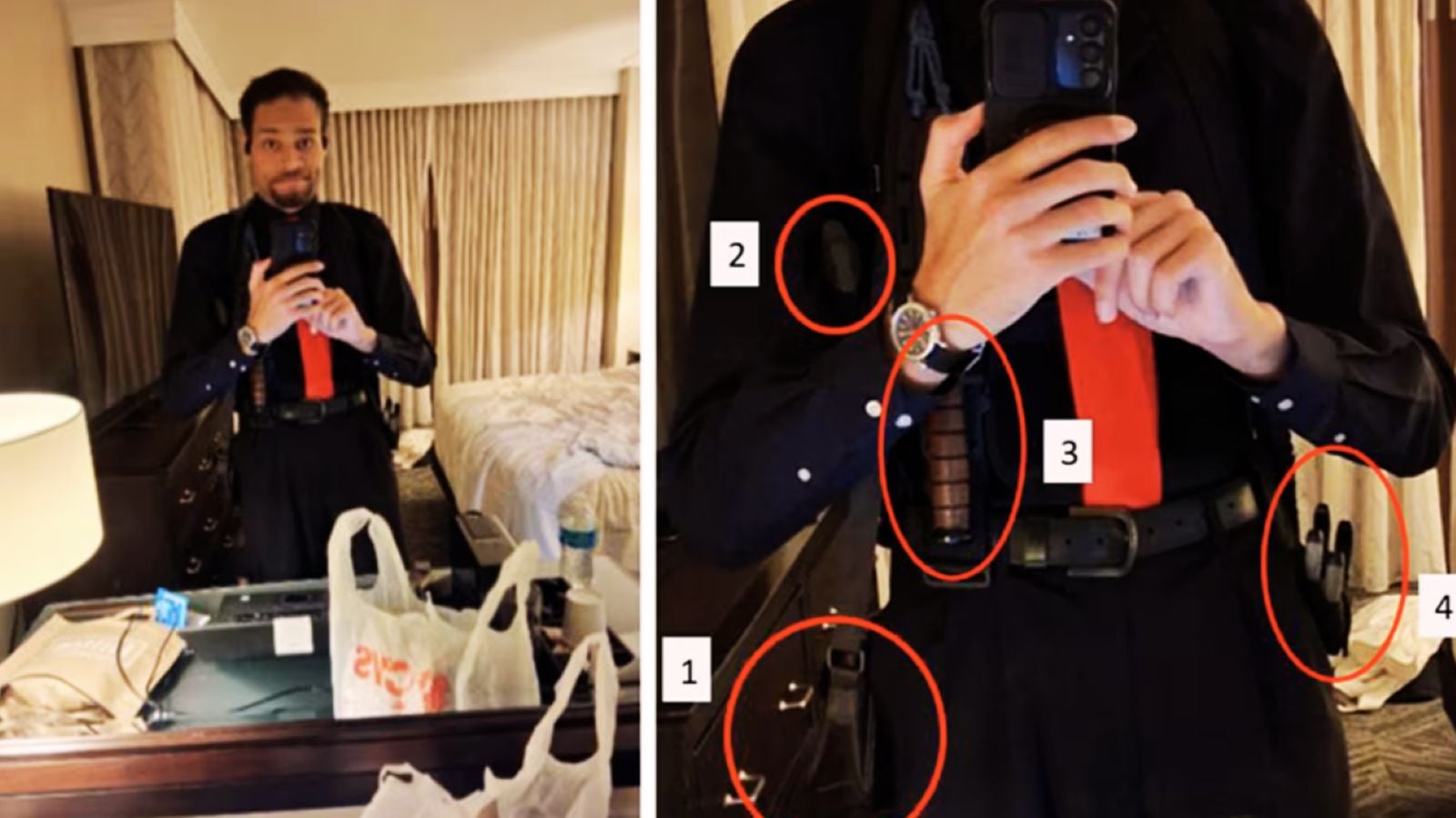
Faruqui apologized to the 31-year-old Caltech graduate accused of taking a train from Los Angeles to the capital, checking into the Washington Hilton before the White House Correspondents’ Dinner, photographing himself with weapons on his body, charging through a security checkpoint, and pointing a long gun toward Secret Service. Prosecutors say an officer wearing a ballistic vest was shot in the chest. Allen had signed his goodbye email “Friendly Federal Assassin.”
That man just received a judicial apology.
That is the uncomfortable part. Even a man accused of trying to kill the president does not become jailhouse property.
The man the judge was apologizing to
Before April 25, Cole Allen sounded like a profile written to prove that warning signs are not always neon.
Caltech graduate. JPL intern. Former teaching assistant. Member of the Caltech Christian Fellowship and Nerf Club. Part-time tutor at C2 Education. Indie game developer behind Bohrdom. Master’s degree in computer science from Cal State Dominguez Hills. In December 2024, his tutoring center named him Teacher of the Month.
His professor told the Associated Press he was “a very good student” who sat in the front row, paid attention, and emailed often about coursework. Soft-spoken. Polite. A good fellow. Shocked, obviously.
How he spent April 25
Court documents say Allen booked three nights at the Washington Hilton on April 6. He took a train from California to Chicago, then Chicago to D.C., arriving April 24. The next evening, according to prosecutors, Trump, Vice President JD Vance, and Cabinet officials were inside the hotel for the dinner.
At 8:03 p.m. on April 25, prosecutors say Allen took a mirror selfie wearing a black shirt, red tie, ammunition bag, shoulder holster, and knife. At 8:27, he pulled up a live feed of Trump heading to the event.
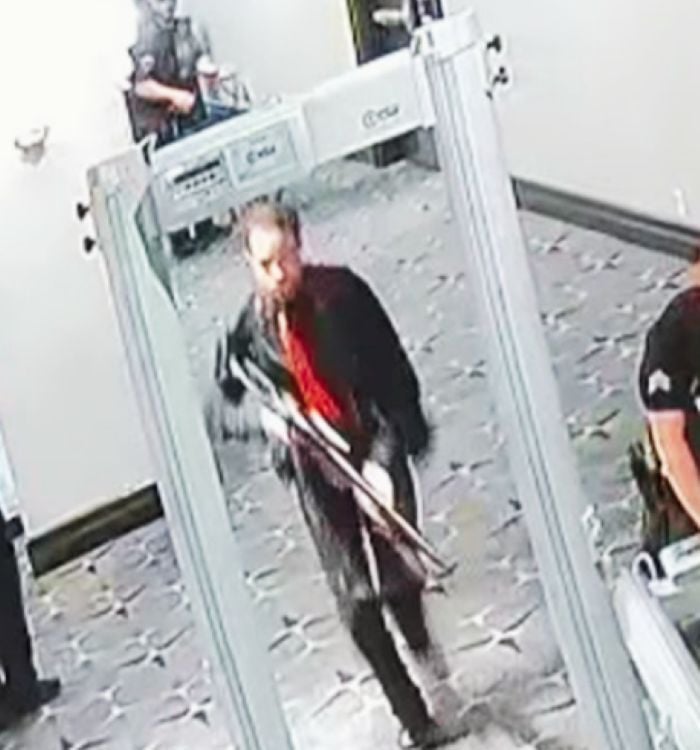
Minutes later, authorities say he ran through a magnetometer with a long gun. The video, the Associated Press noted, does not clearly show the moment his weapon fires. Prosecutors still say a Secret Service officer was struck in the vest, and Allen faces charges including attempted assassination of the president.
The email sounded like a confession and a sermon
Minutes before the attack, federal authorities say Allen emailed family members and a former employer. “I wish I could have said anything earlier, but doing so would have made none of this possible. My sincerest apologies for all the trouble I’ve caused.”
His attached message listed the rules of engagement. Administration officials were targets. Guests and hotel workers were not, at least in theory. He wrote that he would use buckshot rather than slugs to minimize casualties.
Comforting stuff, if your bar for comfort is subterranean.
He also made a religious argument for violence. “Turning the other cheek when someone else is oppressed is not Christian behavior,” he wrote. “It is complicity in the oppressor’s crimes.”
Allen told the FBI after his arrest that he had not expected to survive.
Jan. 6 became the jail-condition measuring stick
After his arrest, Allen was placed in a padded cell at the D.C. jail. Constant lighting. Severe restrictions. No regular visitors except lawyers. His attorneys said he was kept in conditions tied to suicide watch despite a health evaluation finding he was not suicidal. He asked for a Bible. Multiple times. He was refused.
Prosecutors defended the precautions: Allen had told investigators he did not expect to survive. Judge Faruqui was unmoved.
Then came the comparison that lit the match: Jan. 6 defendants were housed in less restrictive conditions than Allen. “I can tell you I have never had a Jan. 6 defendant who was put in five-point restraints or a safe cell,” the judge said.
He turned to Allen directly. “Whatever you’ve been through, I apologize.”
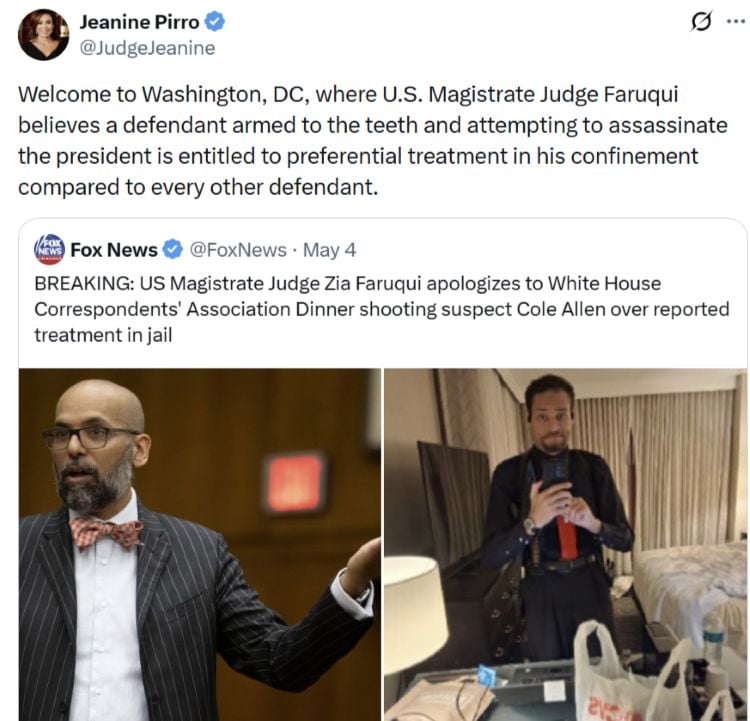
U.S. Attorney Jeanine Pirro hit back on X, accusing Faruqui of giving preferential treatment to someone “armed to the teeth” and accused of attempting to assassinate the president.
Either rights apply to ugly cases or they do not
Due process is cheap when the defendant is sympathetic. It only matters when the person asking for it makes everyone’s skin crawl.
Allen is accused of showing up armed near a room full of national officials after writing like a man who had turned violence into theology. Nobody has to pretend he was harmless.
But danger is not a blank check.
If a jail can keep him in harsh conditions, refuse him a Bible, and only get corrected because a judge notices, the question is not whether Allen deserves sympathy. The question is whether rights still count when the defendant is radioactive.
And if your answer changes because the target was Trump, you are not defending due process. You are defending exceptions for people you hate.