A grandmother delivered McDonald’s to the White House on Monday. The president walked her to the podium, thanked her on camera, and told the country that his No Tax on Tips policy had saved her $11,000. The clip hit every platform within the hour. By Monday morning, Sharon Simmons was the most famous DoorDash driver in America.
She wasn’t the only delivery driver making news that week.
Somewhere in Los Angeles, with no podium, no press pool, and no invitation from anyone, an Uber Eats driver named Jade Phoenix had figured out something the White House celebration never addressed — how to get customers to tip in the first place.
She Put Her Feet in the Frame
Jade Phoenix does Uber Eats runs in the early mornings for spending money. The job is what it sounds like — pick up food, drive it somewhere, leave it at a door, take a photo, move on. The photo is the receipt. Proof the order arrived. Most drivers frame the bag and go.
Phoenix started framing herself in.
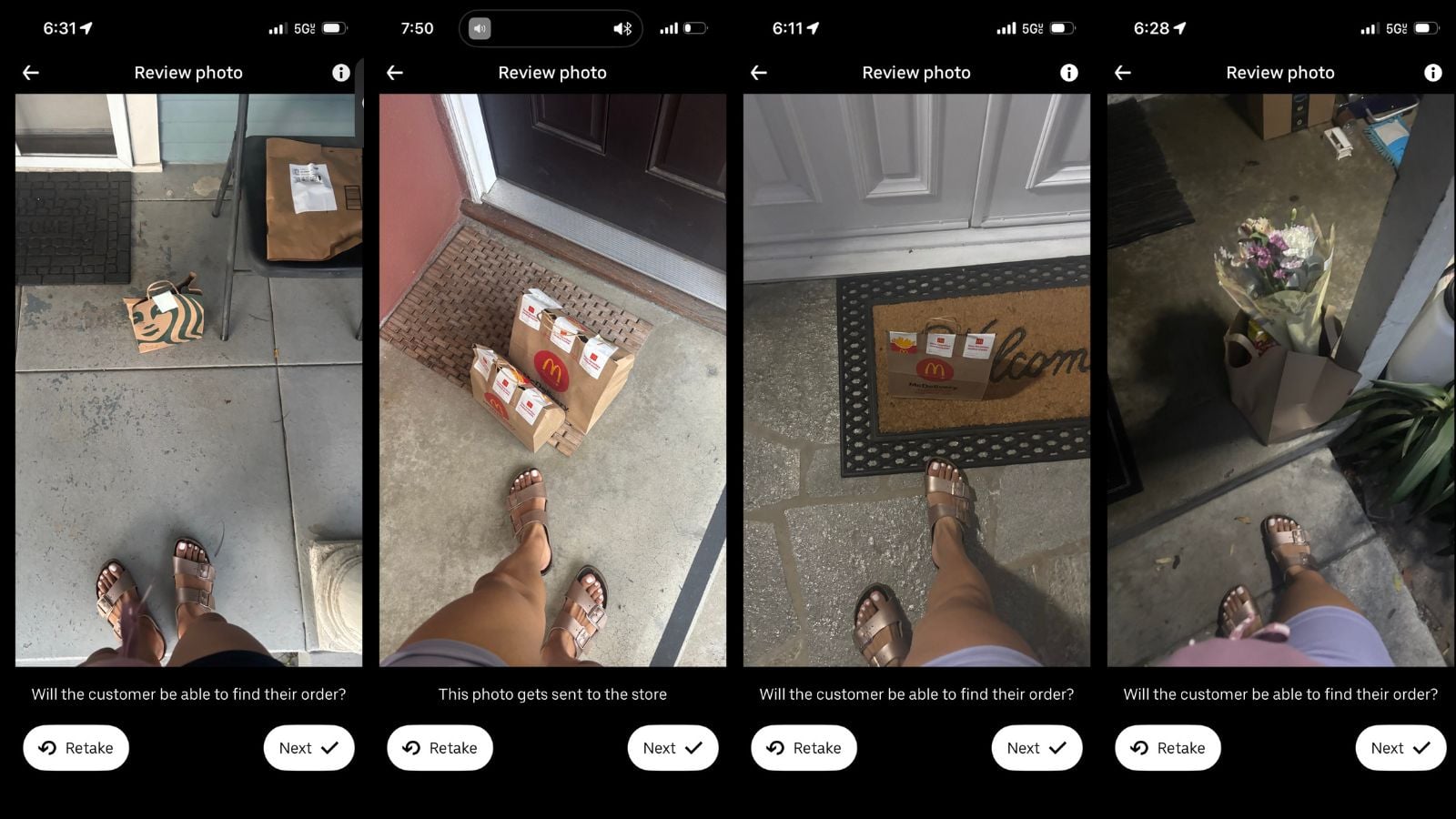
Not selfies. Not anything close to explicit. Just her feet — sandals, painted toenails — visible at the edge of the shot, standing behind whatever she’d just set down. A Starbucks order on a front step. A pair of McDonald’s bags on a doormat. Standard delivery photos with one addition: evidence that a person had been there.
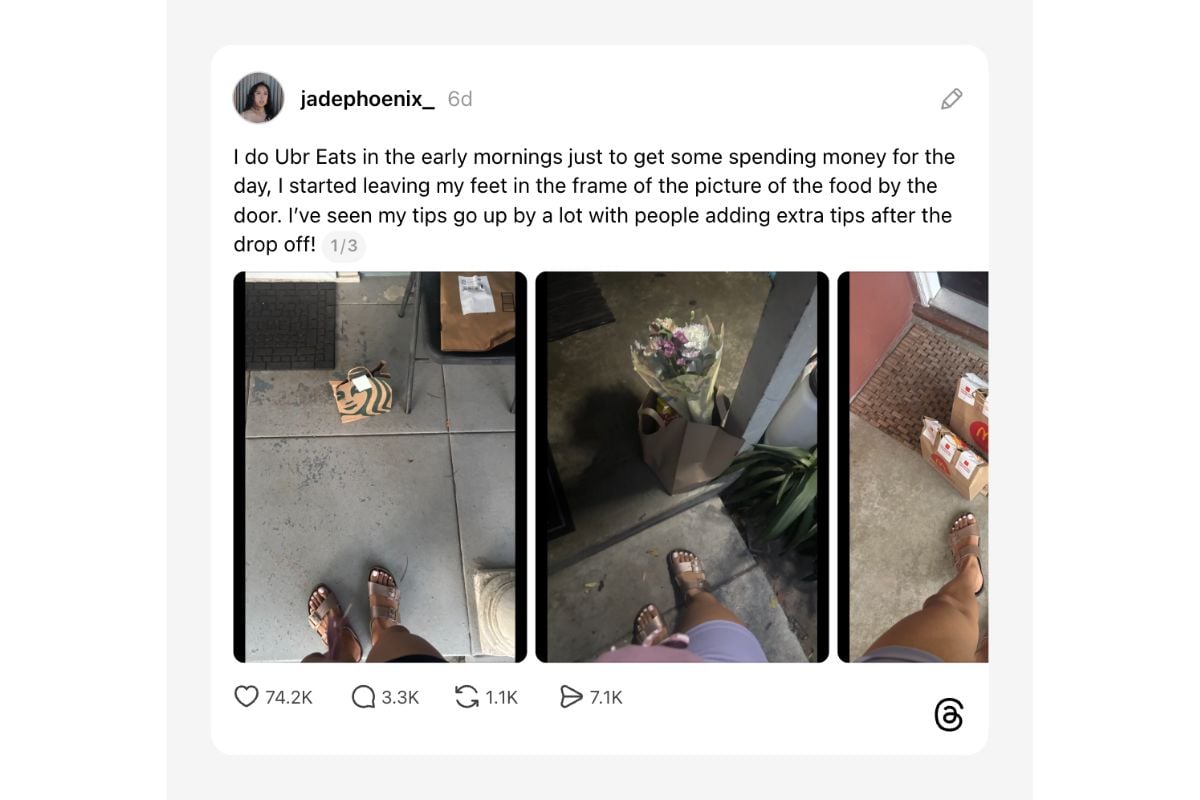
Her tips climbed. Customers who had never added anything after a delivery started adding extra. She posted about it on Threads, called herself the “Uber Feets” girl, and figured she’d get a few laughs. The post cleared 70,000 likes.
Why It Worked
A user named Zionne posted a screenshot — $49.69 tip on a $15.99 delivery. Another driver reported an extra $20 on a single order. Others started experimenting with their own versions. The results were consistent enough that it stopped looking like a joke and started looking like a pattern.
The pattern wasn’t complicated. Before COVID, a delivery meant someone handing you food at your door. You saw their face. You said thanks. Tipping felt natural because the exchange was human. Then the pandemic made no-contact delivery the default — and the apps kept it that way. Leave at door. Photo. Done. The driver appears, sets the bag down, and disappears before you open the door. The only evidence they existed is a notification and a photo of your food on concrete.
What replaced the human moment was a screen prompt. A pop-up asking you to tip before you’ve even received the order, or a guilt-nudge afterward with preset dollar amounts. The apps traded a face-to-face exchange for a toll booth — and customers started treating it like one, skipping past it the same way they skip past a cookie consent banner.
Jade Phoenix didn’t add a toll booth. She put a person back in the frame.
It didn’t need to be feet. Hands holding the bag. A shadow across the pavement. Anything that broke the illusion that the food simply appeared. Customers weren’t tipping for toes. They were tipping because something in the frame reminded them there was someone to tip.
The Gap
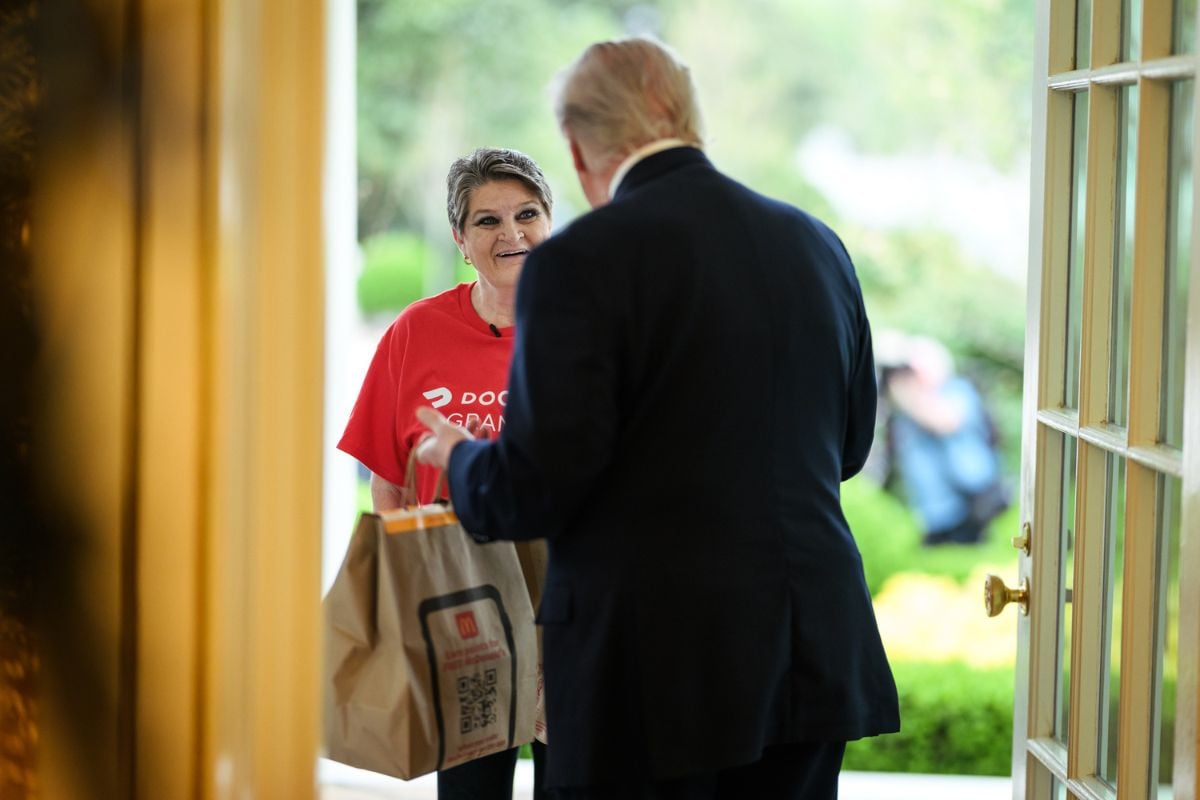
The White House spent the week celebrating what happens to tips after they’re earned. The No Tax on Tips policy is a tax provision — it changes the math on a paycheck that already has a number on it. For the drivers who already get tipped, it’s real money. Sharon Simmons said it saved her $11,000. The president called her to the podium for it.
But the policy assumes the tip exists. It doesn’t address the step before — the moment a customer decides whether to add anything at all. That’s the step Jade Phoenix was solving for from a doorstep in Los Angeles while the White House was hosting a celebration for a problem further down the chain.
One story got a podium and a press pool. The other got 70,000 likes and a comment section full of people debating whether it was genius or depressing. Both were about the same thing — a gig worker trying to get paid — and neither one had much to do with the other.
The administration framed the week around a tax win. The internet framed it around a pair of sandals. Somewhere between the two is the actual state of tipping in America.
Four Days
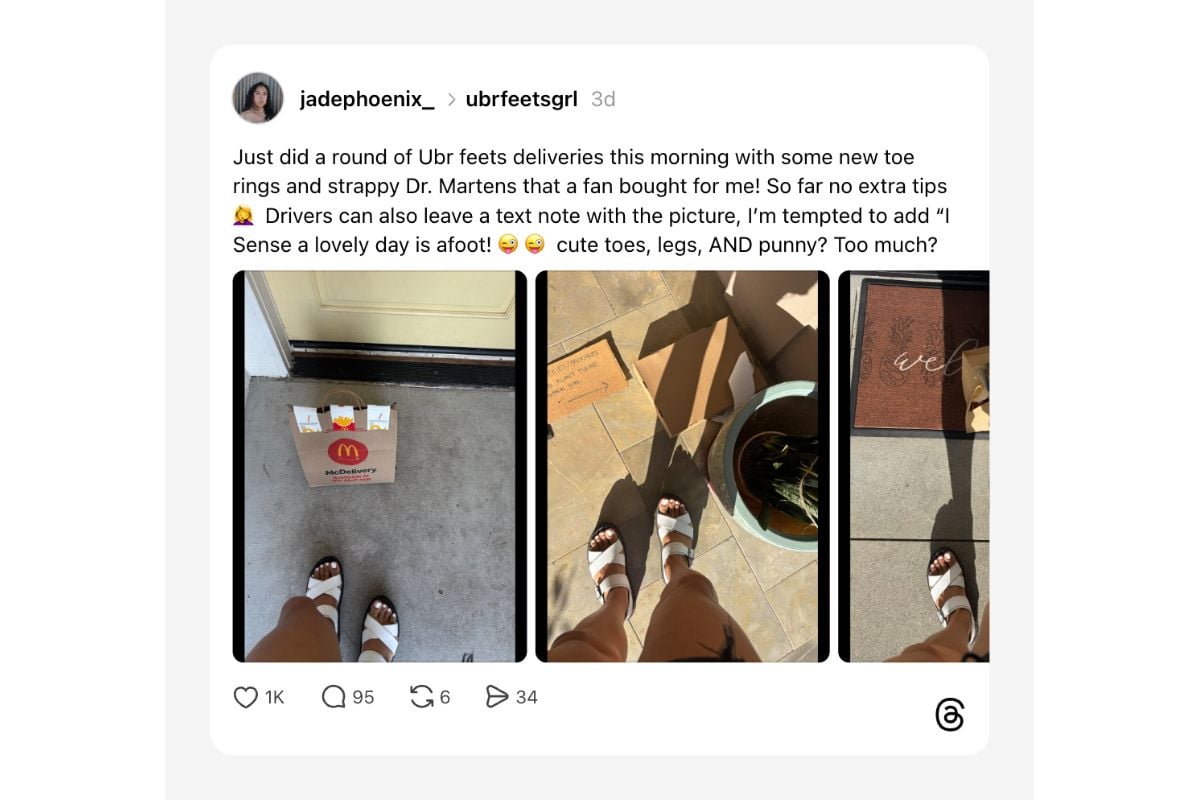
On Monday, Jade Phoenix posted an update. She’d done a round of deliveries in new strappy Dr. Martens and toe rings a fan had bought her. No extra tips.
The hack lasted four days. It worked. It went viral. Other drivers copied it. It stopped working. That’s the lifecycle of every margin in the gig economy — the window closes the moment enough people find it.
But the thing the hack exposed didn’t close with it. Drivers are still invisible on these apps. Customers still see a bag on concrete and a notification that says delivered. The confirmation photo is still the only proof that a human being was involved. And most of them still don’t leave a tip.
Sharon Simmons got a podium this week. Jade Phoenix got four days.