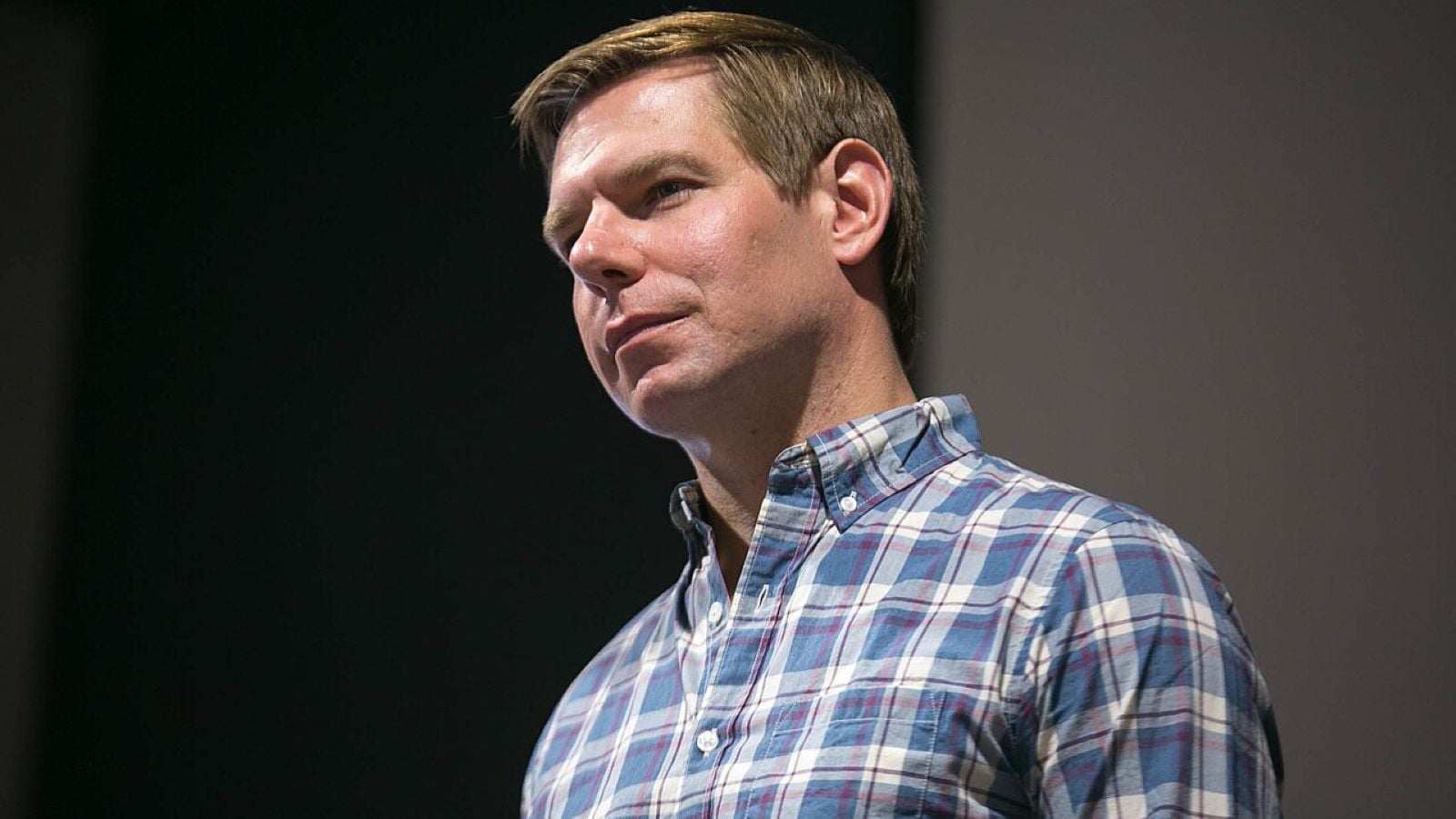
Eric Swalwell announced his resignation from Congress on Monday. Within 72 hours of the Chronicle publishing a former staffer’s sexual assault allegation, he had lost endorsements, campaign leadership, institutional support, and the California governor’s race.
Democrats are pointing to the speed of the response. Schiff pulled out. Gomez resigned from the campaign. Jeffries urged him out of the race. Other House Democrats called for him to leave Congress. The party moved in hours, not weeks. That’s supposed to be the lesson: the system worked.
It didn’t. The system got dragged into working by three women and a group chat.
The Warnings That Weren’t Warnings — Until They Were
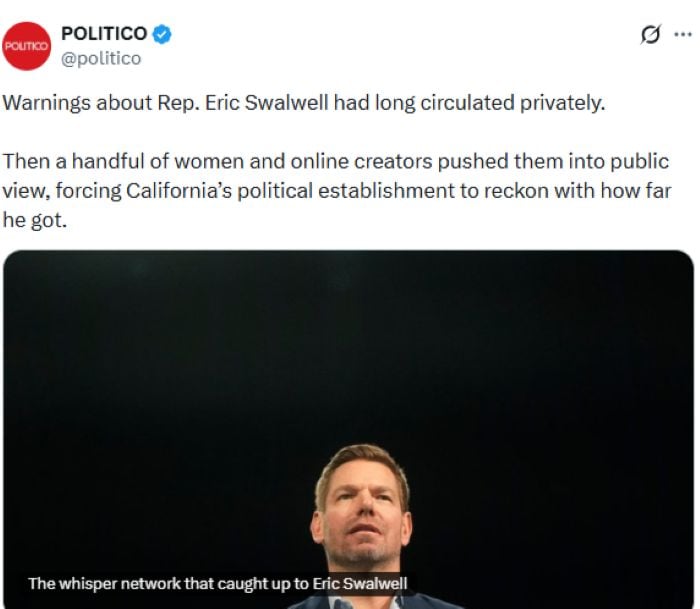
Five months before the story broke, social media creator Arielle Fodor — known online as Mrs. Frazzled — posted a positive Instagram about Swalwell after meeting him at his campaign launch. According to Politico, three people privately messaged her, warning that Swalwell was no good. Those weren’t random trolls. They were people close enough to make her pause.
Fodor and attorney Cheyenne Hunt, executive director of Gen-Z for Change, began working with women who said they had been harassed or assaulted by Swalwell. Hunt posted publicly on X on April 6 — four days before the Chronicle story — that she was “working with a number of women who are in the process of coming forward and sharing their stories of sexual harassment and even alleged abuse.” Democratic strategist Bhavik Lathia posted the same day: “This is real. Take it seriously. Eric Swalwell cannot be our nominee.”
I have been working with a number of women who are in the process of coming forward and sharing their stories of sexual harassment and even alleged abuse at the hands of Eric Swalwell. Here’s why we’re talking about it before mainstream media: 🧵
— Cheyenne Hunt (@CheyenneHuntCA) April 6, 2026
That was before the story was published. Swalwell’s campaign responded by calling the early claims a “false, outrageous rumor” spread by “flailing opponents who have sadly teamed up with MAGA conspiracy theorists.” The framing held long enough to matter. Major endorsers did not immediately run. The whispers kept circulating, and the support mostly held.
The Denial Machine That Almost Worked
According to CNN, Swalwell’s attorney sent cease-and-desist letters to at least two accusers before the Chronicle and CNN published their reports. The letters called the women’s accounts “false,” demanded retractions, and threatened defamation suits. One letter argued that an accuser’s credibility was undermined because she had later texted Swalwell that he “would be an amazing governor.”
Eric Swalwell cease and desisted the women who came forward to share their stories of sexual assault. In the middle of the night. pic.twitter.com/4mwhRNVRNU
— mrs.frazzled (@ms_frazzled) April 10, 2026
Think about that timeline. The campaign knew damaging stories were coming. Instead of transparency, Swalwell’s side lawyered up and tried to stop the women before a single article went live.
And it nearly worked. For days, the public framing was that these were unverified rumors from political opponents and MAGA operatives. Major unions and elected officials kept their endorsements. Swalwell kept campaigning. The calculation was simple — he was a frontrunner, the primary was close, and rumors without a published story were easier to ignore.
What the Speed of the Exit Actually Tells You
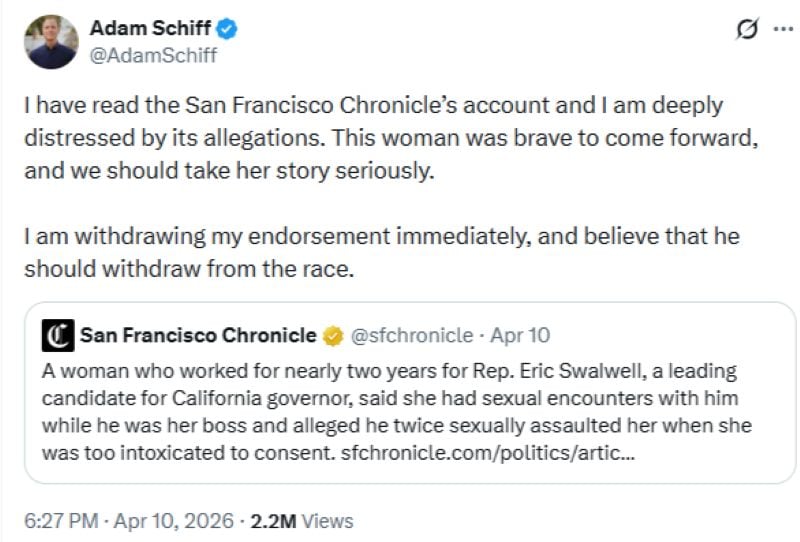
Then the Chronicle published. Then CNN published with four women, including a former staffer, plus corroboration from family members and text messages. Then the Manhattan DA confirmed it was investigating the former staffer’s allegation involving a 2024 encounter in New York. Within hours, people who had stood near Swalwell were racing to say the allegations were serious.
They may have sounded shocked. They were also exposed. Gomez stepped away from the campaign. Schiff pulled his endorsement. The California Teachers Association suspended support. More than 50 former staffers signed a letter calling for Swalwell’s resignation. Everyone moved at once because nobody wanted to be last when the picture became undeniable.
Sammarco, one of the women who accused Swalwell of misconduct, told CBS that he “thought he was untouchable” and “acted with total impunity.” But impunity does not come only from one man’s arrogance. It comes from an ecosystem that decides the frontrunner’s baggage is not worth examining until the press does it.
The Real Question Nobody Wants To Sit With
Three women — Fodor, Hunt, and an anonymous friend of Hunt’s who spoke to Politico — helped push this from private warning to public reckoning. Not a newsroom. Not an opposition research shop. Not a party apparatus with investigators, lawyers, and donor networks. A group chat.
Hunt told Politico that even as they pushed the story forward, they wondered whether it would matter — because, as she put it, people had been looking into Swalwell’s behavior “for years.” That word should make every Democrat who endorsed him uncomfortable. Not because they knew the specifics. But because the whisper network was loud enough to reach a content creator five months out, while people with power waited.
Swalwell is gone now, and he continues to deny the most serious allegations. The question isn’t only about him. It’s about every endorser, donor, and party leader who heard enough to worry and still waited until it became someone else’s problem. That’s not a system that worked. That’s a system that got lucky because three women didn’t give up.