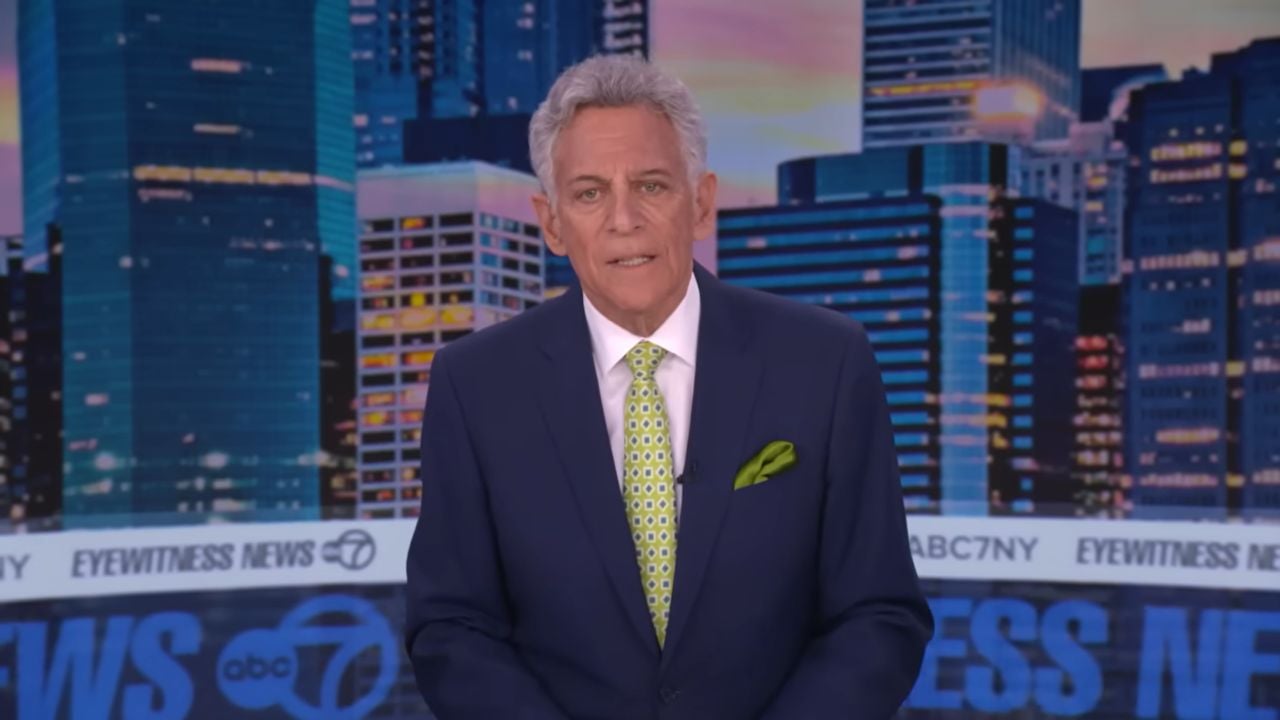
Bill Ritter is opening up about the memory changes that led to his early-stage Alzheimer’s diagnosis and his decision to step away from the ABC 7 New York anchor desk.
The longtime WABC-TV journalist, 76, said on Good Morning America that he first noticed problems about two years ago. People reported that Ritter began forgetting names and places, but initially thought the issue might be tied to his demanding work schedule.
Ritter had been anchoring the 5 p.m., 6 p.m. and 11 p.m. newscasts at the time. He first reduced his schedule, hoping more rest would help, but the memory problems continued.
That pushed him toward medical testing. Ritter announced on June 12 that doctors had diagnosed him with early-stage Alzheimer’s, ending his regular run at the anchor desk after decades in New York television.
Ritter First Blamed His Work Schedule
Ritter said the first signs were easy to explain away. “I realized I was forgetting people, names, and places,” he said on Good Morning America. “I didn’t know why that was happening. My wife also noticed it.”
At first, Ritter wondered whether the problem was exhaustion. ABC News reported that he stepped away from some of his late-night anchor duties after decades of long news shifts, but better sleep did not make the symptoms disappear.
His wife, Kathleen, saw the changes too. Ritter said other people around him did not seem to notice them yet, which made it easier to keep looking for less frightening explanations.
The symptoms eventually led him to testing. Ritter said he wanted viewers to understand that people can talk themselves out of taking early warning signs seriously, especially when they still seem able to work and function in public.
Testing Led to an Early-Stage Diagnosis
ABC News reported that Ritter announced during his June 12 broadcast that he had been diagnosed with early-stage Alzheimer’s after a series of tests.
During that final regular anchor broadcast, Ritter said treatments are helping keep the disease “at bay” for now, but he also told viewers there is still no cure.
He said the decision to announce the diagnosis on air came from a need to be honest with the audience that had watched him for years. Since then, Ritter said he has been overwhelmed by messages from viewers and families affected by Alzheimer’s and other forms of dementia.
Ritter anchored WABC’s 6 p.m. newscast since 2001. ABC News reported that he is stepping away from regular anchoring but plans to remain with the station in a different role.
His Family History Came to Mind Immediately
Ritter said fear was his first reaction after the diagnosis. On Good Morning America, he spoke about his late father, who had Lewy body dementia, and said the family connection made the news hit harder.
He also shifted the focus quickly to his wife and children. Ritter said Alzheimer’s affects families deeply and told GMA that he does not see himself as the brave one.
“My kids say, ‘Dad, you’re so brave about all this,’ and I’m not the one that’s brave,” Ritter said, according to ABC News. “It’s my kids and my wife who are the brave ones.”
That family impact shaped his decision to retire from the anchor desk. Ritter said he wants more time with the people closest to him while he is still able to choose how he spends it.
He Plans to Keep Reporting on Alzheimer’s
Ritter is leaving regular anchoring, but he is not leaving journalism entirely.
ABC 7 New York reported that he plans to continue reporting when he can and help the station cover Alzheimer’s, caregiving, treatment costs and the families affected by the disease.
Ritter said the response to his announcement showed him how many people are dealing with the same fear and uncertainty. His next chapter at WABC is expected to focus on those families and the public conversation around diagnosis, care and treatment.