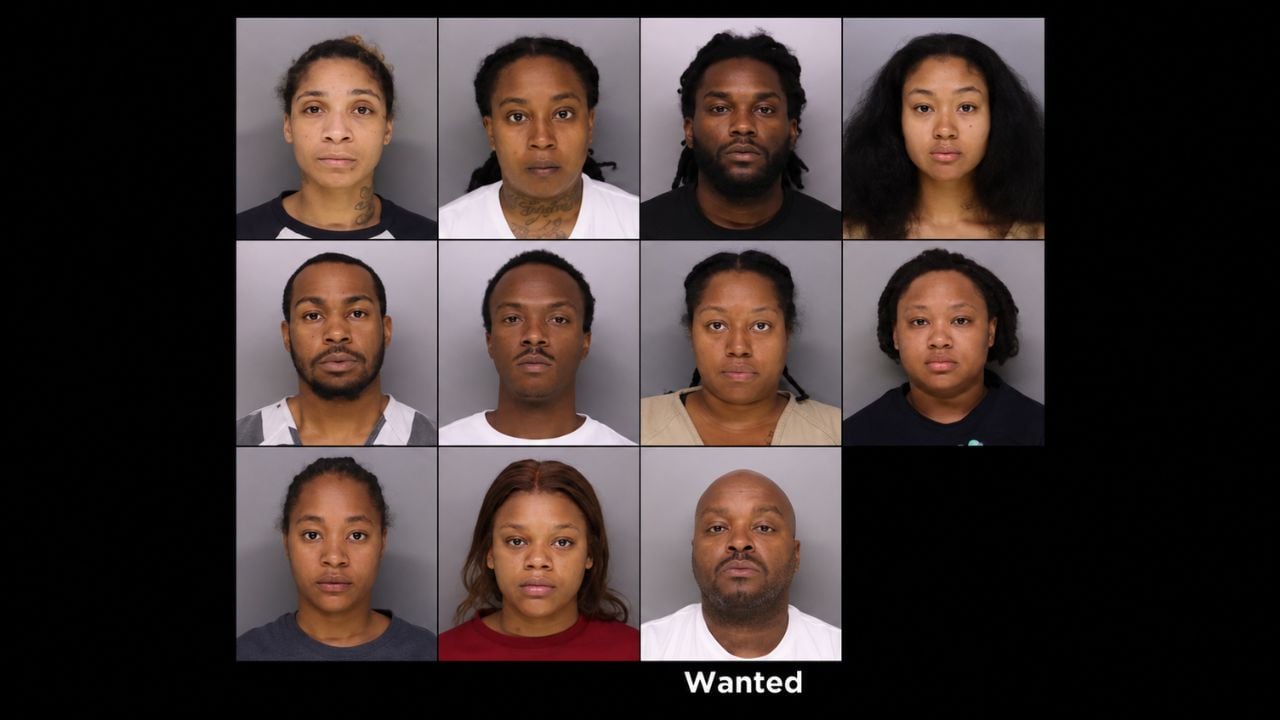
A caregiver is accused of using seniors’ credit cards to pay rent in a Cincinnati theft investigation involving six victims ages 85 to 99 and more than $38,000 in reported losses.
The case began when a resident of The Kenwood by Senior Star reported checks missing from his apartment.
Police said 11 people had been indicted on a combined 29 felony charges, according to FOX19’s November 9 report. Ten had been arrested, while investigators were still seeking Daryl Bullucks.
Detective Says the Same Caregiver Worked With All Six Victims
Cincinnati Police Detective Naomi Stewart told Local 12 that Robyn Brown was identified as the person attempting to cash the missing checks. Brown, a caregiver employed by outside provider Trinity In Home Care, had worked with all six victims.
Stewart said credit card numbers were photographed and used for online purchases. A 99-year-old woman also reported that gold necklaces belonging to her late husband had been stolen.
The detective reviewed financial records, interviewed witnesses and examined surveillance footage as the investigation expanded. She made weekly visits to review residents’ bank statements, and some victims learned about the suspicious activity only after she contacted them.
Indictment Alleges Credit Cards Paid Rent and Checks Were Forged
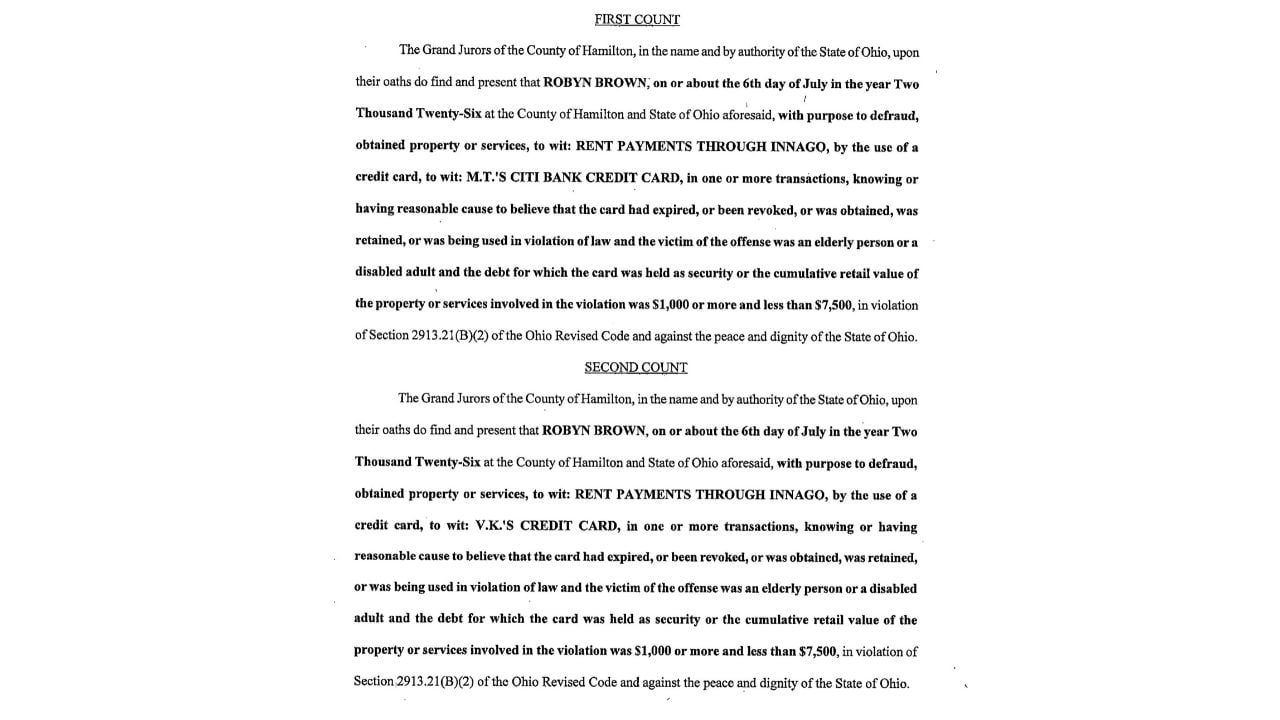
The October 15 indictment accuses Brown of using two residents’ credit cards for rent payments through Innago on July 6. Each of those two counts places the amount involved at $1,000 or more but less than $7,500.
Two other credit-card counts allege purchases of retail merchandise using cards belonging to two additional residents. The indictment also charges Brown with presenting or possessing for presentation two forged Fifth Third Bank checks, for $850 and $2,200, on August 3.
The joint indictment assigns Brown 12 counts covering credit-card misuse, forgery and theft. It also accuses Bullucks of forgery involving a $2,174 check and receiving stolen jewelry.
Brown’s October 23 written plea enters a not-guilty plea to all charges in Hamilton County case B 2606149-A. The filing records a recognizance bond and a condition prohibiting contact with victims.
A separate October 29 indictment against Morrigan Crutcher alleges forgery involving a $1,875.02 Fifth Third Bank check on August 4. It also charges her with theft from an elderly person or disabled adult.
Crutcher’s November 5 written plea enters a not-guilty plea to both charges in case B 2606421. The defendants are presumed innocent unless proven guilty.
Care Company Fired Brown and Offered Identity-Protection Reimbursement
Trinity CEO Aaron Stapleton told Local 12 that Brown was suspended after a client reported a theft and fired the following day. He said he contacted investigators after learning that other clients at the community had reported missing property.
Trinity’s written statement says the company was cooperating with law enforcement and working with affected clients and families. It offered reimbursement for LifeLock identity-protection services and said it was strengthening caregiver screening, supervision, training and client safeguards.
Senior Star’s November 9 statement identifies the accused caregiver as an employee of a third-party provider. The senior living operator said none of its own employees were involved in the alleged misconduct and that it was cooperating with investigators.
Secure Checks and Cards, and Arrange an Independent Account Review
The Consumer Financial Protection Bureau and Federal Deposit Insurance Corporation’s caregiver-exploitation guidance recommends securing checks, financial statements, credit cards and valuables, including using a locked file cabinet for financial documents. It also advises obtaining receipts for purchases made by helpers and monitoring account activity.
With the account holder’s permission, a trusted relative or other person can help review statements and monitor transaction alerts. The guide notes that a bank can send a second statement copy to someone helping the customer read it without giving that person authority to act on the account.
Report unauthorized transactions to the bank or card issuer immediately, and suspected theft to local police. Suspected elder financial exploitation can also be reported to Adult Protective Services; the federal Eldercare Locator can help identify the appropriate local office.