

A New York man is accused of persuading friends and longtime acquaintances to finance real estate deals, then diverting their money to other investors, personal expenses and gambling. Federal prosecutors say one investor recorded Andrew Laub admitting that the investor’s and his family’s money had not gone into properties as promised.
Laub, 59, of Goldens Bridge in Westchester County, was arrested November 10, 2026, on a wire fraud charge. He appeared that afternoon before Chief U.S. Magistrate Judge Judith C. McCarthy in White Plains federal court.
A federal criminal complaint identifies approximately $5,758,630 in losses involving three victims. Investigators allege the scheme operated from at least 2020 through December 2025.
Laub presented himself as a developer formerly associated with a real estate investment firm that owned and managed more than $750 million in assets, according to the complaint. His proposals involved buying properties, renovating them and reselling them for substantial profits.
A $250,000 Loan Grew Into Millions From One Family
The five-page criminal complaint, sworn November 5, describes a Westchester investor who had known Laub for several years. Around 2020, Laub offered the investor an opportunity to finance property developments, saying his own family members were participating.
The investor initially loaned approximately $250,000 after Laub promised roughly 45% interest and repayment of principal when the properties were sold or refinanced. Laub then made what he represented as monthly interest payments, encouraging the investor and relatives to provide additional loans.
Between 2020 and 2025, the family advanced millions of dollars for purported projects in Virginia, Texas and Florida. In June 2025, the original investor prepared documents recording the loans, associated properties and repayment terms, including approximately 45% annual interest payable monthly.
Laub returned signed copies on June 11, according to the complaint.
A Bronx Deal Promised $27,500 in Profit Within About 45 Days
A Connecticut investor who had known Laub for approximately 12 years received a proposal involving a Bronx residential property in May 2025. In an email titled “Bronx Deal,” Laub proposed that each of them contribute $180,000 toward buying and reselling the house.
The May 7 email projected a combined profit of $55,000, or $27,500 each, within approximately 45 days. Laub claimed he had already paid a deposit and expected to close the purchase the following week.
The investor wired approximately $180,000 on May 9, and Laub later represented that the money had purchased the property. Investigators reviewed ownership records and concluded that Laub had never held an ownership interest; the house had last been sold to an unrelated party around 2006.
A Childhood Friend Wired $325,000 for a Bedford Property
A Florida investor who had known Laub since childhood received a separate proposal involving a house in Bedford, New York. In a July 9, 2025 email, Laub described a $1.1 million purchase and approximately $200,000 in improvements.
He projected a holding period of 90 to 120 days and promised that every $100,000 invested would bring back $150,000. On July 14, he sent a signed promissory note for approximately $900,000 that incorporated earlier amounts. The investor wired approximately $325,000 that day for the Bedford transaction.
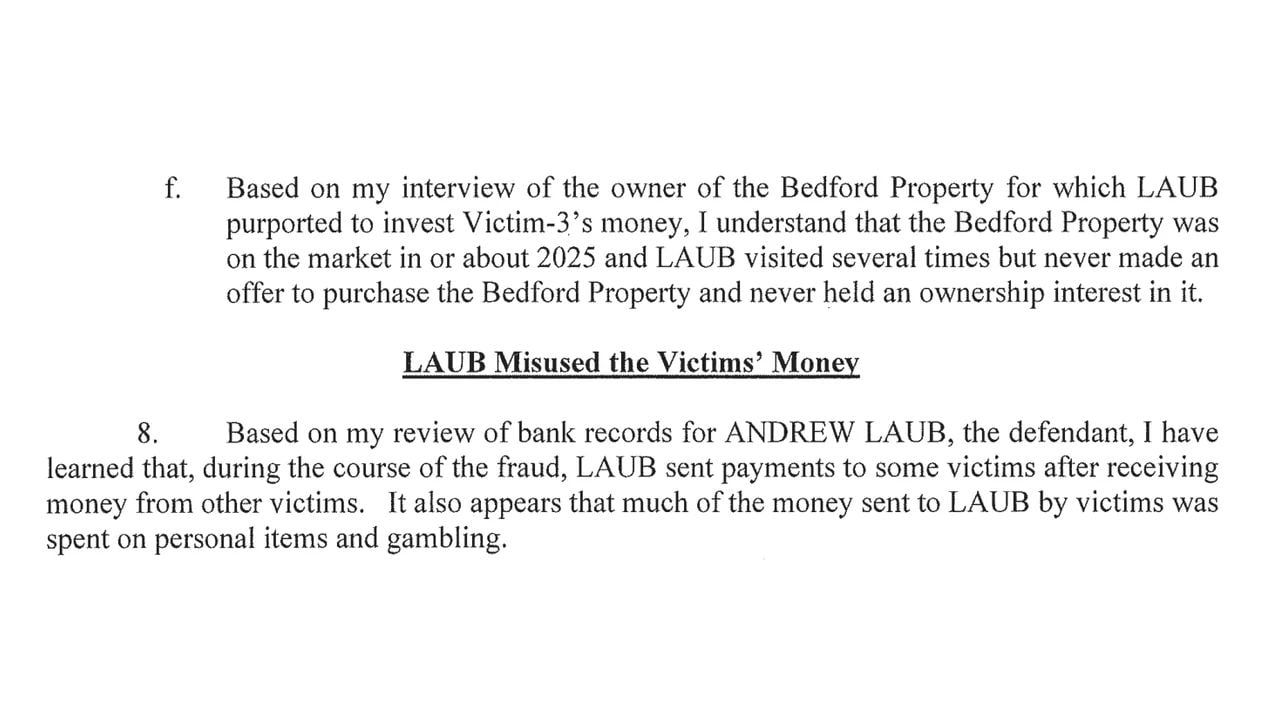
Laub later told the investor that the money had been used to purchase the house, according to the complaint. The property’s owner told investigators that Laub had visited several times while it was on the market in 2025 but never made an offer. The complaint states that he never held an ownership interest.
An Investor Recorded Laub Describing Where the Money Went
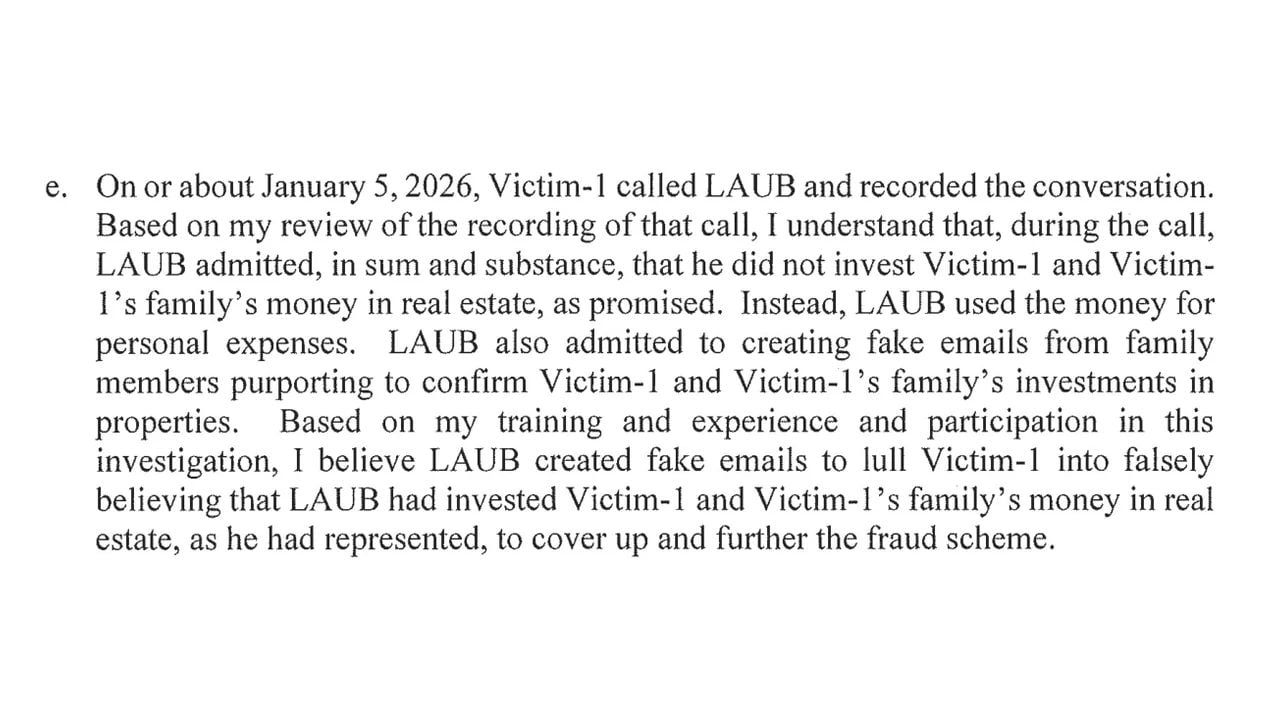
On January 5, 2026, the original Westchester investor called Laub and recorded their conversation. Postal Inspector Daniel J. Gabel wrote that he reviewed the recording and understood Laub to admit that he had used the investor’s and the family’s money for personal expenses instead of the promised real estate investments.
According to Gabel’s account, Laub also admitted creating fake emails that appeared to come from family members confirming the supposed investments. The complaint describes those emails as an effort to make the investor believe the property investments had occurred.
Gabel separately reviewed bank records showing payments to some victims after money arrived from others. He wrote that much of the money also appeared to have been spent on personal items and gambling, a pattern prosecutors described as a Ponzi-like scheme.
Laub faces one count of wire fraud, which carries a statutory maximum sentence of 20 years in prison if convicted. The complaint contains allegations, and he is presumed innocent unless proven guilty.
Verify the Property Deal Before Sending Investment Money
Before financing a private property transaction, independently verify the ownership, purchase agreement and proposed use of your money. An independent real estate attorney or title professional can help check whether the promoter’s claims match the transaction documents and ownership records.
The SEC’s investment-fraud checklist urges investors to research opportunities thoroughly and check the backgrounds of investment professionals. Promises of unusually high returns, pressure to act quickly and impressive credentials deserve scrutiny even when the person seeking money is a friend.
Receiving payments does not establish that the underlying investment exists. The SEC explains that Ponzi schemes pay existing investors with money collected from others, so apparent returns should not replace independent verification of the deal.