On Saturday, Elon Musk posted on X that he wanted “to offer to pay the salaries of TSA personnel during this funding impasse that is negatively affecting the lives of so many Americans at airports throughout the country.” The post got 91 million views.
On Wednesday, the White House said no.
“We greatly appreciate Elon’s generous offer,” spokeswoman Abigail Jackson told Fortune. “This would pose great legal challenges due to his involvement with federal government contracts.” She added that the fastest way to ensure TSA employees get paid would be for “Democrats to fund the Department of Homeland Security.”
That was the official explanation. It is also not the interesting part. The interesting part is what you see when you pull back far enough to watch the full sequence of events that led to the richest man on the planet offering to pay government employees who are relying on food pantries to feed their families.
The Chainsaw Came Before the Checkbook
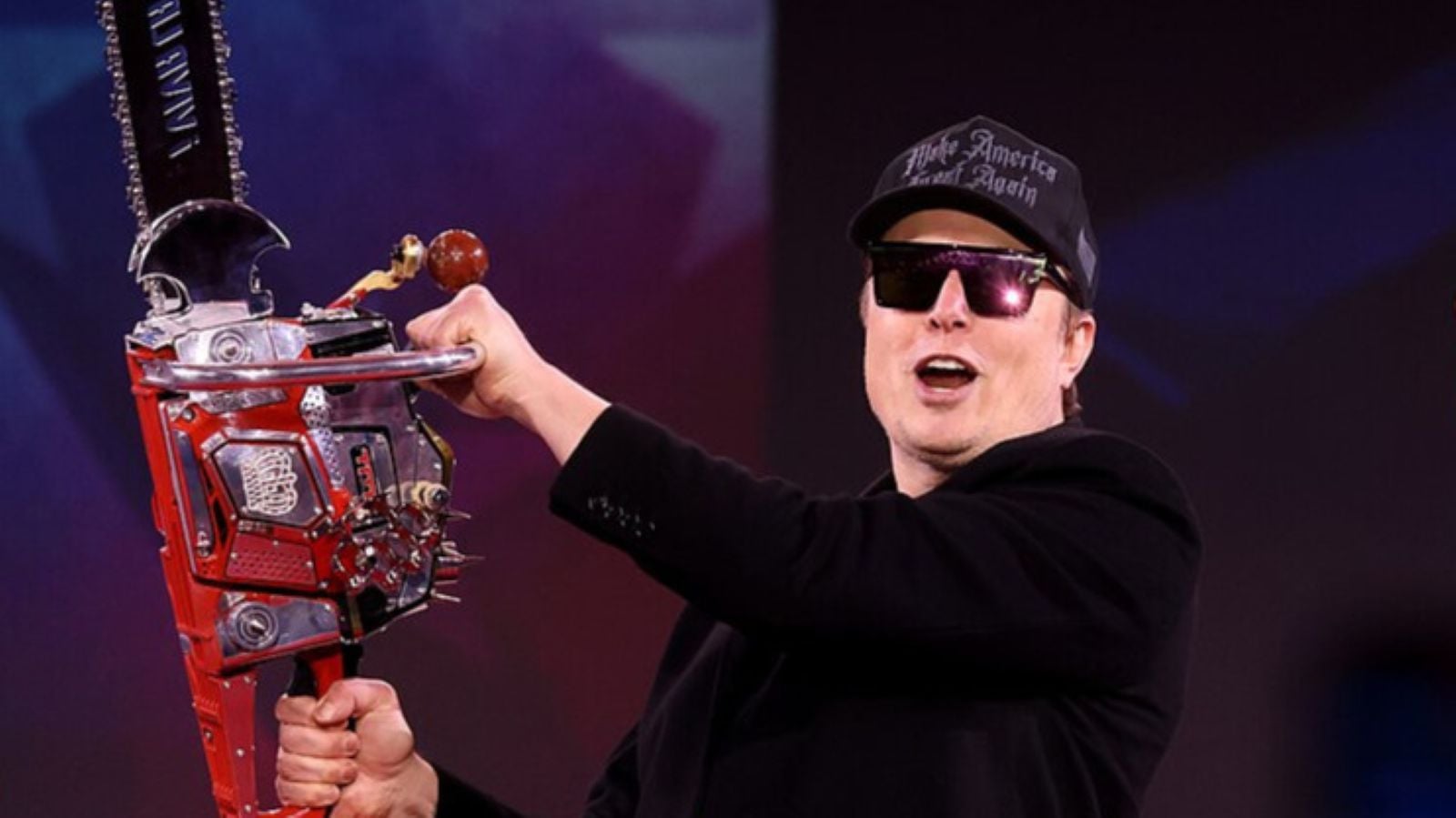
In February 2025, Musk appeared at CPAC holding a chainsaw. He had spent the first weeks of Trump’s second term as the public face of the Department of Government Efficiency, or DOGE. He sent mass emails to government employees demanding they justify their jobs, then admitted the emails were partly a test to see if workers “had a pulse.”
By the end of 2025, more than 260,000 government workers had been bought out, taken early retirement, or been fired under DOGE-era downsizing, according to Reuters. The Cato Institute pegged the decline at roughly 271,000, about a 9% drop since January 2025. The federal workforce was bloated, and trimming it was the point.
Here is the part that never got the same airtime. While DOGE targeted agencies for cuts, overall government spending in Trump’s first months ran about $250 billion higher than the same period a year earlier, according to Reuters. The workers left. The bill got bigger. The efficiency project did not produce efficiency. It produced layoffs.
Then the People Left Standing Stopped Getting Paid
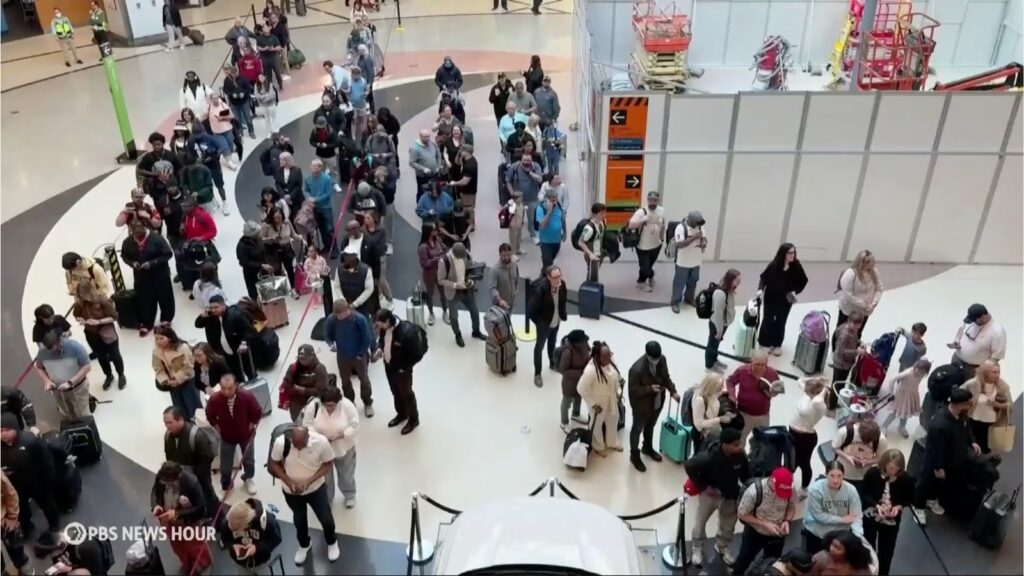
DHS has been in a partial shutdown for over a month. Roughly 50,000 TSA officers are working without pay. In March, more than 10% of TSA workers failed to show up. At some major airports, the absence rate was much worse. By March 24, more than 450 officers had quit outright, according to Reuters. Security lines at some airports have stretched to three or four hours. MGM Resorts in Las Vegas started delivering meals and care packages to unpaid agents at Harry Reid International Airport. Bloomberg reported that TSA warned new screeners will not be ready in time for the 2026 FIFA World Cup.
These are people who scan your bags for a living. They are choosing between showing up to work for free or staying home to feed their kids. That is the backdrop against which Musk’s offer arrived.
The Offer That Couldn’t Work
I would like to offer to pay the salaries of TSA personnel during this funding impasse that is negatively affecting the lives of so many Americans at airports throughout the country
— Elon Musk (@elonmusk) March 21, 2026
Federal law makes this harder than a rich guy writing a check. Under 18 U.S.C. § 209, executive-branch employees generally cannot be paid by an outside party for performing their official duties. That alone creates a legal wall. But the White House pointed to something more specific: Musk’s involvement with federal government contracts. The Washington Post has reported that Musk and his businesses have received at least $38 billion in government contracts, loans, subsidies, and tax credits. SpaceX alone holds billions in NASA contracts.
The White House did not explicitly connect those two facts. But the math is hard to ignore. The man offering to fund federal salaries out of pocket is also one of the largest recipients of federal money in the country. His entanglement with the government is part of what makes the offer legally fraught.
This Is the Part Musk Doesn’t Want in One Timeline
None of this means Musk caused the DHS shutdown. That is a congressional funding fight. But Musk spent months teaching Washington to treat federal workers as expendable. He argued that the government employs too many people, that those people are not productive enough, and that cutting them is an act of patriotism. He held a chainsaw on a stage and got a standing ovation.
Now, 50,000 of the workers who survived the cuts are going without paychecks, relying on donated meals, quitting in numbers that threaten airport security before a global sporting event, and being told by their own government that the billionaire who volunteered to help them cannot legally do so because he is already too deep inside the system.
Musk’s offer may have been sincere. It also arrived in a world he helped build—a world where a month-long shutdown affecting tens of thousands of federal workers barely qualifies as a crisis in Washington, because the idea that those workers are disposable already took root.
So who exactly is the federal government working for right now? The 50,000 officers scanning bags for free, or the billionaire who can’t pay them because the government has already paid him too much?