
Former West Virginia University basketball guard Kerr Kriisa pleaded guilty to federal wire fraud after admitting that he created a fictitious email identity to demand $9,000 from a victim in a case involving an alleged $2.2 million fraud scheme.
Kriisa, a 25-year-old Estonian national who played for four American college basketball programs, entered his guilty plea Oct. 8, 2026, in Clarksburg, West Virginia. He admitted using the invented identity “Irene” to pressure a victim into making a payment.
The admission concerns one count from an original five-count federal indictment. Prosecutors separately alleged that Kriisa deceived two people over several years through fabricated financial emergencies, impersonated family members, invented third parties and repayment promises.
Kriisa is scheduled to be sentenced Dec. 22. Under his plea agreement, federal prosecutors agreed not to recommend more than 24 months in prison, although the sentencing judge is not bound by that recommendation.
A Fake ‘Irene’ Email Demanded $9,000 to Avoid a Supposed Lawsuit
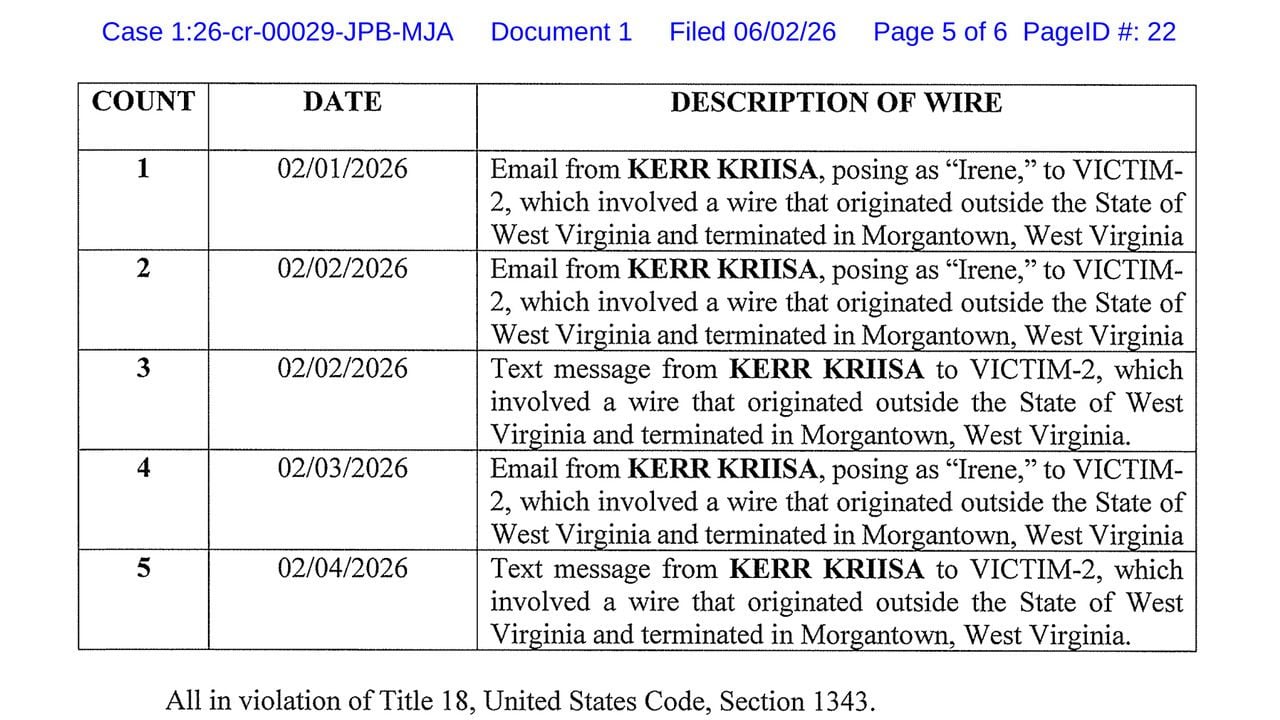
According to the Justice Department, Kriisa admitted sending an email in February 2026 while pretending to be a fictional person named Irene.
The message demanded $9,000 from one of the victims to avoid litigation and unwanted publicity over a supposed financial dispute between Irene and Kriisa. Federal prosecutors said he invented the identity to advance the fraudulent scheme.
During his plea hearing, Kriisa acknowledged creating the false email to obtain money, according to WVNews, which covered the proceedings.
The six-page federal indictment, filed June 2, provides a longer account of the communications. It alleges that Kriisa began emailing the second victim under the Irene identity in November 2025 and continued using it during December, January and February.
He also allegedly sent text messages under his own identity claiming to have communicated with Irene. On Feb. 4, prosecutors said he falsely denied that Irene was an invented person.
The indictment identified five specific interstate emails and text messages transmitted between Feb. 1 and Feb. 4, 2026, as the basis for the original wire fraud counts. Kriisa pleaded guilty to one count, not separately to all five alleged offenses.
Prosecutors Describe Cancer Claims, a Family Farm and an Organ-Sale Story
The indictment traces the alleged deception to at least 2022, when Kriisa was playing basketball at the University of Arizona. Prosecutors said he repeatedly approached a woman identified as the first victim with requests based on personal or family financial problems.
In August 2022, he allegedly told the woman he had obtained a loan to repay her. By November, prosecutors said he falsely claimed that he intended to sell his organs to raise money to settle the debt.
Between 2022 and 2024, Kriisa allegedly sent emails while impersonating his mother. Some requested money for supposed cancer treatments, while others claimed that the family’s farm needed financial assistance.
Prosecutors also alleged that Kriisa warned one victim that he and his relatives faced imminent danger unless money was provided to cover a debt. The requests were presented as emergencies requiring immediate financial help.
On April 17, 2025, Kriisa signed a written agreement promising to repay the first victim $100,000 by February 2026. The indictment alleges that the repayment promise was fraudulent, and federal authorities said he did not honor the agreement.
The Indictment Says One Victim Was Directed to Pay Another
Federal prosecutors described another unusual arrangement in which Kriisa allegedly instructed the second victim to send money to the first rather than directly to him.
The indictment identifies seven occasions between Dec. 22, 2025, and Jan. 2, 2026, when he allegedly directed such transfers. He represented that the first victim was merely a third party who had agreed to receive the money and forward it to him.
Prosecutors also described occasions when Kriisa allegedly claimed that he or a fictional contact had not received a previous payment, giving the victim another purported reason to send replacement funds.
The Indictment Sought $2.2 Million in Forfeiture
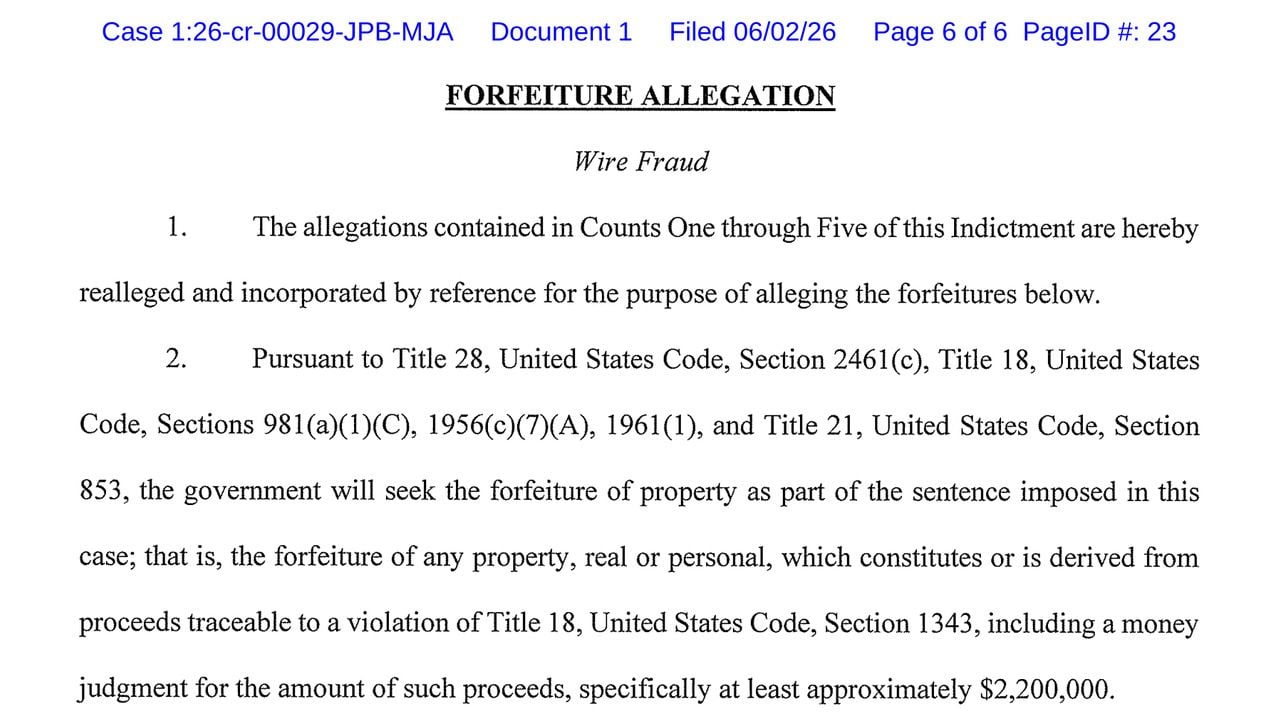
The federal grand jury returned five wire fraud counts against Kriisa on June 2, 2026. Authorities publicly announced his arrest in July and described an alleged scheme operating from at least 2022 through June 2026.
The indictment sought forfeiture of property or proceeds traceable to the alleged wire fraud offenses, including a proposed money judgment of at least approximately $2.2 million. The figure represents the government’s forfeiture allegation, not a restitution award already imposed by the court.
Under the October plea agreement, prosecutors agreed not to recommend a prison sentence exceeding 24 months, according to WV MetroNews. The federal wire fraud statute ordinarily permits a maximum sentence of 20 years for a single count. The prosecution’s recommended limit does not change the judge’s statutory sentencing authority.
U.S. Magistrate Judge Michael John Aloi presided over Kriisa’s guilty plea. U.S. District Judge John P. Bailey is scheduled to handle sentencing on Dec. 22 at 2:30 p.m. in Wheeling, West Virginia.
Assistant U.S. Attorney Jarod Douglas is prosecuting the case, while the FBI conducted the investigation. The sentencing court will determine Kriisa’s punishment and any applicable financial obligations.
Kriisa Played for Arizona, West Virginia, Kentucky and Cincinnati
Kriisa began his American college basketball career at Arizona in 2020, where he led the Pac-12 Conference in assists during two seasons. He transferred to West Virginia for the 2023-24 season and was suspended for nine games after acknowledging that he had received impermissible benefits during his time at Arizona.
He subsequently transferred to Kentucky, where a foot injury limited him to nine games. He finished his college career at Cincinnati during the 2025-26 season, starting 12 games before suffering a separated shoulder, according to the Associated Press.
His college career overlapped with the period identified in the federal indictment. The criminal case concerns Kriisa’s personal financial dealings with the two victims, rather than allegations of misconduct by the basketball programs.
How to Verify Urgent Money Requests and Missing Transfers
The indictment describes several methods that can make requests for financial assistance difficult to evaluate, including purported family emergencies, promises to repay money, invented third parties and claims that earlier payments were never received.
The Federal Trade Commission advises consumers to independently verify urgent requests for money, especially when someone claims to be contacting them on behalf of another person. Even when the initial request appears to come from someone familiar, additional identities or unexpected emergencies should be checked through trusted contact information.
Anyone told that an earlier transfer has disappeared should confirm its status directly with the bank or payment service before sending more money. Bank statements, transfer confirmations and correspondence can help determine whether the original payment was completed.
People who suspect they have been deceived into sending money should contact their financial institution promptly, preserve messages and agreements, and report suspected fraud through ReportFraud.ftc.gov. Acting quickly can improve the chance of stopping or recovering additional transfers.