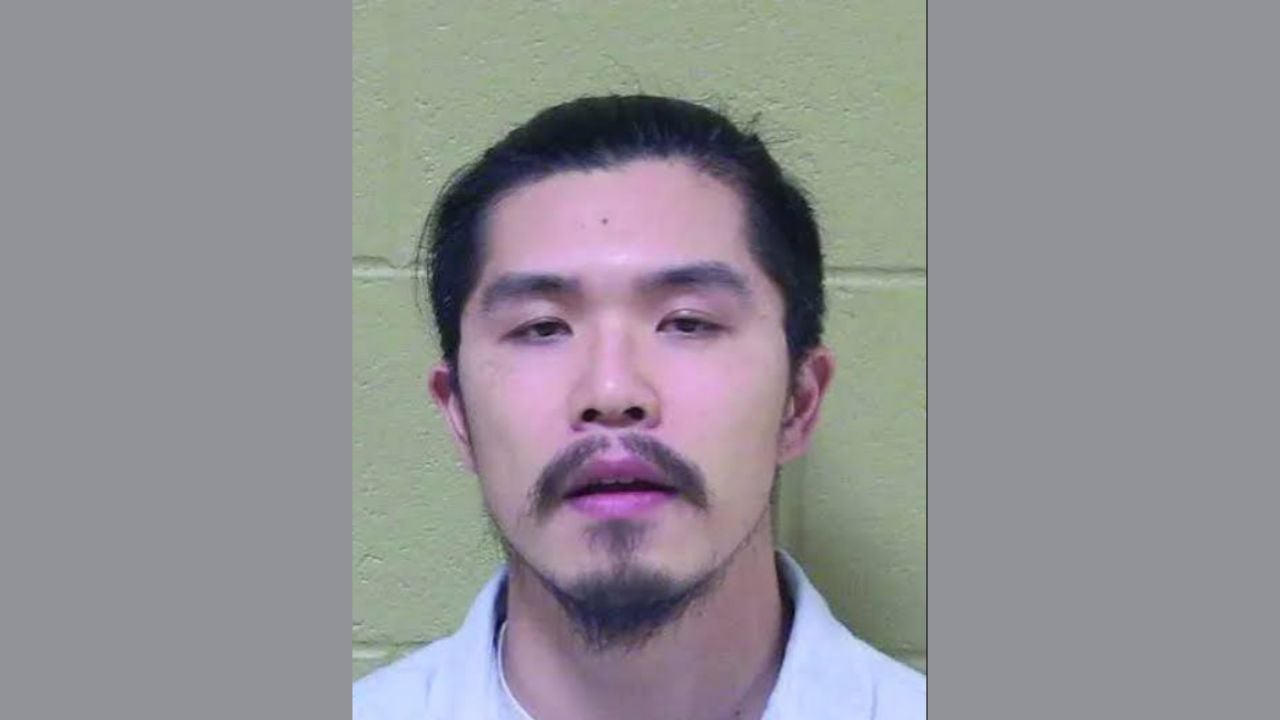
An Escanaba, Michigan, resident reported losing approximately $665,000 to someone posing as a cryptocurrency investor, according to state police.
Michigan State Police identified the suspect as Zhong Jiang, 34, formerly of Orland Hills, Illinois. Detectives at the Gladstone Post began investigating in July 2026 after receiving a complaint from the Escanaba resident.
Wisconsin court records document a separate investment-fraud prosecution and the extradition process that brought Jiang to Michigan.
On October 19, Jiang was arraigned in Michigan’s 94th District Court on one felony count of larceny by conversion involving $100,000 or more. His bond was set at $400,000 cash or surety, with another hearing scheduled for October 29. Michigan State Police announced the arrest on October 21.
The Victim Handed Over More Than $500,000, Then Shipped Cash by FedEx
Believing his money would be used to purchase Bitcoin, the Escanaba resident arranged an in-person meeting with the supposed investment professional.
During that meeting, he handed over more than $500,000 in U.S. currency. He subsequently shipped another $165,000 in physical cash through FedEx to addresses outside Michigan, according to state police.
A Wisconsin Investor Faced a $270,000 Demand to Withdraw His Money
In Delafield, Wisconsin, another man contacted police on July 13 after becoming suspicious of an online investment operation through which he believed he was trading stocks. According to Hoodline’s reporting, citing Greater Milwaukee Today’s examination of a criminal complaint, the investor had already transferred approximately $132,000 through bank wires and delivered a similar amount through two cash handoffs.
When the man tried to withdraw approximately $3,000 to $4,000, the purported investment firm demanded a $270,000 cash commission before releasing his money.
The complaint described documents involving supposed home remodeling, steel purchases and a gold coin transaction that the investor said he had never made.
A Monitored Cash Pickup Led to Two Wisconsin Felony Charges
The Wisconsin investor’s wife contacted Delafield police after another collection was arranged. Officers recorded the serial numbers of the money and monitored the planned exchange, according to the earlier reporting about the criminal complaint.
Jiang reportedly arrived in a rented BMW to collect the cash. He told investigators that he had found the collection job online and expected to receive $800 for completing it.
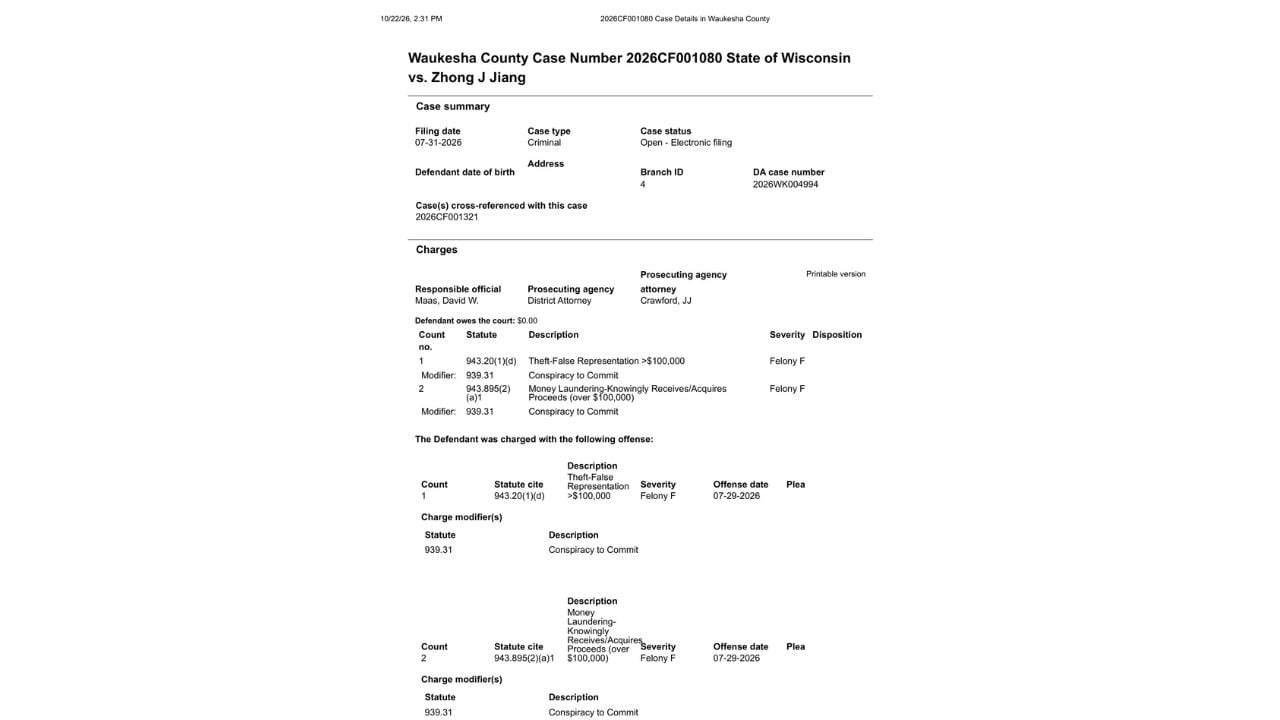
Wisconsin Circuit Court records list case 2026CF001080 against Zhong J. Jiang as filed on July 31, 2026, in Waukesha County
The case lists two Class F felony charges. The first involves conspiracy to commit theft by false representation involving more than $100,000, under Wisconsin Statutes 943.20(1)(d) and 939.31. The second concerns conspiracy to commit money laundering through knowingly receiving or acquiring proceeds exceeding $100,000, under Sections 943.895(2)(a)1 and 939.31.
Jiang waived a preliminary hearing and entered a not-guilty plea on August 12. The Wisconsin prosecution remains open, with a hearing scheduled for November 23, 2026.
Wisconsin Court Records Confirm Jiang Waived Extradition to Michigan
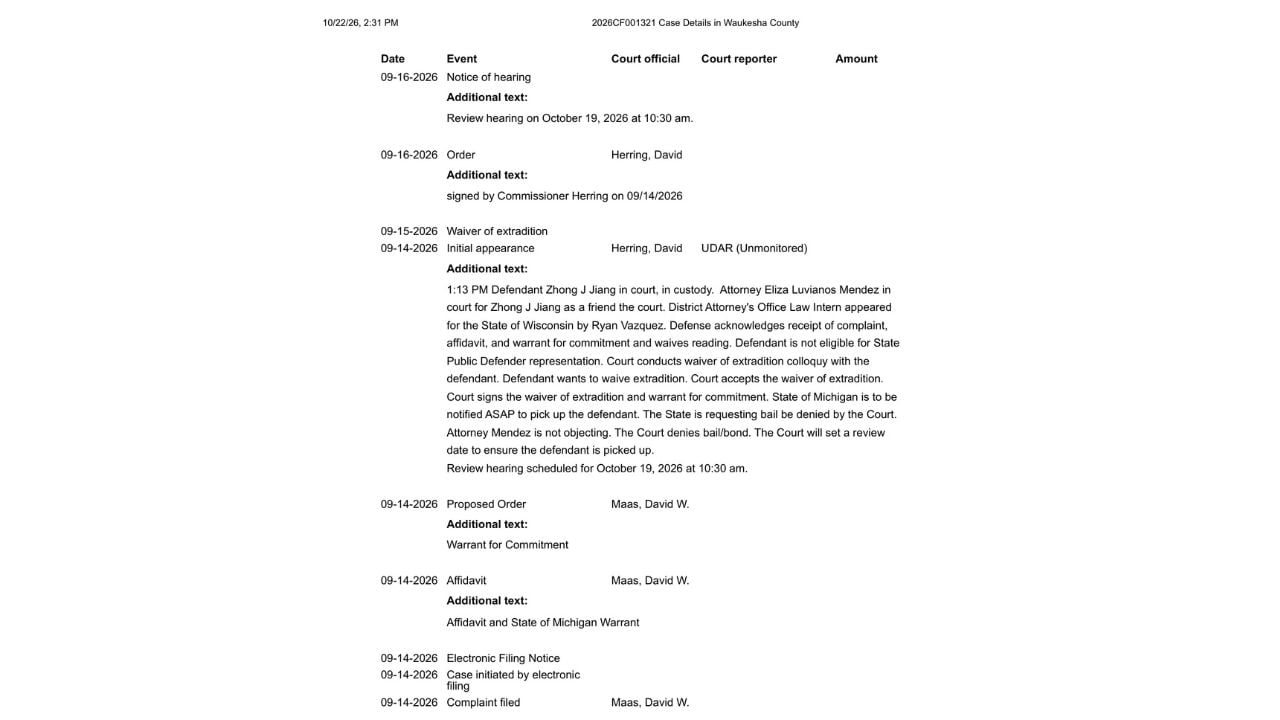
The separate extradition proceeding, case 2026CF001321, began in Waukesha County on September 14. The docket identifies an affidavit and Michigan warrant among the documents filed that day.
At the September 14 hearing, Jiang told the court he wanted to waive extradition. Court Commissioner David Herring accepted the waiver and signed a commitment warrant, with instructions for Michigan authorities to arrange Jiang’s pickup.
The commissioner denied bond in the extradition proceeding. Wisconsin’s court records subsequently marked Jiang as extradited on October 15, and an October 19 entry in his original Wisconsin criminal case confirmed that he had been transferred to Michigan.
Michigan authorities lodged Jiang in the Delta County Jail before his arraignment. The state police investigation involved assistance from Escanaba Public Safety, the Delta County Prosecutor’s Office, Homeland Security Investigations, Delafield police, the Waukesha County Sheriff’s Office and the Internal Revenue Service.
Michigan’s larceny by conversion statute, MCL 750.362, addresses money or property entrusted to a person who then fraudulently converts it. Under the applicable larceny penalties, property valued at $20,000 or more can support a maximum prison sentence of 10 years.
Jiang remains presumed innocent unless proven guilty.
The FBI Warned About Cash Couriers in Cryptocurrency Investment Scams
On June 15, 2026, the FBI issued a warning describing cryptocurrency investment scams that use couriers to collect physical cash from victims.
According to the agency, victims may be directed to websites displaying fictitious investment returns, creating the impression that their funds are growing. When they try to withdraw money, scammers can demand additional fees or instruct them to hand cash to a designated collector.
Some operations use prearranged passwords or matching dollar-bill serial numbers to make the collection process appear legitimate. The FBI described these as tactics found in cryptocurrency investment scams generally, rather than specific additional allegations against Jiang.
How to Check an Investment Before Handing Over or Shipping Cash
The SEC’s Investor.gov offers free tools for checking an investment professional’s registration status and disciplinary history. Investors should independently verify the person, firm and investment arrangement before sending money.
Requests to deliver large amounts of physical currency to unfamiliar collectors or ship cash to unrelated addresses warrant particular scrutiny. FedEx’s U.S. service guide lists money and currency among prohibited shipments.
Anyone who has already shipped cash and suspects fraud should contact the carrier immediately with the tracking number to ask whether the delivery can be intercepted. Victims should also preserve shipping receipts, payment records, recipient addresses and communications with the supposed investment professional.
The FBI recommends reporting cryptocurrency investment scams through IC3.gov. Reports should include relevant websites, applications, wallet addresses, financial account information and communications with the people involved.