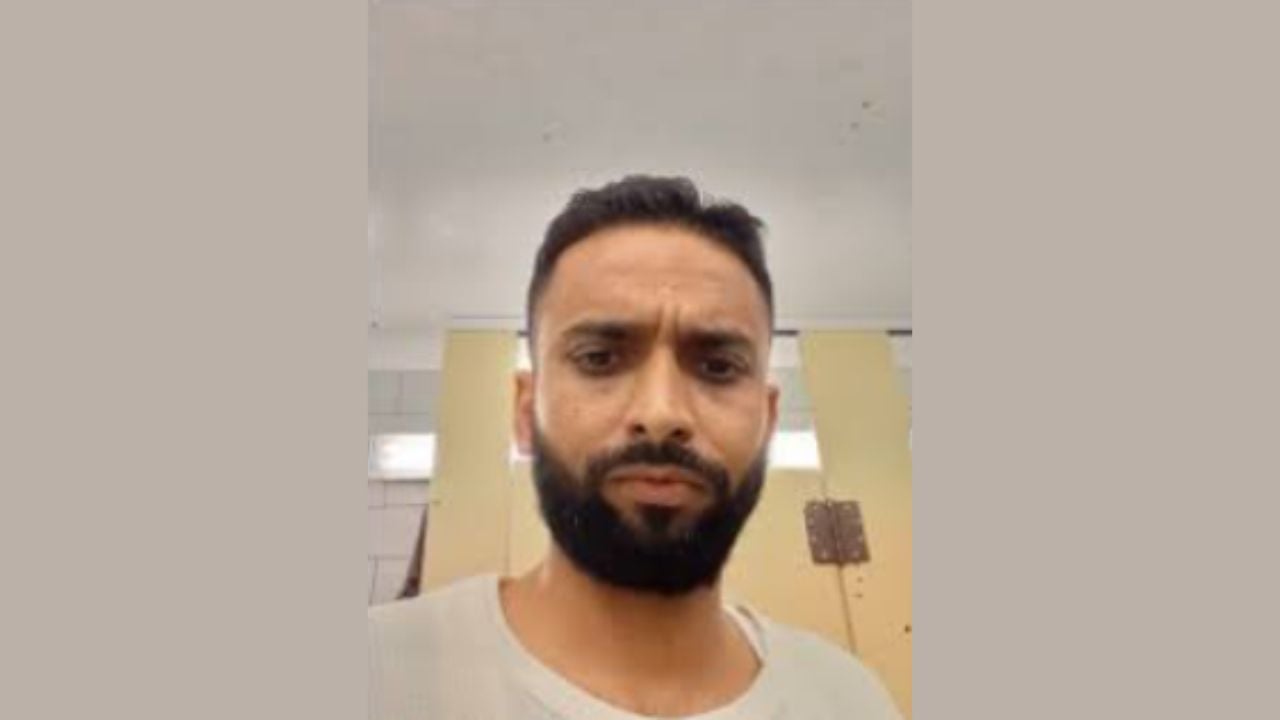
Sumit Kumar Singh was already serving 78 months in federal prison for defrauding older Americans when he acquired a prohibited cell phone and joined another scam involving a 93-year-old woman’s $45,000 check, according to federal prosecutors.
The 32-year-old Indian national has now pleaded guilty to conspiring to commit mail fraud. The new scheme used callers posing as PayPal representatives or federal agents, who promised to return money after victims paid for supposed identity documents, financial protection or government assistance.
The U.S. Attorney’s Office announced Singh’s plea on October 15, 2026. Investigators traced the woman’s check to a bank account in Edinburg, Texas, and photographs of the payment and deposit receipt appeared in messages Singh sent while incarcerated.
An April indictment originally contained five charges, including individual mail-fraud counts involving three older victims. Prosecutors later proceeded under a single conspiracy allegation in a September filing, according to the federal court record.
Fraudsters Invoked the Attorney General’s Name to Demand $45,000
In 2025, members of the scheme contacted victims by telephone and text, claiming to represent PayPal or the federal government. They falsely said money sent to them would be returned after some supposed official process was completed. The superseding criminal information describes several stories: obtaining a new identification card, removing someone’s name from a government list connected to drug cartels and supposedly cleaning the person’s funds, or protecting money from hackers.
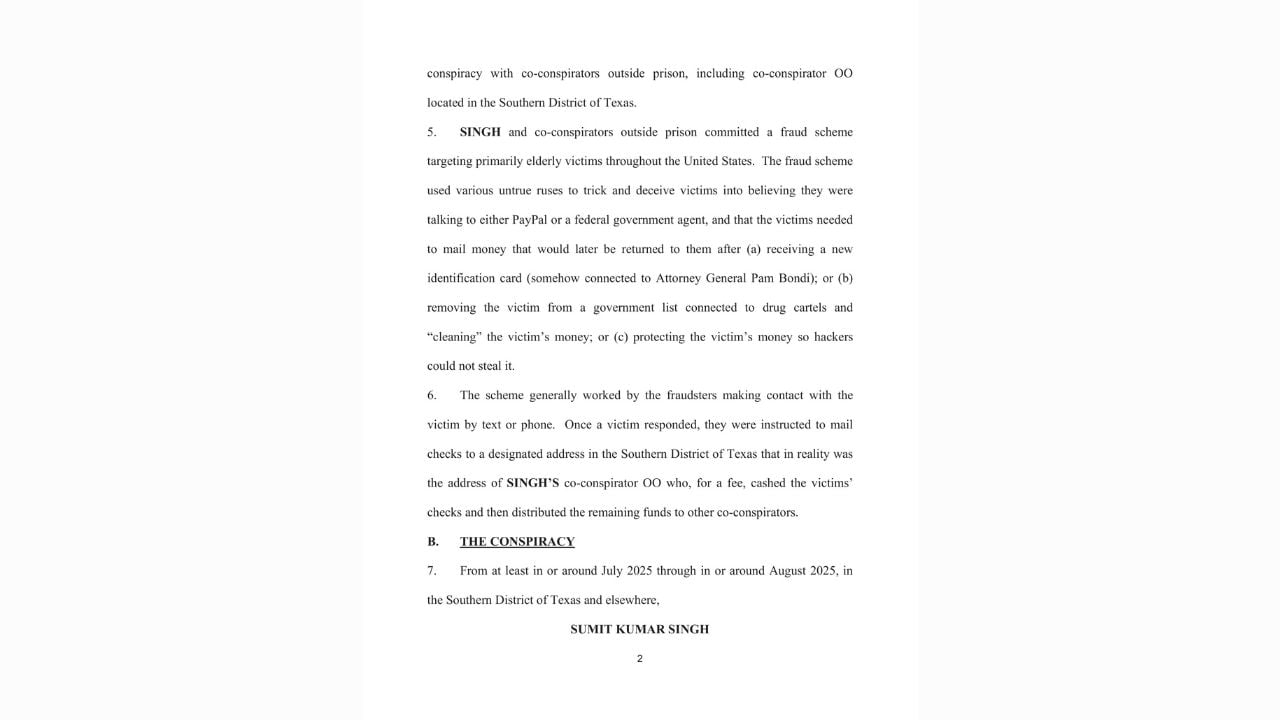
One target, a 93-year-old woman in North Dakota, spoke with someone identified in the filing as “Mark.” She was told that U.S. Attorney General Pam Bondi would help her obtain new identification and recover her funds. On July 17, 2025, the woman mailed a $45,000 personal check to a participant in Edinburg, Texas.
Prosecutors say the Edinburg recipient, identified in the charging document only by initials, collected victims’ checks, deposited or cashed them for a fee and passed the remaining proceeds to other conspirators.
Prison Phone Messages Linked the Check to a Texas Deposit
Singh obtained a contraband cell phone while incarcerated at a federal prison in North Texas. The September charging document places him in contact with people outside the facility, including an associate in Edinburg and people reached through phone numbers or messaging accounts.
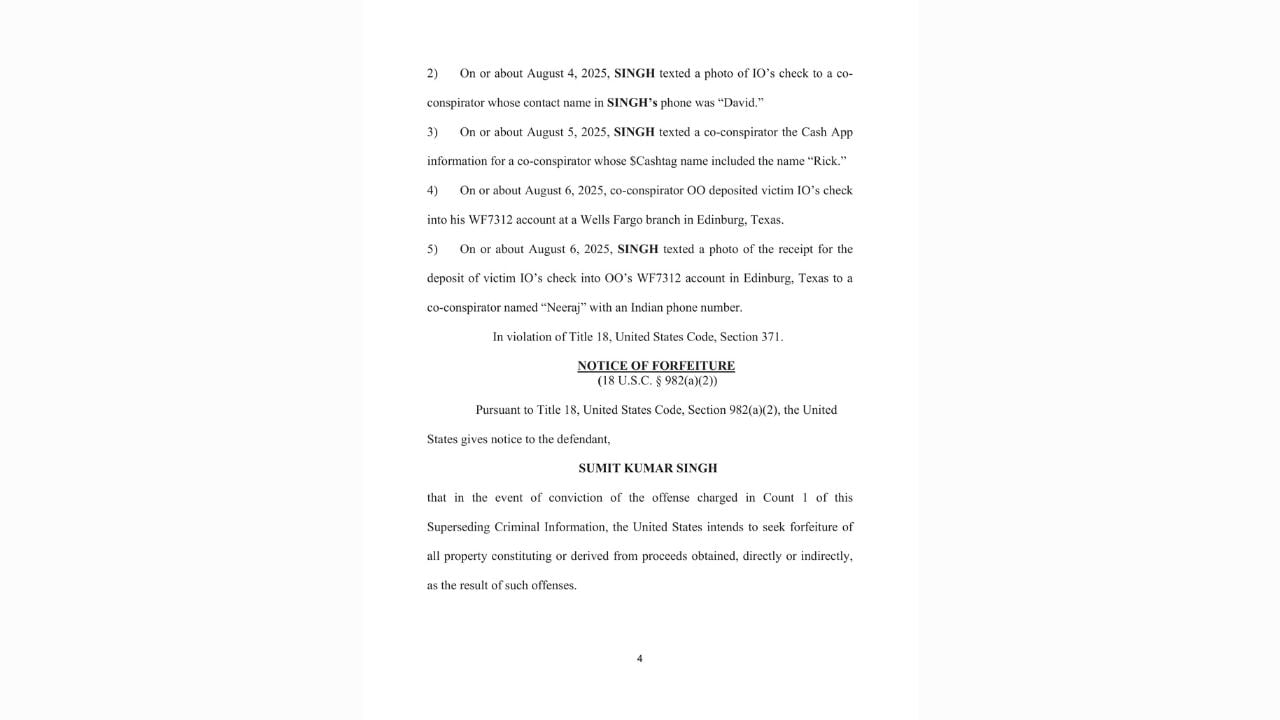
On August 4, 2025, Singh allegedly texted a photograph of the woman’s check to a contact saved as “David.” The next day he sent another participant Cash App information associated with a contact whose account name included “Rick.”
On August 6, the Edinburg associate deposited the woman’s $45,000 check into a Wells Fargo business account. The same day, Singh allegedly sent a photograph of the bank deposit receipt to a contact named “Neeraj” at an Indian phone number. The U.S. Postal Inspection Service conducted the investigation.
His Earlier Fraud Ring Used Fake Computer Support and Refund Demands
Singh was already imprisoned because of a separate nationwide operation that targeted older people using bogus tech-support services and refund stories. In a 2021 guilty-plea announcement, federal prosecutors said the earlier ring contacted victims by phone or through websites offering computer assistance.
After obtaining remote access to victims’ devices and financial information, members of the ring allegedly manipulated account displays to create the appearance of an oversized refund. Victims were told they had received too much money, sometimes supposedly $10,000 instead of $100, and had to repay the difference.
Singh admitted that he acted as a courier in that operation, picking up packages containing victims’ cash under assumed names using fraudulent international driver’s licenses. Other participants collected money through gift cards and transfers, and some victims were targeted more than once.
The First Prosecution Brought a 78-Month Prison Sentence
In September 2023, the Justice Department announced prison sentences for all five defendants in the earlier Houston-linked conspiracy. U.S. District Judge Kenneth Hoyt sentenced Singh to 78 months. Three others received the same prison term, while MD Azad, described as the highest-ranking member of the group based in the United States, received 188 months.
The sentencing release described impact statements from nearly 200 victims, including people who lost life savings or suffered continuing fear after the fraudsters gained access to their computers.
Original Indictment Identified Three Elderly Victims’ Mailings
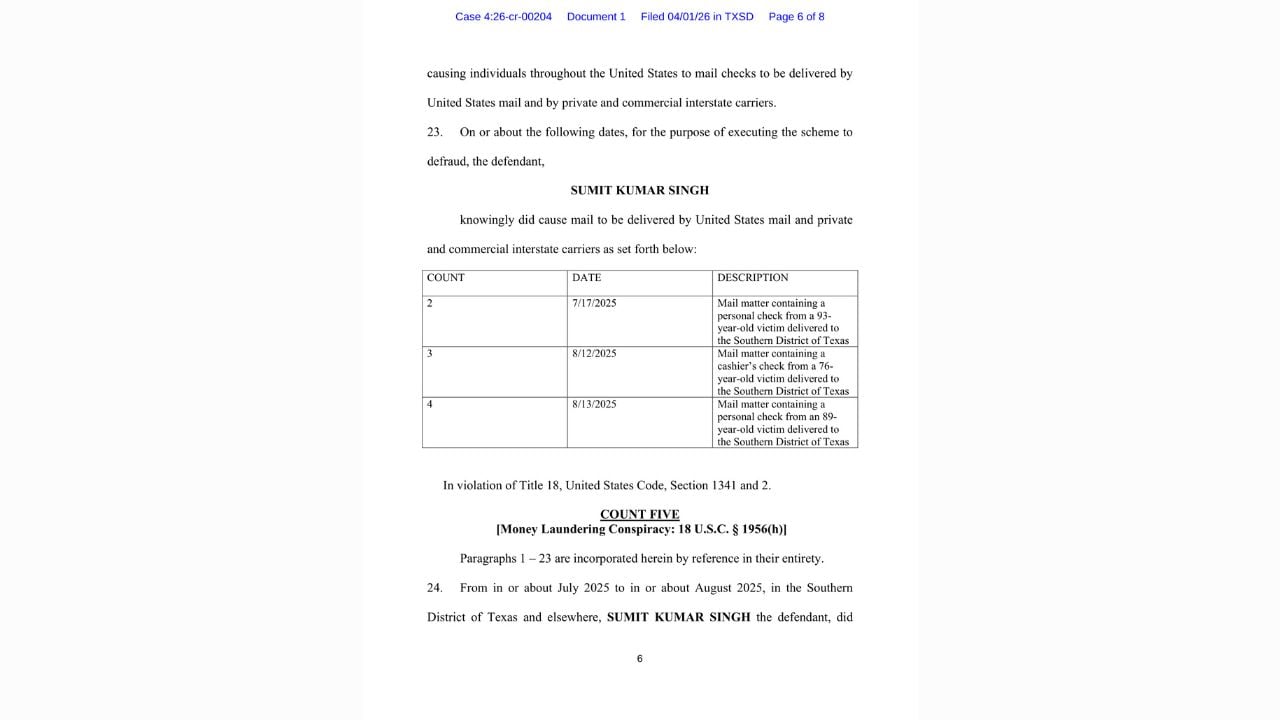
On April 1, 2026, a federal grand jury returned an original indictment in the Southern District of Texas, case 4:26-cr-00204. It charged Singh with conspiracy to commit mail fraud, three substantive mail-fraud counts and conspiracy to commit money laundering.
The mail-fraud counts referred to a personal check mailed by the 93-year-old North Dakota victim in July, a cashier’s check from a 76-year-old victim delivered in August, and a personal check from an 89-year-old victim delivered the following day.
Those five counts appeared in the original indictment. Prosecutors later filed a superseding criminal information charging one conspiracy count, to which Singh pleaded guilty.
A Superseding Conspiracy Charge Led to Another Guilty Plea
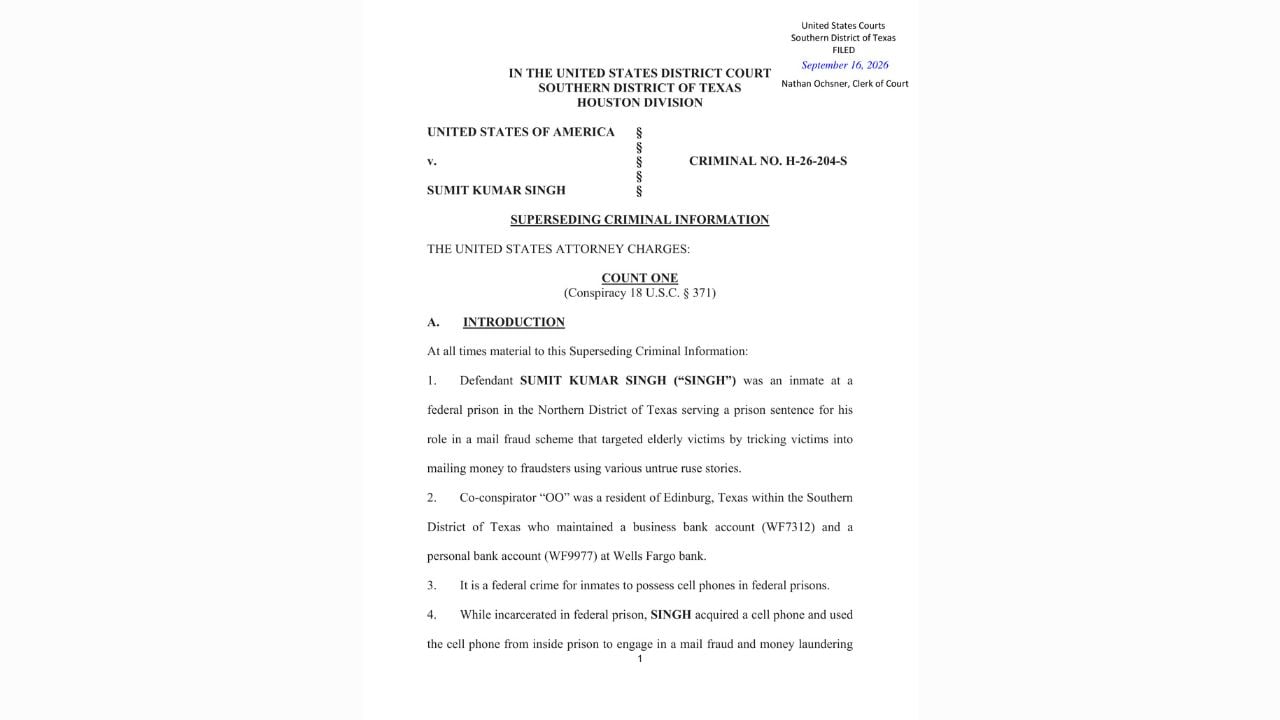
On September 16, 2026, prosecutors filed a five-page superseding criminal information charging one conspiracy count under 18 U.S.C. § 371. The federal docket records an October re-arraignment and subsequent filings concerning a waiver of indictment and plea agreement. The Justice Department confirmed on October 15 that Singh had pleaded guilty.
U.S. District Judge George C. Hanks Jr. accepted the plea and set sentencing for December 21, 2026. Singh faces a maximum of five years in federal prison and a fine of up to $250,000 on the new conspiracy conviction. No new sentence has yet been imposed.
Singh remains in federal custody. Assistant U.S. Attorney Belinda Beek is prosecuting the case, with assistance from Assistant U.S. Attorneys Whitney Ohlausen and Lesley Brooks in the Northern District of Texas.
How to Recognize Fake Government Refund and Recovery Promises
The Federal Trade Commission warns that scammers promise to recover lost money, then demand an advance payment. A caller claiming that cash must be mailed to clear a government list, protect savings from hackers or obtain a refund is not providing a legitimate reason to surrender money. Independently contact the organization through its official website or a verified number rather than one provided by the caller.
Anyone who has already mailed a check should contact their bank promptly to ask whether the payment can be stopped. Preserve the check number, mailing receipt, messages and any documents supplied by the caller. Suspected mail-related fraud can be reported to the U.S. Postal Inspection Service or by calling 1-877-876-2455. Refund and government impersonation scams can also be reported at ReportFraud.ftc.gov.