
A Connecticut woman is accused of using a fake driver’s license to withdraw thousands of dollars from a North Carolina resident’s bank account.
Pinehurst police obtained felony warrants for Kelsey Marie Ross, of Terryville, Connecticut, following an alleged withdrawal at a Pennsylvania bank branch. The department announced the case on Oct. 15, 2026.
Police said Ross had been arrested in Michigan in an unrelated case and was expected to be extradited to North Carolina. The Village of Pinehurst said she also faced charges from two other North Carolina jurisdictions.
A Catawba County Superior Court indictment identifies a separate proceeding involving Ross and a Truist customer’s bank-account information. Its alleged offense date is Nov. 10, 2025, more than two weeks after the transaction described by Pinehurst police.
Fake North Carolina License Allegedly Presented in Pennsylvania
Ross allegedly entered a Truist Bank branch in Pennsylvania on Oct. 24, 2025, and presented a fraudulent North Carolina driver’s license carrying a Pinehurst resident’s identifying information. Police said several thousand dollars was withdrawn from that resident’s account. They received the complaint on Oct. 27.
Pinehurst detectives worked with other North Carolina law enforcement agencies to identify Ross. Police Chief Glen Webb said financial investigations that cross jurisdictional boundaries often take time and persistence, and he credited detectives and assisting agencies for their work. The Moore County News also reported the police allegations.
A Catawba Indictment Describes a Different-Dated Truist Transaction
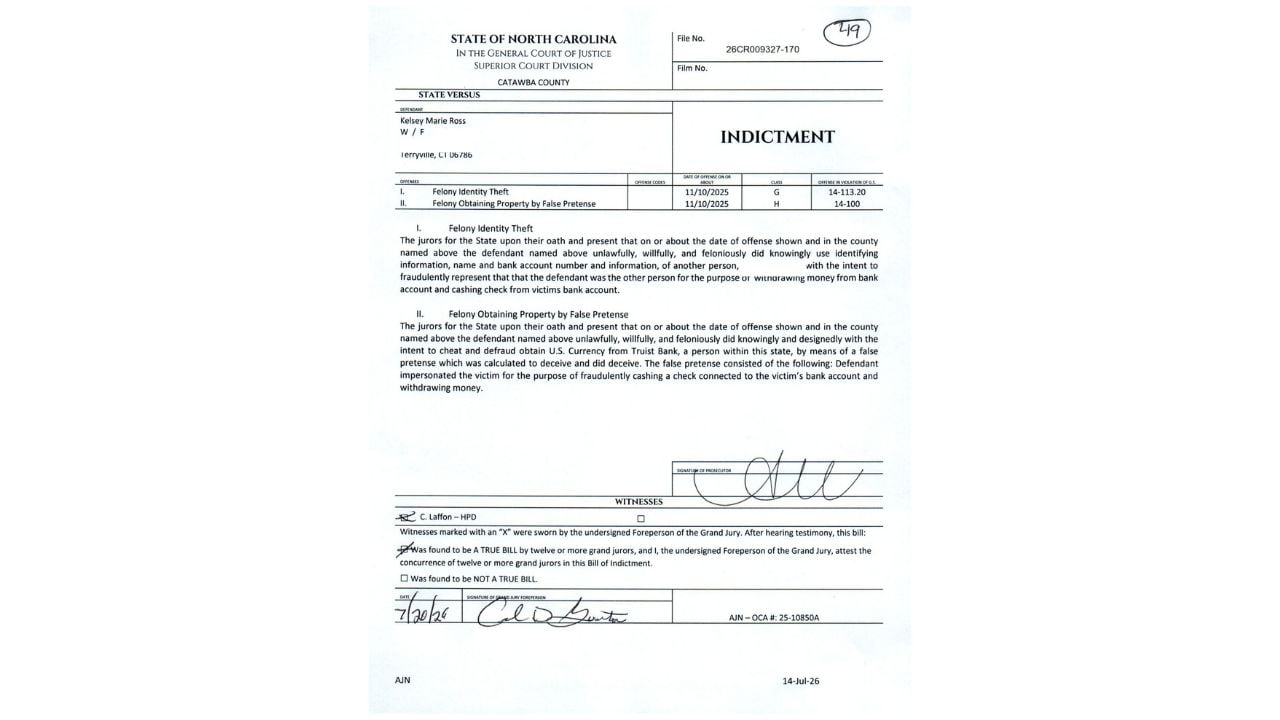
A Catawba County grand jury returned an indictment against Ross on July 20, 2026, charging identity theft and obtaining property by false pretenses. The charging document lists Nov. 10, 2025, as the alleged offense date, and the matter was filed in Catawba Superior Court on July 22.
According to the indictment, Ross used another person’s name and bank-account information to impersonate the account holder, cash a check, and withdraw money. It identifies Truist Bank as the institution allegedly deceived. The filing lists the charges as Class G and Class H felonies, respectively, but does not assign a dollar amount to this Catawba transaction.
Catawba Court Records Show an Arrest Order and Pending Case
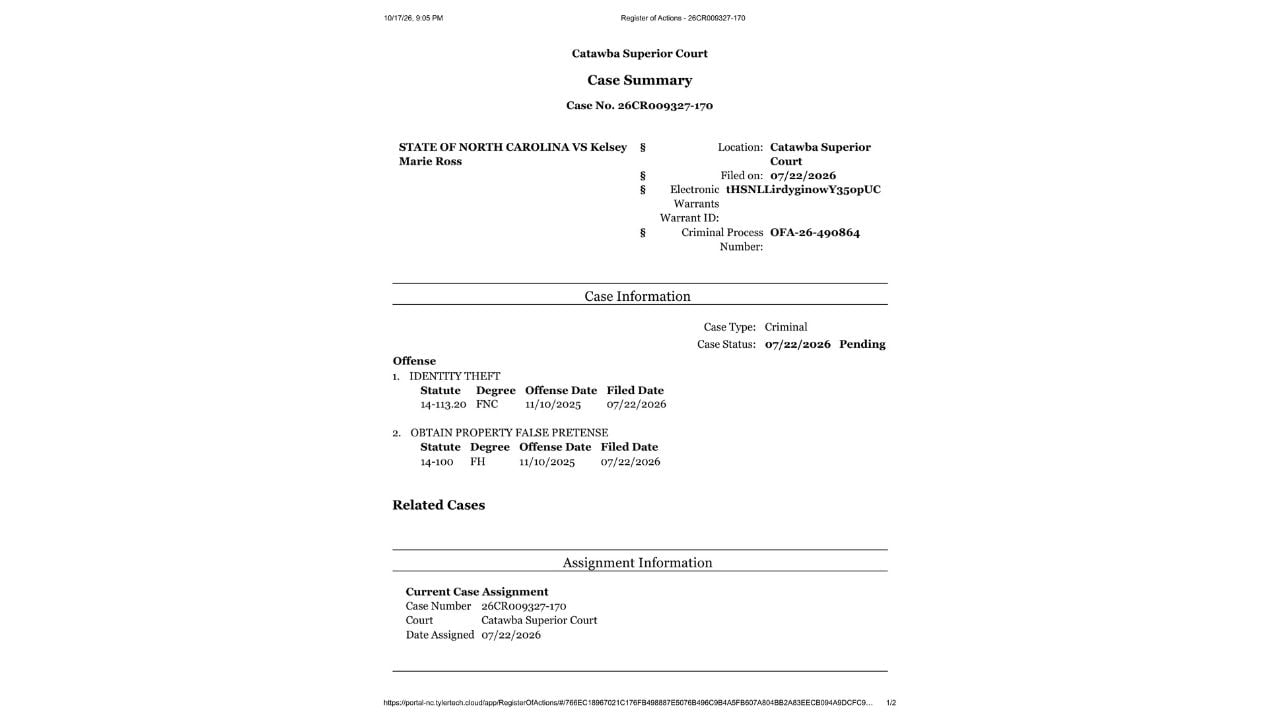
The public Catawba Superior Court case summary identifies the prosecution as 26CR009327-170 and lists it as pending in the version accessed on Oct. 17. The docket records a July 20 order for arrest, identified as OFA-26-490864, followed by a July 23 notice that the grand jury had returned a true bill of indictment.
A separate notice issued July 23 names Catawba Superior Court as the place for Ross to appear, with the hearing date and time marked to be announced.
Michigan Arrest and the North Carolina Charges
East Lansing police arrested Ross on May 22, 2026, on charges of uttering and publishing checks in a Michigan matter that Pinehurst police described as unrelated. Pinehurst authorities said she was expected to be transferred to North Carolina and held at the Moore County Detention Center.
Both the Pinehurst warrants and the Catawba indictment refer to identity theft and obtaining property by false pretenses. Under North Carolina law, identity theft can involve using another person’s identifying information to impersonate them for financial transactions. The usual classification is a Class G felony. Obtaining property through deceptive representations is addressed by the state’s false pretenses statute, which generally classifies offenses involving less than $100,000 as Class H felonies.
The state’s identity-theft venue law permits a prosecution in the victim’s county even if the person accused was never physically present there. The charges against Ross remain allegations, and she is presumed innocent unless proven guilty.
What to Check After an Unauthorized Bank Withdrawal
Truist customers can review their transaction history and configure account alerts to help spot unfamiliar activity. Those who identify an unauthorized withdrawal should contact the bank promptly and ask what steps are needed to secure the affected account.
Truist lists 844-487-8478 for fraud reports. Customers can retain the transaction date, amount, and any claim number for follow-up. If someone has misused their personal identifying information, the Federal Trade Commission’s IdentityTheft.gov offers an identity-theft report and recovery plan.