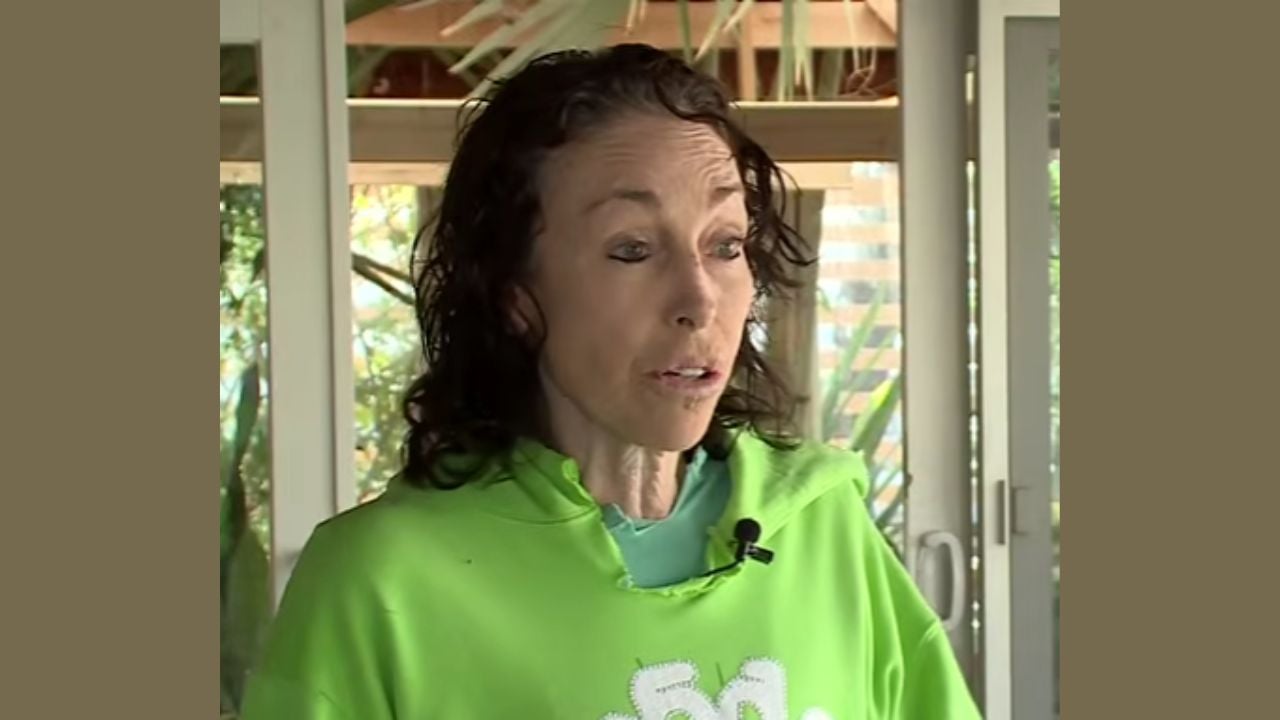
Heidi Fleiss is asking a Nevada court to overturn penalties for letting her macaws fly freely around her Las Vegas home. The former Hollywood madam argues that the restrictions harm birds she has spent years rescuing.
Clark County acknowledges that birds are “probably happier and healthier when they fly free,” TMZ reported October 28. It still opposes her challenge.
Fleiss, 60, bought the house near Sunset Park in February after years in Pahrump. She planned to create a habitat for her parrots in a backyard filled with palm trees and mature landscaping.
The property is less than three miles from Harry Reid International Airport. County officials have also cited complaints about free-roaming macaws within a bird-strike hazard area.
Gin and Juice’s Morning Flights Drew a Neighbor’s Complaints
Neighbor Shauna Cordova said the parrots were waking her around 6 a.m., according to PEOPLE, which quoted her interview with 8 News Now. The birds would gather outside her window. “It has woken me up,” she said.
Fleiss told the magazine she had tried to make peace with a note and sweet treats. She said other neighbors had welcomed the birds. One nearby resident, Janie Englestead, separately told the Las Vegas Review-Journal that she knew of only one neighbor who objected and described Fleiss as a warm host.
The macaws, named after Snoop Dogg’s “Gin and Juice,” became the subject of a documented complaint. County records cited in subsequent reporting included more than a dozen photographs and nearly a dozen videos submitted by Cordova.
The County Allows Enclosed Flight and Makes an Exception for Pigeons
Clark County Code Section 10.36.030 requires birds capable of flight to remain in a suitable outbuilding, coop or enclosed runway. An enclosed flight area is therefore among the permitted options. Racing and homing pigeons have a specific exception. Their keepers may exercise them in free flight for up to one hour daily, with confinement at other times. The provision contains no equivalent exception for macaws.
Fleiss challenged her citations at a May 5 hearing at the Clark County Building Department. Cordova attended, along with animal-control officials, and spoke against her appeal. As 8 News Now reported, the disagreement before the hearing officer concerned the birds’ freedom to roam, although noise had prompted the neighbor’s complaint.
During the hearing, Fleiss asked an animal-control supervisor, “What do birds do?” He answered, “Fly.” She replied, “Exactly.” A county attorney also questioned Fleiss, and the hearing officer said a written decision would follow.
The officer ultimately upheld two citations carrying $500 penalties apiece, a total of $1,000, the Review-Journal reported May 28. Fleiss criticized the ordinance afterward: “Flying is essential for birds. It’s not optional.”
Fleiss Took the Dispute to District Court in June
On June 25, Fleiss appeared remotely before Clark County District Judge Anna Albertson to challenge the county’s decision. 8 News Now reporter Kyle J. Paine covered the proceeding, during which Albertson told Fleiss and a county attorney to expect further movement by the end of July.
Fleiss described the effort as a personal sacrifice she was prepared to make. “I know it’s the right thing to do and any worthwhile cause is a great personal sacrifice,” she told the station. She wanted to challenge the underlying restrictions as well as the penalties imposed on her.
A Caged Macaw Named Dalton Helped Change Fleiss’s Plans
Fleiss traced her interest in rescuing parrots to a woman she met in Pahrump who had run the Tropicana hotel’s exotic-bird program. The woman kept a macaw named Dalton and, according to Fleiss’s account to the Review-Journal, said he had not left his cage in about 25 years.
In a separate PEOPLE interview published in December 2024, Fleiss linked her commitment to her own experience of imprisonment. She described feeding and rehabilitating rescued macaws, watching them form pairs and raise families, and relying on benefactors to help pay for food and medicine.
By spring 2026, more than two dozen birds remained at her Pahrump property. The Las Vegas move was already in doubt. In late March, she told the Review-Journal she would sell rather than accept the confinement requirements. She said she was “going to try to list it next week.”