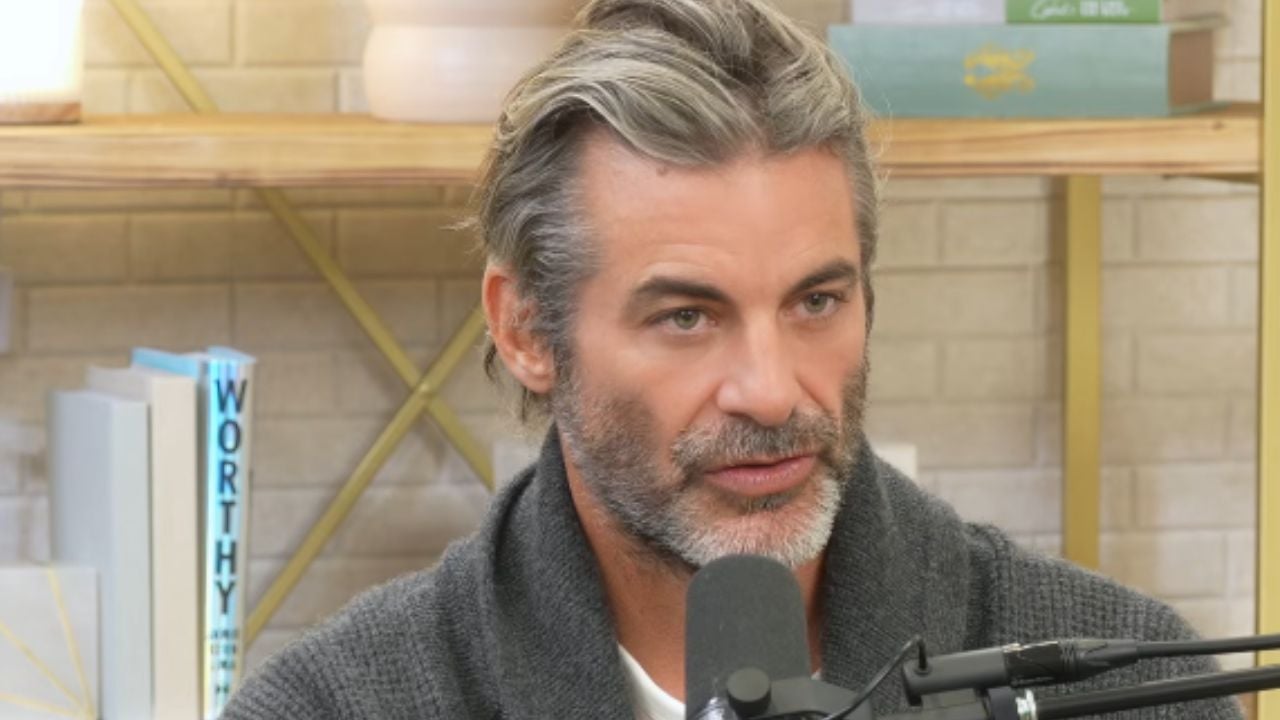
Jim Curtis says he once told people that his limp came from a motorcycle accident because he felt too ashamed to explain the medical condition that had left him dealing with partial paralysis and chronic nerve damage.
The 50-year-old transformational coach discussed his health history Wednesday, Sept. 2, while being interviewed by his girlfriend, Jennifer Aniston, at New York City’s 92nd Street Y. The event celebrated his forthcoming book, The Book of Possibility: Release, Align, Become.
Curtis said doctors discovered lesions on his spinal cord when he was around 20 after numbness began spreading through his left leg. The cause remained unclear, while his symptoms eventually included severe pain, difficulty walking and periods when he could not walk at all.
Curtis told Aniston that changing the way he viewed himself had been roughly 25 years in the making, while stressing that his message about mindset was not an argument for disregarding medical advice.
Curtis Said a Motorcycle Accident Sounded ‘a Little Macho’
When people asked why he walked with a limp, Curtis initially avoided telling them about his health. “I would tell everyone I got in a motorcycle accident,” he said during the conversation, according to PEOPLE.
Curtis explained that the invented accident fit the identity he had built around being athletic and physically strong. Admitting that a medical condition had changed his body made him feel ashamed, while the motorcycle explanation sounded “a little macho.”
He now looks back at that response as evidence that he had not accepted what had happened to him. Curtis said developing greater self-acceptance and self-love took years rather than arriving as one sudden breakthrough.
The 13-Hour ER Visit Happened Years After His Original Health Crisis
Curtis’ medical history began around age 20, when numbness in his left foot gradually moved higher through his leg. An MRI eventually revealed a lesion on his spinal cord, but Curtis has said doctors could not establish a specific underlying cause.
That original episode should not be confused with the 13-hour New York emergency-room visit Curtis discussed with Aniston. In a recent interview about his health history, Curtis clarified that the ER episode occurred many years later, when severe pain sent him back to the hospital during what he described as a relapse.
During that later visit, Curtis said a possible neurological diagnosis frightened him enough that searching it online caused his body to “freeze and seize up.” Curtis has consistently described the lasting effects of his health problems as including chronic pain, nerve damage and periods of paralysis. He continues to walk with a limp.
Aniston Asked What He Would Tell Someone Who Feels Stuck
During the event, Aniston asked Curtis what advice he would give someone who wants to change their life but feels trapped by work, bills or other responsibilities.
Curtis acknowledged that people cannot necessarily walk away from practical obligations. He specifically mentioned rent, medical expenses and caring for children and said he was not recommending that anyone simply “drop everything and leave.”
His broader point was that difficult circumstances did not have to become someone’s permanent identity. “You don’t have to live as the victim,” he said, while arguing that people could change how they approached circumstances they could not immediately change. His upcoming The Book of Possibility: Release, Align, Become is scheduled for publication Sept. 8 by Simon & Schuster.
His Health Experience Eventually Redirected His Career
Curtis graduated from the University of New Hampshire and worked as a Wall Street trader before moving into health and wellness. His later career included leadership roles connected to WebMD, Everyday Health, Remedy Health Media and the Institute for Integrative Nutrition.
He eventually shifted toward coaching, hypnotherapy and writing, drawing partly on his own experience with chronic illness. Curtis has said that his physical limitations also affected his confidence for years, including making him question whether he could credibly work publicly in health and wellness while still living with a disability.