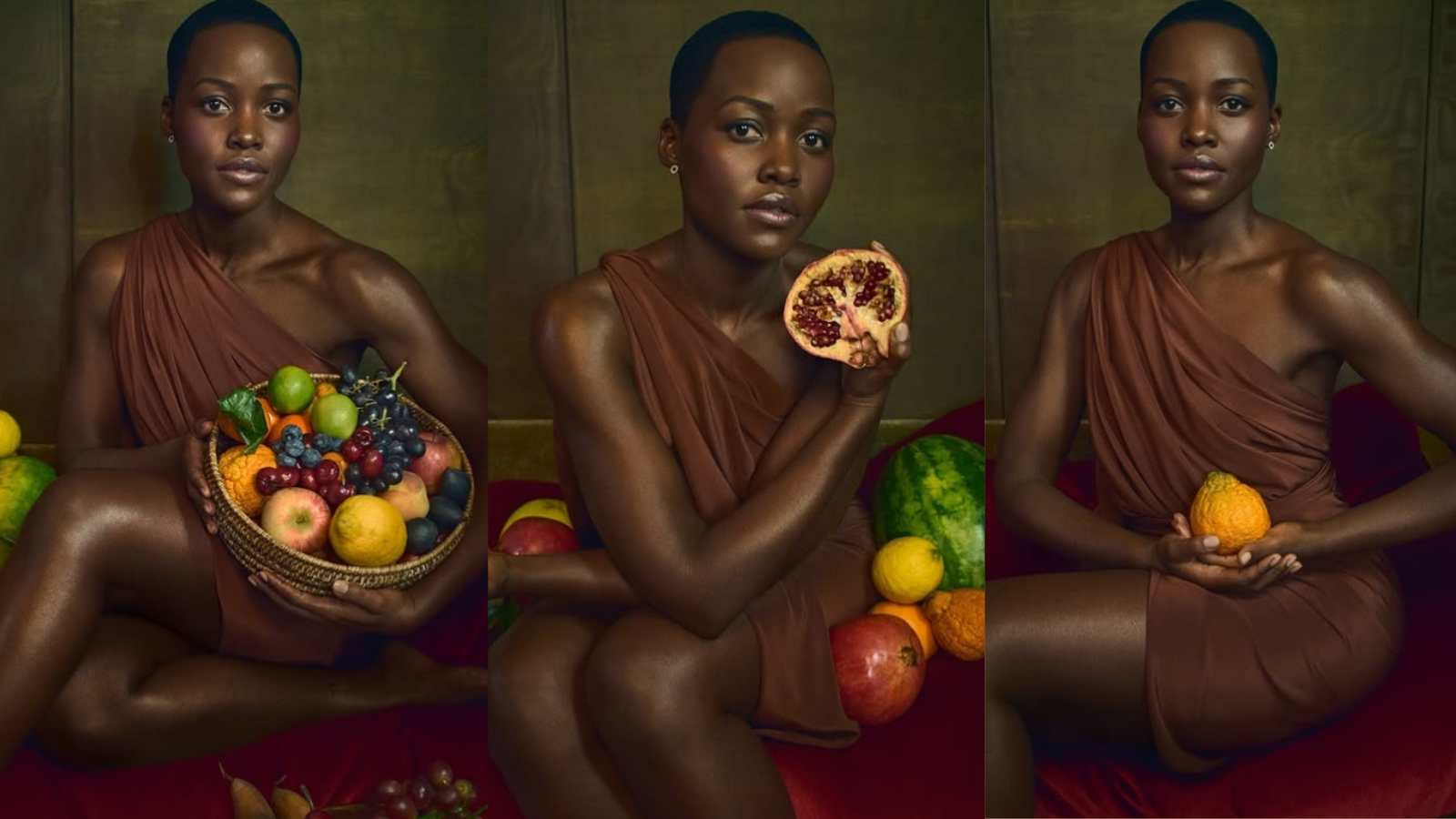
In 2014, while the rest of the world watched Lupita Nyong’o glide across the Academy Awards stage in a custom powder-blue Prada gown to accept her Oscar for 12 Years a Slave, the actress was privately fighting a battle that no gold statue could fix. Behind the “Hollywood’s It Girl” headlines, Nyong’o was grappling with a medical diagnosis that would come to define her personal health journey for the next decade: uterine fibroids.
Fast forward to February 2026, and the 42-year-old star is making headlines again, not for a new movie role, but for her staggering honesty. During a recent appearance on the Today show and through a series of vulnerable social media posts, Nyong’o revealed that her battle with fibroids has reached a grueling new milestone.
She has been diagnosed with over 50 uterine fibroids, a number that has left even her most seasoned medical team and her global fanbase in awe of her resilience.
The Stats of a Silent Struggle

Uterine fibroids are non-cancerous tumors that grow in or on the uterus, and while they are common, Nyong’o’s case is exceptionally severe.
Shortly after her Oscar win in 2014, Lupita underwent her first surgery to remove 30 fibroids. At the time, she was just 31 years old.
After years of management, a recent check-up two years ago revealed that the growths had not only returned but nearly doubled. She now faces more than 50 fibroids.
Doctors often use fruit to describe the size of these tumors. While some are the size of grapes, Lupita shared that her largest current fibroid is the size of an orange.
This isn’t just a Lupita problem. By the age of 50, rnearly two thirds of women will develop fibroids. Black women are about three times more likely than white women to be diagnosed with fibroids, the University of Michigan notes.
They often develop them at a younger age, and the fibroids they experience are usually larger, more numerous, and linked to more intense symptoms. Despite these high numbers, the condition remains chronically under-researched.
The “Normalization of Pain”
Lupita’s mission is simple: she wants women to stop suffering in silence. For years, she admits she felt a sense of “shame” and isolation, wondering what she had done to cause the condition.
“We’re taught that periods mean pain, and that pain is simply part of being a woman,” she told Today. “We need to stop treating this massive issue like a series of unfortunate coincidences.”
Her advocacy has reached the highest levels of government. In July 2025, she joined lawmakers on Capitol Hill to introduce a legislative package, the U-FIGHT Act, which seeks to allocate $150 million over five years for research, early detection, and education through the National Institutes of Health.
The Woman Behind the Health Fight
Before she was an activist, Lupita was a trailblazer with an Ivy League pedigree and a historical resume. She holds a BA from Hampshire College and a Master of Fine Arts (MFA) from the prestigious Yale School of Drama.
She was the first Kenyan and first Mexican actress to win an Academy Award. She is also only the 15th actress in history to win an Oscar for her film debut.

With lead roles in the Black Panther franchise, Star Wars, and Us, her net worth is estimated at $10 million to $15 million. However, even with elite wealth and access to the best doctors, she admits the options for fibroids, “surgery or live with the pain,” are frustratingly limited.
In 2024 and 2025, Lupita’s career has been more diverse than ever. She voiced the lead character Roz in the animated hit The Wild Robot and starred in the silent horror thriller A Quiet Place: Day One. But while her professional life is loud and successful, her physical reality has been a “quiet place” of its own.
She has recently paused on deciding whether to undergo another myomectomy (the surgical removal of fibroids). The procedure is invasive and poses a potential threat to her reproductive organs, a decision she says she isn’t “ready to make” just yet.
The Verdict

Lupita Nyong’o’s journey from 30 to 50 fibroids is a testament to the fact that fame and fortune do not provide an “invincibility cloak.” By rejecting the “normalization of female pain,” she is leveraging her Oscar-winning platform to ensure that the next generation of girls doesn’t have to choose between a career and a pain-free life.
What do you think? Is it the responsibility of high-profile stars to share their medical trauma to get the government to listen, or should we be demanding more from the medical community regardless of who is in the hospital gown?
Have you or someone you know dealt with the “silent” struggle of fibroids? Your voice matters. Tell us your story in the comments.