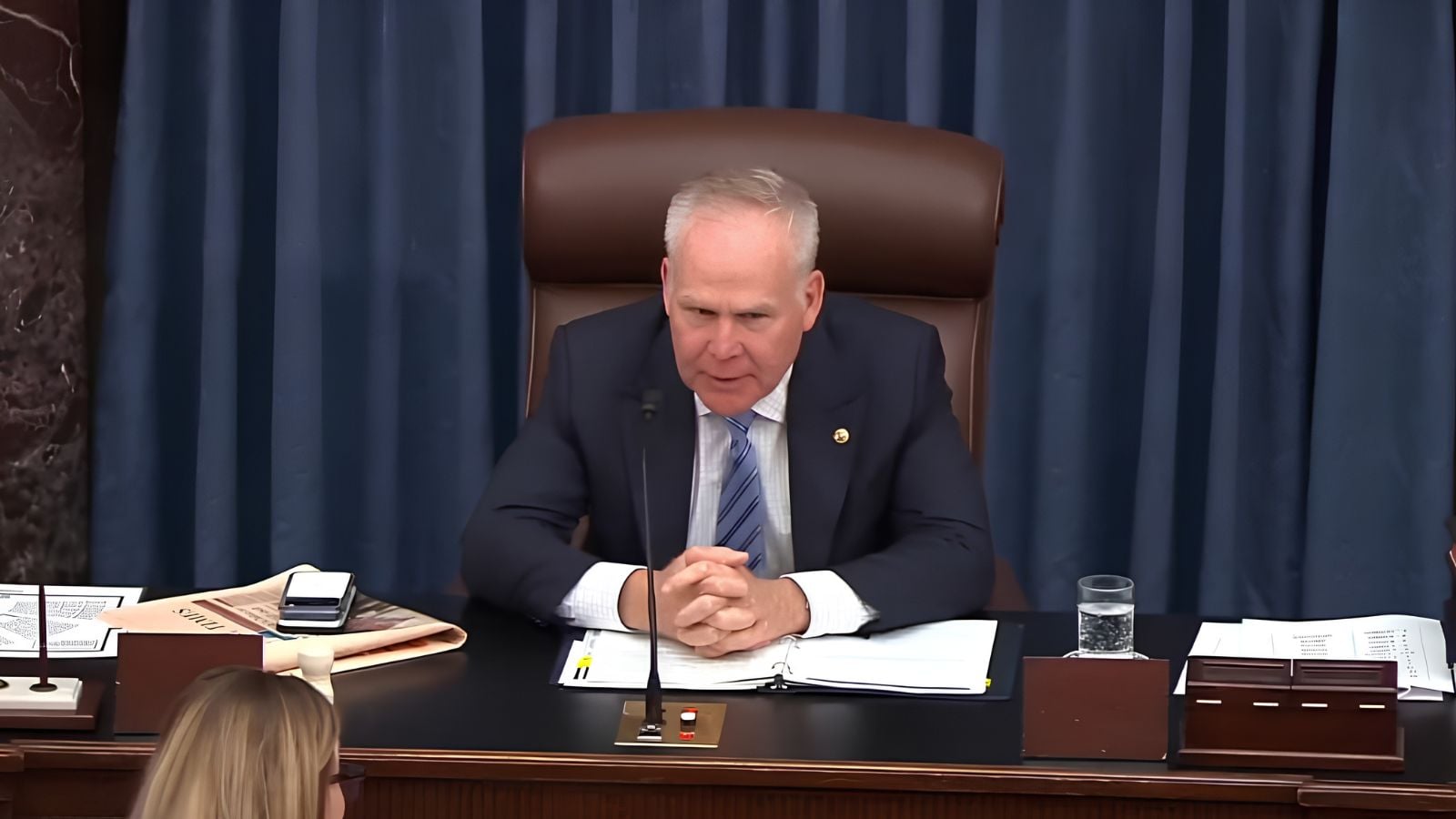
A post from conservative commentator Nick Sortor is gaining major traction online after news broke that the U.S. Senate has approved a measure barring members of Congress from receiving paychecks during government shutdowns.
The reaction online has been overwhelmingly emotional because the issue taps directly into one of the deepest frustrations many Americans have with Washington: the belief that ordinary citizens suffer the consequences of political dysfunction while elected officials remain insulated from it.
For years, government shutdowns have triggered furloughs, delayed services, halted federal operations, and created financial stress for workers across the country. Yet members of Congress have often been viewed as largely protected from the economic fallout they help create.
That perception is what makes this decision politically powerful.
The Measure Targets One of Congress’s Biggest Image Problems
Public trust in Congress has remained historically weak for years across both parties.
Americans regularly complain about partisan gridlock, endless spending fights, shutdown threats, and lawmakers appearing disconnected from the financial realities facing ordinary workers. The idea that Congress could continue receiving salaries during shutdowns became symbolic of that disconnect.
Critics argued that if federal workers, contractors, military families, airport staff, and government agencies could face disruption or uncertainty, lawmakers should not be financially shielded from the consequences of legislative failure.
The Senate’s move appears designed to directly address that frustration.
Politically, it sends a simple message: if the government shuts down, lawmakers should feel some of the pressure too.
That argument is easy for voters to understand, which is why measures like this often receive broad bipartisan public support even in highly polarized political climates.
🚨 JUST IN — IT’S OFFICIAL: The U.S. Senate has BARRED members from receiving paychecks when the government shuts down
The ONLY useful thing the Senate has done in a long time.
I’m genuinely surprised! pic.twitter.com/XuvPvUkiPM
— Nick Sortor (@nicksortor) May 14, 2026
Supporters See Accountability. Critics May See Symbolism.
Supporters of the move argue it introduces at least some level of accountability into a system where shutdown brinkmanship has become normalized.
They believe lawmakers should experience financial consequences if they fail to pass budgets or keep the government operating. Under that logic, removing congressional pay during shutdowns creates stronger incentives to negotiate seriously instead of using shutdown threats as political leverage.
For many voters, the measure also feels morally intuitive.
If millions of Americans are expected to work under performance pressure and financial consequences, why should elected officials be exempt from similar standards when the federal government fails to function properly?
But critics may argue the practical impact is more symbolic than transformative.
Many members of Congress are independently wealthy, have outside income sources, book deals, investments, or substantial financial resources. For those lawmakers, temporarily losing a paycheck may create little actual pressure compared to the effects shutdowns have on ordinary federal employees living paycheck to paycheck.
That criticism raises an uncomfortable possibility: measures like this may generate political goodwill without fundamentally changing the incentives driving shutdown politics in the first place.
Shutdown Politics Have Become a Weapon in Washington
The larger issue underneath this debate is how government shutdowns themselves evolved into recurring political tools.
Originally viewed as major governance failures, shutdowns increasingly became part of Washington’s negotiation strategy over spending priorities, debt fights, border security, healthcare, military funding, and broader ideological battles.
Both parties have used shutdown pressure at different points to energize supporters or force negotiations.
The problem is that repeated shutdown threats slowly reshape public expectations. Dysfunction starts to feel routine rather than exceptional. That normalization damages confidence not just in Congress, but in the federal government’s ability to operate consistently at all.
Measures targeting congressional salaries therefore serve another purpose beyond punishment. They function as public relations attempts to show voters that lawmakers are not entirely detached from the crises they create.
The Public Mood Around Government Spending Has Changed
The strong reaction to the Senate decision also reflects growing national frustration around debt, deficits, spending battles, and political paralysis.
Americans increasingly see Washington as trapped in endless fiscal conflict with few long-term solutions emerging. Massive federal spending packages, rising national debt, inflation concerns, and recurring budget standoffs have made economic governance one of the most politically sensitive issues in the country.
Against that backdrop, symbolic gestures suddenly carry more emotional weight because people want visible signs that political leaders are being held accountable in some way.
That does not mean the measure alone will restore trust in Congress. But it does explain why the announcement immediately resonated with people across ideological lines.
The Real Question Is What Happens During the Next Shutdown
The true test of this policy will not come during headlines announcing it. It will come during the next major funding crisis.
If lawmakers still allow prolonged shutdowns despite losing paychecks themselves, critics will likely argue the measure was mostly political theater designed to calm public anger without addressing deeper structural problems inside Congress.
But if the policy genuinely increases urgency around negotiations and reduces shutdown frequency or duration, supporters will point to it as proof that accountability mechanisms can alter political behavior.
Either way, the debate reflects a growing public demand for elected officials to share more directly in the consequences of government dysfunction rather than merely managing it from a protected distance.
If Congress only becomes more responsive when lawmakers personally feel financial pressure themselves, what does that say about how disconnected modern political systems have become from the people they govern?