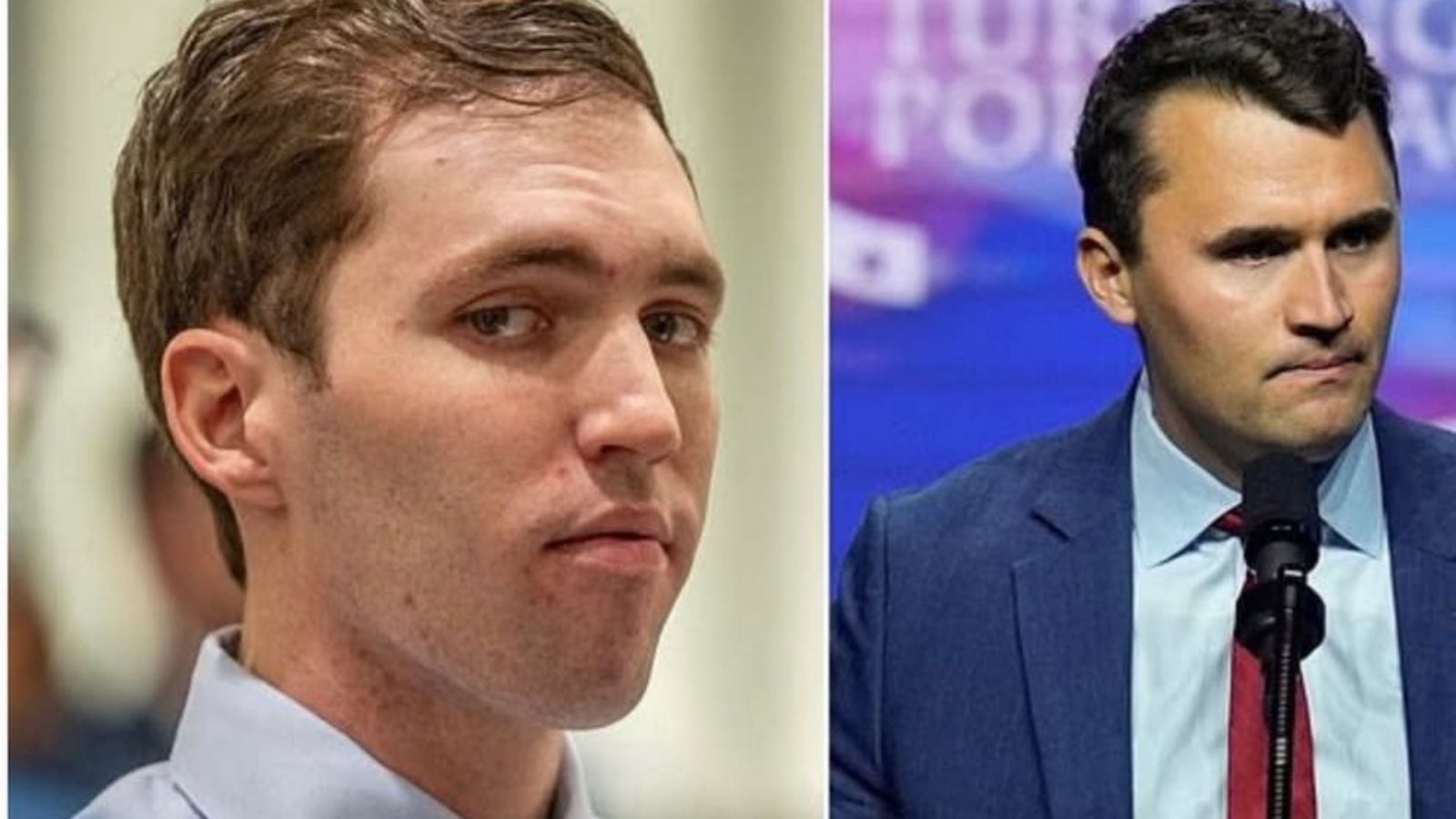
The shooting of conservative activist Charlie Kirk on the Utah Valley University campus last September didn’t just stay a tragedy; it evolved into something way louder, messier, and very online. What started as a devastating crime scene has now turned into a full-blown digital showdown where cold, technical forensic facts are going head-to-head with hot takes moving at internet speed.
At the center of it all is Tyler Robinson, the twenty-two-year-old charged with multiple felonies, including aggravated murder and felony discharge of a firearm. He is now staring down the possibility of the death penalty, with prosecutors building their case around DNA evidence and alleged private confessions.
But just when things seemed straightforward, the plot twisted. New defense filings revealed that an Alcohol, Tobacco & Firearms (ATF) ballistics report could not conclusively match the bullet from the autopsy to the rifle linked to Robinson.
And just like that, the internet did what it does best. One Daily Mail report about the findings pulled in 23.5 million views on X in under a day. Yes, a single detail turned into a viral frenzy overnight. This case now sits in that chaotic overlap between a serious criminal trial and a media cycle that refuses to wait for labs to finish their homework.
When “Inconclusive” Suddenly Means Everything and Nothing
Here is where things start getting spicy: the tension isn’t just about evidence; it’s about how that evidence gets translated for a very online audience. The defense is pointing to the ATF report like it’s their golden ticket, but legal experts are basically waving a giant “hold on” sign.
The entire debate hinges on one phrase, “unable to identify”. The defense is framing it like a failure to connect the weapon to the fatal shot, but critics argue that it is a stretch. People like attorney Will Chamberlain and media watchdog Nicholas Fondacaro are calling out the way this is being spun online.
Even Turning Point USA (TPUSA) spoke up through spokesperson Andrew Kolvet, echoing what ballistics experts are saying, and their point is simple but crucial. High‑velocity rounds often fragment, leaving too little intact material for a clean match, So, an inconclusive result is not shocking; it is actually pretty normal.
They also argue that calling an inconclusive result a mismatch is not just sloppy, it is misleading on a massive scale. But try explaining that nuance on social media, where everything gets reduced to “gotcha” moments and conspiracy bait.
You see, the problem here is that the internet loves a dramatic twist way more than it loves slow, careful explanations. So, the version of events that spreads fastest is not always the most accurate one.
Is This a Tiny Crack or the Whole Case Falling Apart?
The defense is not about to let that ambiguity go quietly. They are already planning to bring the ATF analyst into the spotlight, signaling that this ballistics question will be a major part of their strategy.
Even if prosecutors are not leading with the report, the defense might introduce it as “exculpatory evidence”. And honestly, it makes sense from their perspective. If you can create even a sliver of doubt around the physical link between the bullet and the rifle, you have something to work with.
This is especially interesting because according to Independent, Prosecutors say DNA matching Robinson’s turned up on the rifle’s trigger, the fired cartridge casing, and two unfired cartridges. But the defense points out that the forensic reports actually show multiple people’s DNA on some of those same items, which they argue makes the whole picture a lot more complicated.
And without a direct ballistic match, the defense suddenly has room to poke holes. Meanwhile, the FBI is still running its own tests, which means the full forensic picture is not even complete yet. So yes, the internet is arguing over a puzzle that is still missing pieces.
How One Bullet Became the Main Character
The timeline of this case reads like a script that keeps escalating. It started on September 10 with the shooting in Orem. By the next evening, Robinson had turned himself in after an alleged private confession. Fast forward to January 2026, and prosecutors officially announced they would seek the death penalty.
Now here we are in 2026, and the focus has shifted from what happened to how everything is being interpreted. And the amount of information involved is honestly wild. The defense says they are dealing with approximately 61,500 pages of documents, 31 hours of audio, and more than 700 hours of video.
That is not a case file; that is a whole library. No surprise they are pushing to delay the May preliminary hearing. They are asking for at least 60 days just to get through a first pass. Meanwhile, the public is out here forming opinions based on headlines and screenshots.
Open Court or Secret Drama, Pick a Side
Beyond the science and speculation, another battle is brewing over transparency. The prosecution is making a strong push to keep cameras and reporters in the courtroom; a move Robinson’s lawyers are strongly against.
The prosecution argument is pretty bold. They believe more visibility could actually calm the chaos by countering misinformation. In their view, secrecy only fuels conspiracy theories, while openness lets people see the process for themselves.
It is an interesting twist because it paints the defense as the ones advocating for secrecy in a case that has been anything but clear online. All eyes are now on the April 17 hearing, where the court will decide whether cameras stay or go. That decision could shape how the public consumes this entire trial.
Justice Moves Slow, The Internet Does Not Care
If there is one thing this case makes painfully clear, it is that the legal system and the internet operate on completely different timelines. While lawyers are sorting through thousands of documents and hours of footage, the public is refreshing feeds every five minutes, looking for the next update.
That gap is where speculation thrives. People are debating the meaning of a single text message or a fragment of evidence while entire batches of data are still being reviewed behind the scenes.
This is not a sprint to a verdict; it is a long, methodical grind. But every delay, every unanswered question, adds fuel to the narratives forming online.
As the April 17 hearing gets closer, the big question is whether transparency can actually cut through the noise like the prosecution claims. Right now, this case feels like two parallel realities. One built on court filings, DNA, and procedure. The other built on viral posts, interpretations, and momentum.
And until those two worlds finally line up, the real battle might not just be in the courtroom but in the court of public opinion, where everyone already thinks they know how this ends.