
A New York man has been indicted in Ohio after prosecutors say postal employees flagged him while he was trying to buy 50,000 stamps with a fraudulent check.
Christopher Ryan Ellis, 24, was indicted on one count of attempted grand theft and two counts of forgery, according to the Geauga County Prosecutor’s Office, as reported by Cleveland 19.
The case began Aug. 19 when Chardon police responded to a post office after employees reported a suspicious customer. Prosecutors said postal workers had already received an alert about Ellis following activity at several other post offices.
Chardon Municipal Court records show three preliminary allegations across two cases arising from the Aug. 19 incident: felony forgery, obstructing official business and false identifying information. All three were later bound over to Geauga County Common Pleas Court.
A Postmaster Alert Connected the Chardon Visit to Earlier Stamp Purchases
The Geneva postmaster had circulated an alert about Ellis before the Chardon encounter, according to the prosecutor’s office. Investigators said he had previously obtained approximately $40,000 worth of stamps from three post offices in Ashtabula County using fraudulent checks.
When Ellis appeared at the Chardon post office on Aug. 19, employees contacted police while he was allegedly attempting to purchase another 50,000 stamps.
Following the investigation, authorities recovered what the prosecutor’s office described as a fake Ohio identification card and a fraudulent check. The U.S. Postal Inspection Service assisted Chardon police.
Municipal Records Show Three Preliminary Allegations Across Two Cases
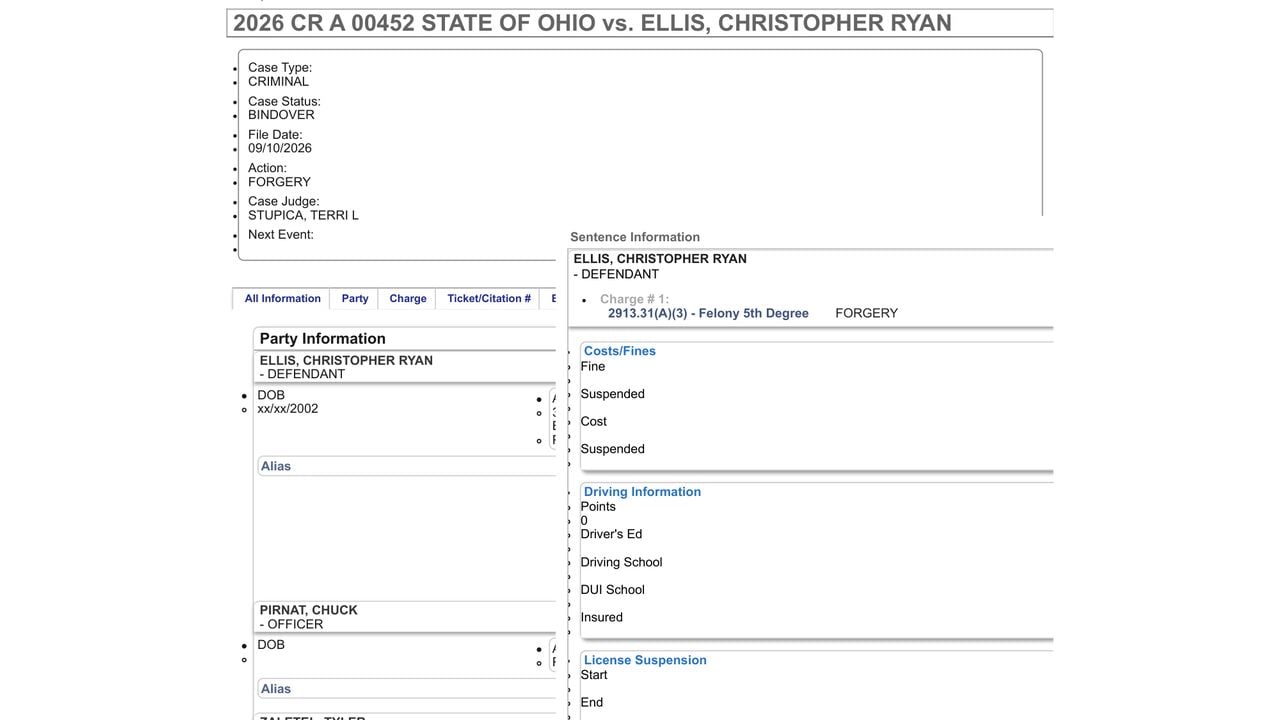
Chardon Municipal Court case 2026 CRA 00452 identifies the Aug. 19 offense as forgery under Ohio Revised Code 2913.31(A)(3). The court classified the preliminary charge as a fifth-degree felony.
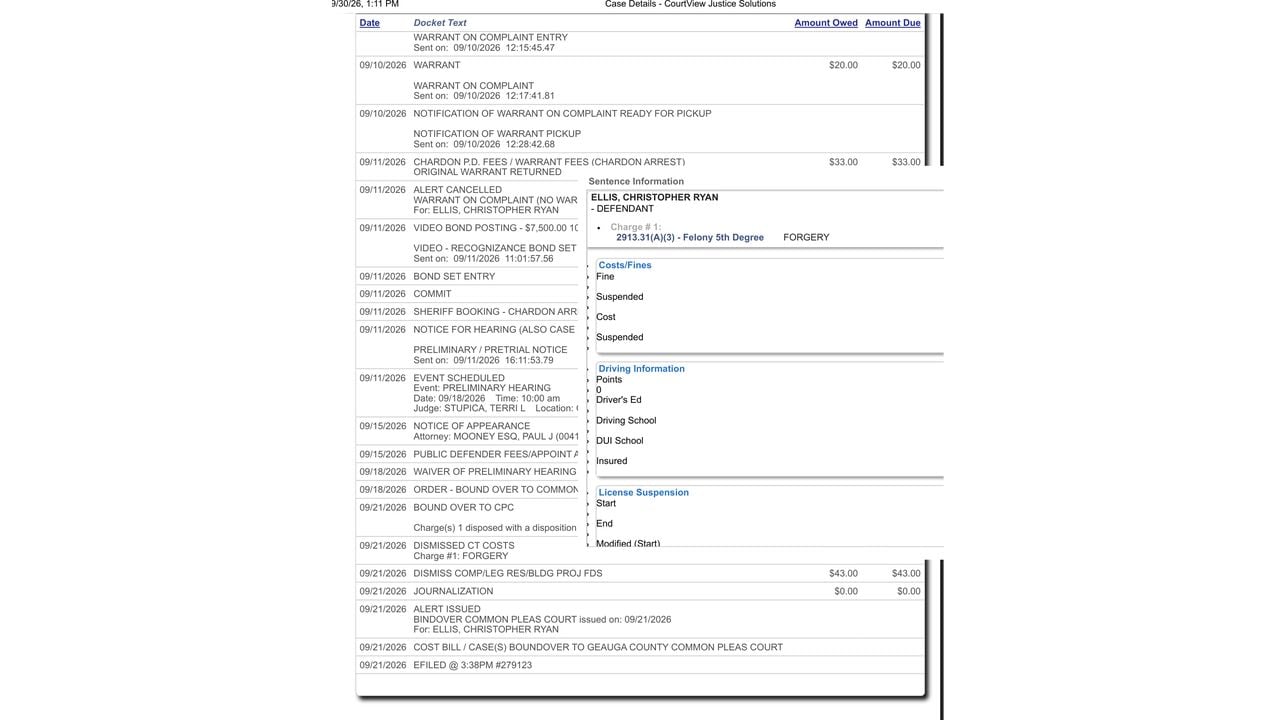
The forgery case was filed Sept. 10. The docket shows a warrant on complaint, a Sept. 11 Chardon arrest and a $7,500 bond structured as 10% or surety. Ellis later waived a preliminary hearing, and the municipal court ordered the case bound over to Common Pleas.
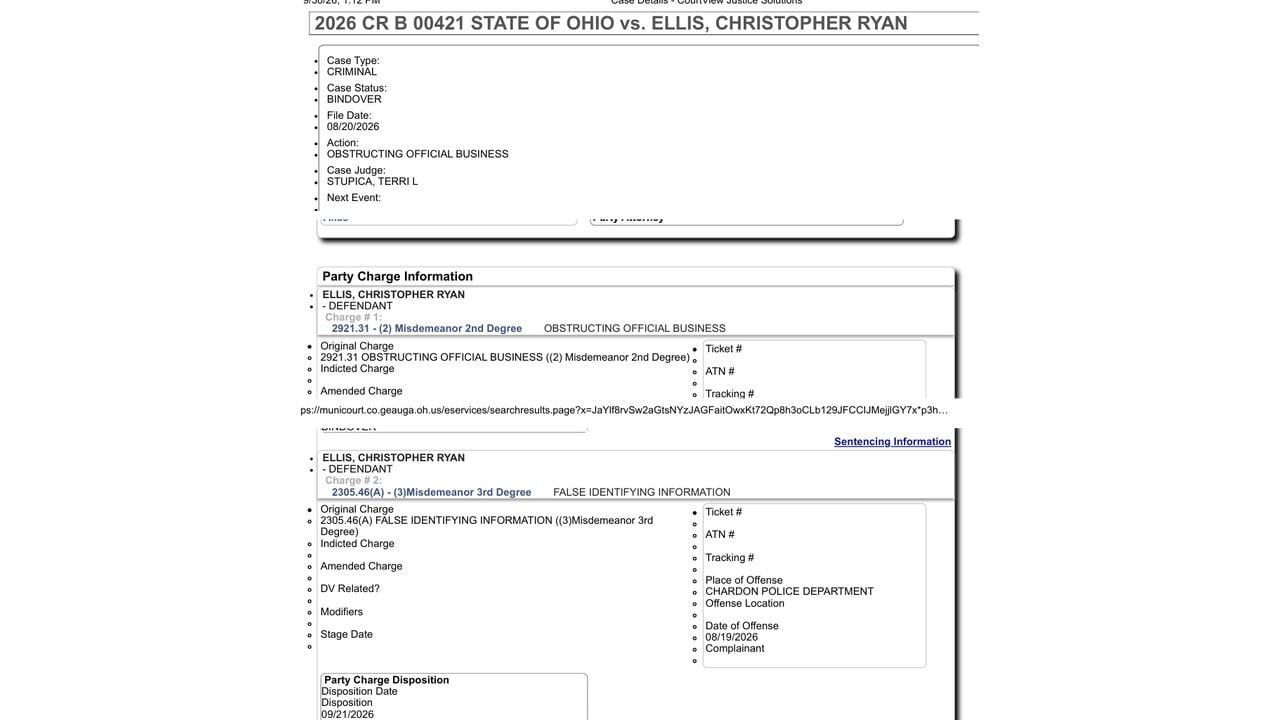
A second case, 2026 CRB 00421, arose from the same Aug. 19 incident. That municipal case lists obstructing official business as a second-degree misdemeanor and false identifying information as a third-degree misdemeanor.
Ellis entered a not-guilty plea in that case on Aug. 21. The docket later records both allegations as bound over to Common Pleas on Sept. 21 alongside case 2026 CRA 00452.
The Grand Jury Returned Three Charges
The Geauga County Prosecutor’s Office later announced that a grand jury indicted Ellis on one count of attempted grand theft and two counts of forgery.
Ohio’s forgery statute covers conduct that includes forging writings or possessing or presenting certain forged writings while knowing they have been forged. The statute generally classifies forgery as a fifth-degree felony, although the degree can increase depending on the property, services or loss involved.
The preliminary Chardon forgery charge was filed under subsection 2913.31(A)(3). The prosecutor’s announcement identified the later indictment as two forgery counts but did not specify their subsections.
Cleveland 19 reported Sept. 29 that Ellis was being held in the Geauga County Jail pending arraignment in Common Pleas Court.
Postal Inspectors Have Seen Other Fake-Check Schemes Targeting Stamps
The Ellis investigation is not the first case in which postal inspectors have encountered fraudulent checks being used to obtain large quantities of postage.
In its annual report, the U.S. Postal Inspection Service described a Southern California investigation in which suspects used fraudulent business checks to buy stamps from post offices.
Inspectors said the stamps in that scheme were sold at a discount to a middleman and then resold for profit. The operation caused more than $600,000 in losses to the Postal Service.
The same report described employees recognizing a suspect from an alert bulletin during an attempted $37,800 stamp purchase, prompting law enforcement involvement.
Counterfeit Checks Can Be Difficult to Identify on Appearance Alone
The U.S. Postal Inspection Service warns that counterfeit checks can closely resemble legitimate checks because fraudsters may use commercial printers, scanners, check stock and information copied from genuine financial documents.
The agency also warns that a counterfeit check may not be identified immediately. A transaction can appear successful before the issuing bank or account holder discovers that the check is fraudulent.
Suspected check fraud or fraud involving the mail or Postal Service can be reported through the Postal Inspection Service.